What Happens During a Solar Eclipse? Get Ready for the Great American Eclipse on August 21, 2017
TL;DR
The upcoming solar eclipse on August 21, 2017, will offer a rare celestial spectacle for North America.
Transcript
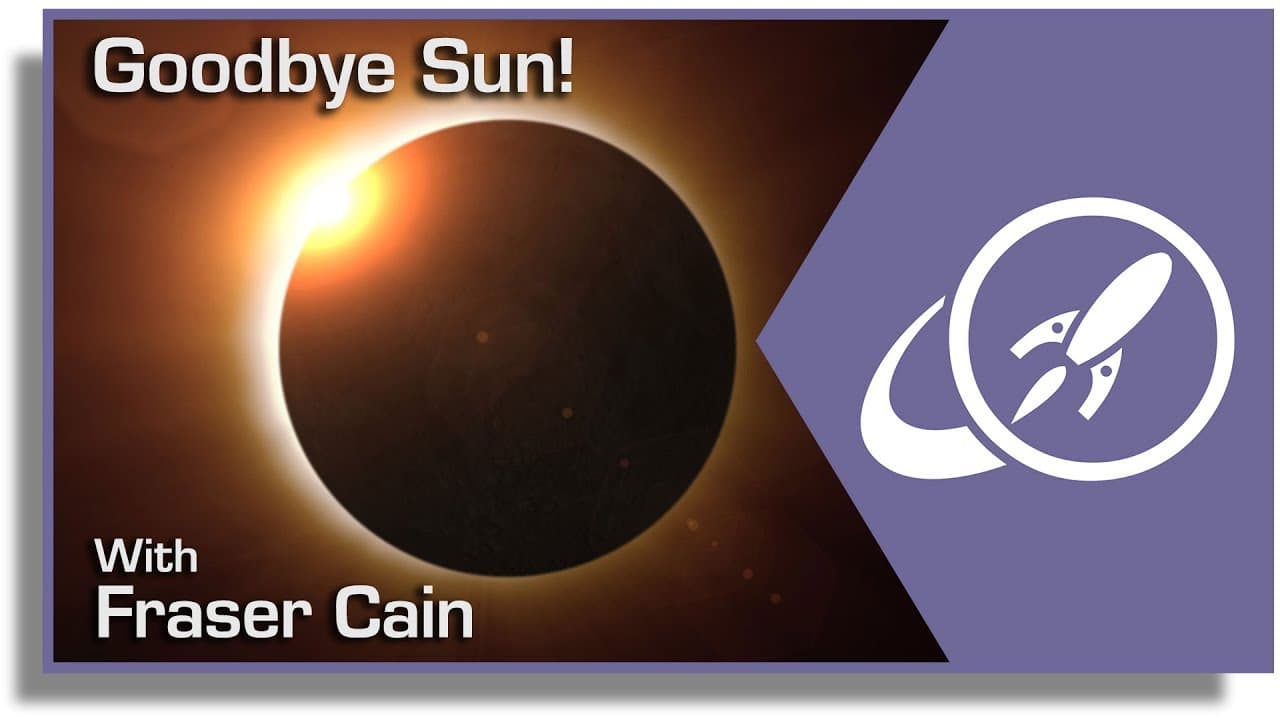
On Monday, August 21, 2017, the Moon is going to destroy the Sun. Briefly. But don’t worry, the Sun will return. For the first time since 1991, the United States will experience a total solar eclipse. In fact, everyone in North America will get a chance to see some version of this epic event - 500 million people will see the Sun dim to some extent.... Read More
Key Insights
- ❓ Eclipses result from intricate orbital geometries involving the Earth, Moon, and Sun.
- 🌎 The upcoming solar eclipse on August 21, 2017, presents a rare sight for North America.
- 👓 Proper viewing safety measures, such as certified eclipse glasses, are crucial to safeguard eyes during solar eclipses.
- ❓ The visual impact of totality during a solar eclipse, when the Sun is completely obscured by the Moon, offers a unique astronomical experience.
- 😃 Indirect viewing methods, like pinhole projection, provide safe ways to observe solar eclipses without risking eye damage.
- ❓ Understanding the astronomical principles behind eclipses enhances the appreciation of these celestial events.
- ❓ Future eclipses, such as the one in April 2024, offer additional opportunities for witnessing this natural phenomenon.
Install to Summarize YouTube Videos and Get Transcripts
Explore YouTube Video Summarizer or Get YouTube Transcript Extractor
Questions & Answers
Q: What causes solar and lunar eclipses?
Solar eclipses happen when the Moon's shadow falls on Earth, while lunar eclipses occur when the Moon is in the Earth's shadow. These events result from the orbital alignments of the Sun, Earth, and Moon.
Q: How does the size relationship between the Moon and Sun impact eclipses?
The nearly identical apparent sizes of the Moon and Sun, despite vast differences in actual size, create the visual effect of total solar eclipses where the Moon fully covers the Sun from Earth's perspective.
Q: Why are proper eye protection and viewing methods essential during a solar eclipse?
Directly looking at the Sun during an eclipse can permanently damage eyes, necessitating the use of certified eclipse glasses or indirect viewing methods as safety precautions.
Q: What are the risks associated with using binoculars or telescopes to view solar eclipses?
Looking through unfiltered binoculars or telescopes at the Sun can cause instant eye damage and harm the optic components, underscoring the importance of employing appropriate solar filters.
Summary & Key Takeaways
-
The solar eclipse on August 21, 2017, will be a rare event for North America, with the path of totality spanning from Oregon to South Carolina.
-
Eclipses occur due to the specific orbital alignments of the Earth, Sun, and Moon, with the size similarity between the Moon and Sun creating the phenomena.
-
Viewing safety precautions are essential, including wearing certified eclipse glasses or employing indirect viewing methods to protect one's eyes.
Read in Other Languages (beta)
Share This Summary 📚
Summarize YouTube Videos and Get Video Transcripts with 1-Click
Try YouTube Summary with ChatGPT & Claude or YouTube Transcript Generator
Explore More Summaries from Fraser Cain 📚




Summarize YouTube Videos and Get Video Transcripts with 1-Click
Try YouTube Summary with ChatGPT & Claude or YouTube Transcript Generator