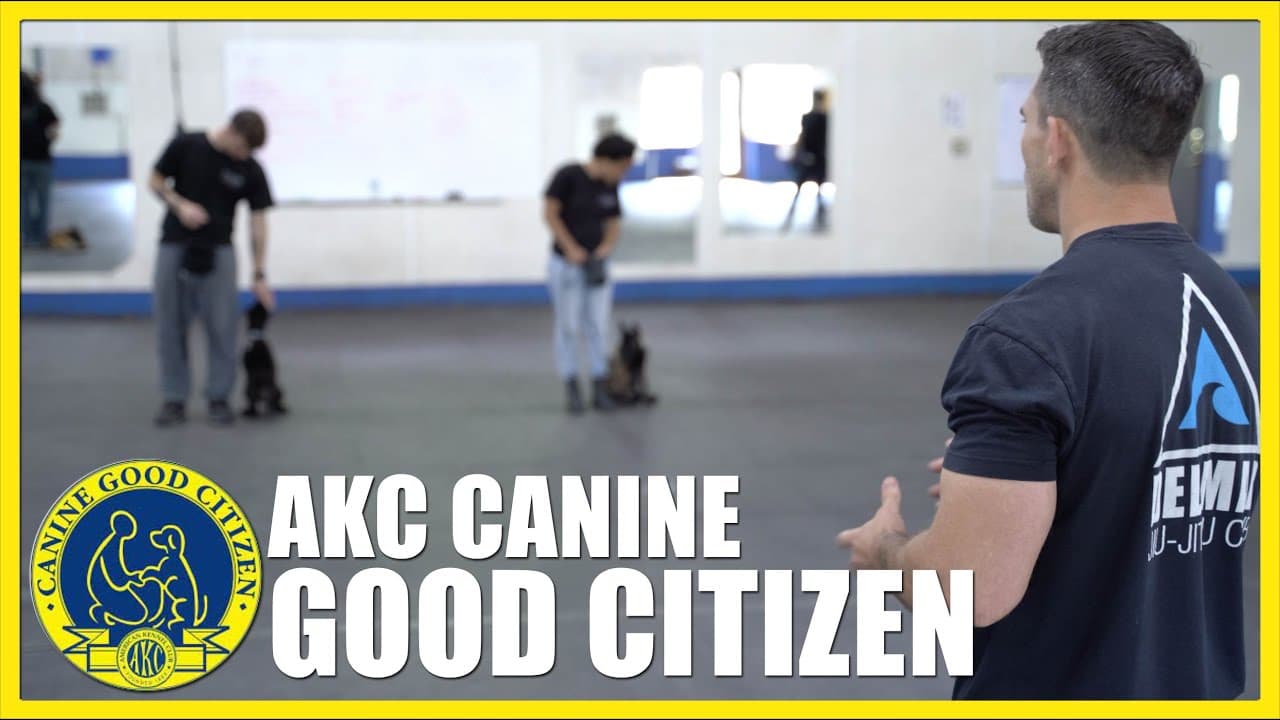
Training and Preparing Your Dog for The AKC Canine Good Citizen Test.
TL;DR
Learn to train your dog for the AKC Canine Good Citizen Test.
Transcript
hey everyone welcome back to another episode today we are going to be going over the training that we like to do for the canine good citizens test if you want to learn more about the tom rose school or if you want to become a professional dog trainer the information is going to be in the description below if you want to do a private session with me... Read More
Key Insights
- The Canine Good Citizen (CGC) test is a 10-skill program focused on good manners and obedience, open to all dog breeds.
- Training emphasizes rehearsing behaviors in different environments to ensure dogs generalize the skills beyond the training setting.
- Pairing verbal commands with physical cues is crucial for dogs to respond predictably, reducing reliance on physical corrections.
- Desensitization involves exposing dogs to various stimuli gradually, ensuring they remain calm and composed in different situations.
- Using positive reinforcement, such as treats, helps create a positive association with new experiences, reducing fear and anxiety.
- Handlers should focus on their dogs during exercises, correcting mistakes calmly to build confidence and ensure consistent behavior.
- Supervised separation tests a dog's ability to remain calm without the owner present, requiring a stable and relaxed demeanor.
- Pattern training helps dogs anticipate and respond to commands, enhancing their reliability during tests and real-world scenarios.
Install to Summarize YouTube Videos and Get Transcripts
Explore YouTube Video Summarizer or Get YouTube Transcript Extractor
Questions & Answers
Q: What is the purpose of the Canine Good Citizen Test?
The Canine Good Citizen Test aims to evaluate a dog's manners and obedience, promoting responsible pet ownership and strengthening the bond between dogs and their owners. It involves a 10-skill program open to all breeds, ensuring dogs can behave well in various social and public settings.
Q: How does pairing verbal and physical cues benefit dog training?
Pairing verbal and physical cues helps dogs create predictable patterns, allowing them to respond to verbal commands without relying solely on physical corrections. This approach enhances communication between the handler and the dog, making training more effective and reducing the need for physical interventions.
Q: Why is desensitization important in dog training?
Desensitization is crucial as it gradually exposes dogs to different stimuli, helping them remain calm and composed in various situations. By slowly increasing the intensity of stimuli, dogs learn to associate new experiences with positive outcomes, reducing fear and anxiety and ensuring better behavior in real-world scenarios.
Q: What role does positive reinforcement play in training?
Positive reinforcement, such as treats and praise, plays a vital role in training by creating a positive association with desired behaviors. It encourages dogs to repeat those behaviors, enhances their learning experience, and builds their confidence, making them more willing to engage and comply with commands.
Q: How should handlers correct mistakes during training?
Handlers should correct mistakes calmly and consistently, focusing on reinforcing the correct behavior rather than punishing the dog. This approach helps build the dog's confidence, ensuring they understand what is expected without creating fear or anxiety, leading to more reliable and consistent behavior.
Q: What is supervised separation in the CGC test?
Supervised separation tests a dog's ability to remain calm and composed when their owner is not present. The dog must stay in a designated position for three minutes without showing signs of distress or nervousness, demonstrating their independence and trust in the handler's return.
Q: Why is pattern training beneficial for dogs?
Pattern training helps dogs anticipate and respond to commands by creating a routine or sequence of actions. This method enhances the dog's reliability in performing tasks, as they become familiar with the expected behavior, reducing uncertainty and increasing their confidence during tests and real-life situations.
Q: How can handlers ensure their dogs generalize training?
Handlers can ensure dogs generalize training by practicing skills in various environments and situations, reinforcing the idea that commands apply everywhere, not just in the training setting. This approach helps dogs adapt their learned behaviors to different contexts, ensuring consistent and reliable performance in diverse scenarios.
Summary & Key Takeaways
-
The video provides a comprehensive guide on training dogs for the AKC Canine Good Citizen Test, focusing on skills like accepting strangers, sitting politely for petting, and staying calm during separations.
-
Emphasis is placed on pairing verbal commands with physical cues and using desensitization techniques to help dogs generalize their training across different environments.
-
Handlers are advised to focus on positive reinforcement and pattern training to build their dogs' confidence and ensure consistent behavior during testing and everyday interactions.
Read in Other Languages (beta)
Share This Summary 📚
Summarize YouTube Videos and Get Video Transcripts with 1-Click
Try YouTube Summary with ChatGPT & Claude or YouTube Transcript Generator
Explore More Summaries from Nate Schoemer 📚
Summarize YouTube Videos and Get Video Transcripts with 1-Click
Try YouTube Summary with ChatGPT & Claude or YouTube Transcript Generator