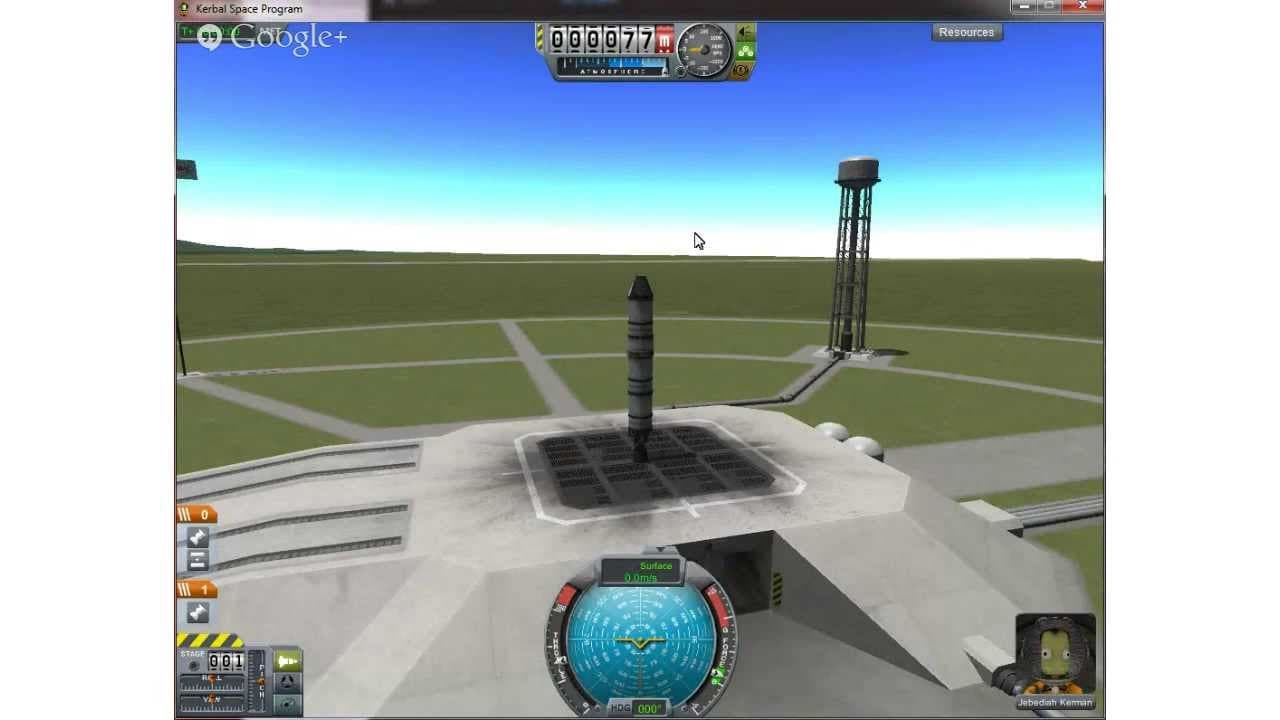
Virtual Star Party - Aug. 18, 2013: The Kerbal Space Program Edition
TL;DR
Stargazing with live Google Hangout showcasing celestial objects with expert knowledge.
Transcript
i think it's working all right well let's go so uh so hi everyone my name is fraser kane i'm the publisher of universe today and this is your virtual star party for august 18th 2013. i have to check the date i should know that it's august 18th uh yeah so uh we're going to be hooking up a whole bunch of telescopes three to a live google plus hangout... Read More
Key Insights
- 🤩 Star parties facilitate community engagement, offering collaboration in observing and discussing celestial objects.
- 🦻 Dark sky locations enhance stargazing, aiding in precise observations of nebulae, galaxies, and clusters.
- 🫵 Interactive sessions with live views of celestial wonders provide educational and inspiring experiences for audiences.
- 🤩 Differentiating between optical doubles and binary stars involves careful analysis of proper motion and observational data.
- 🏍️ Nebulae and supernova remnants offer unique insights into stellar life cycles and galactic evolution.
- 🥃 Maintaining optimal viewing conditions, including using filters and techniques, enhances the visibility of deep-sky objects.
- 🤩 Virtual star parties enable remote participation in stargazing events, fostering a sense of community among astronomy enthusiasts.
Install to Summarize YouTube Videos and Get Transcripts
Explore YouTube Video Summarizer or Get YouTube Transcript Extractor
Questions & Answers
Q: How does the dark sky map help astronomers locate ideal stargazing locations?
The dark sky map provides light pollution levels and helps astronomers identify areas with minimal light pollution, ensuring optimal viewing conditions.
Q: Can amateur astronomers differentiate between optical doubles and gravitationally bound binary stars?
Astronomers observe proper motion to determine if double stars are gravitationally bound or merely optical doubles, based on their movements through the sky.
Q: What makes the Veil supernova remnant a challenging target for astronomers?
The Veil supernova remnant is challenging due to its vast size, with chunks extending several degrees, requiring wide-field views to capture the entire structure.
Q: How do globular clusters provide insights into the age of the universe?
Globular clusters, like M13 in Hercules, contain ancient stars, helping astronomers establish estimates for the age of the universe based on star formation histories.
Summary & Key Takeaways
-
Fraser Kane hosts a virtual star party where telescopes are hooked up to a live Google Hangout to showcase celestial objects.
-
Participants, including David, Gary, Mark, and Stuart, share insights and observations regarding various nebulae, galaxies, and stars.
-
Requests for specific objects such as the Veil and North American Nebulas are fulfilled, providing visual experiences of distant cosmic wonders.
Read in Other Languages (beta)
Share This Summary 📚
Summarize YouTube Videos and Get Video Transcripts with 1-Click
Try YouTube Summary with ChatGPT & Claude or YouTube Transcript Generator
Explore More Summaries from Fraser Cain 📚




Summarize YouTube Videos and Get Video Transcripts with 1-Click
Try YouTube Summary with ChatGPT & Claude or YouTube Transcript Generator