Pre-Algebra 23 - Scientific Notation
TL;DR
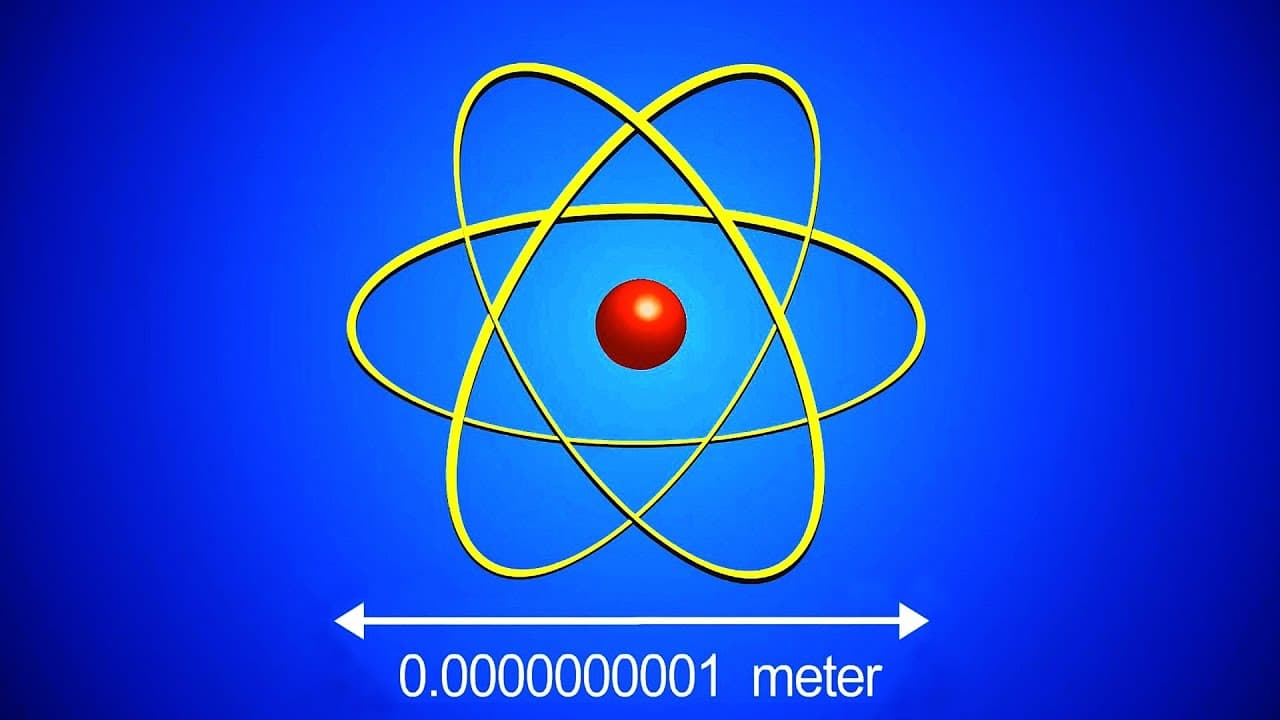
Decimal numbers can represent fractional quantities by adding a decimal point, and scientific notation is used to write very large or small numbers in a more compact format.
Transcript
Hello. I’m Professor Von Schmohawk and welcome to Why U. In our lecture on the decimal number system we saw that decimal numbers can represent fractional quantities by adding a decimal point to the right of the one’s digit followed by any number of digits. Multiplying a decimal number by ten which can also be written as ten to the first power incre... Read More
Key Insights
- 😥 Decimal numbers represent fractional quantities by adding a decimal point and are manipulated by multiplying by powers of ten.
- 😑 Scientific notation is useful for expressing very large or small numbers in a compact format.
- 😒 Engineers and scientists often work with measurements that go beyond the human scale, requiring the use of scientific notation.
- 😥 Converting between scientific notation and standard decimal numbers involves adjusting the decimal point and the exponent.
Install to Summarize YouTube Videos and Get Transcripts
Explore YouTube Video Summarizer or Get YouTube Transcript Extractor
Questions & Answers
Q: What is the purpose of scientific notation?
Scientific notation allows us to write very large or very small numbers in a more condensed and manageable format, using a multiplier of ten with an exponent.
Q: How do you convert a number from scientific notation to a standard decimal number?
To convert a number from scientific notation to a standard decimal number, you multiply the first part (the digit and optional decimal point) by the second part (ten with the exponent). This moves the decimal point to the proper position.
Q: How do you convert a decimal number to scientific notation?
To convert a decimal number to scientific notation, you start by adding a multiplier of ten to the zero power. Then, you move the decimal point to immediately after the first non-zero digit and adjust the exponent of the multiplier accordingly.
Q: What are some examples of very small units of time?
Some examples of very small time units are millisecond, microsecond, nanosecond, picosecond, femtosecond, attosecond, zeptosecond, and yoctosecond.
Summary & Key Takeaways
-
Multiplying a decimal number by ten increases the value of each digit by a factor of ten, shifting the digits one column to the left.
-
Likewise, multiplying a decimal number by one-tenth decreases the value of each digit by a factor of ten, shifting the digits one column to the right.
-
Scientific notation is used to express large numbers by writing a single digit followed by a decimal point and a multiplier of ten with an exponent.
Read in Other Languages (beta)
Share This Summary 📚
Summarize YouTube Videos and Get Video Transcripts with 1-Click
Try YouTube Summary with ChatGPT & Claude or YouTube Transcript Generator
Explore More Summaries from MyWhyU 📚

Summarize YouTube Videos and Get Video Transcripts with 1-Click
Try YouTube Summary with ChatGPT & Claude or YouTube Transcript Generator