How to Navigate Insurance Liability in Car Accidents
TL;DR
Determining liability in car accidents can be complex, involving factors like vehicle modifications, driver negligence, and municipal responsibilities. Insurance typically covers negligence, but policy specifics matter. In California, comparative fault allows multiple parties to share liability. Legal representation can help navigate these complexities, often without upfront costs.
Transcript
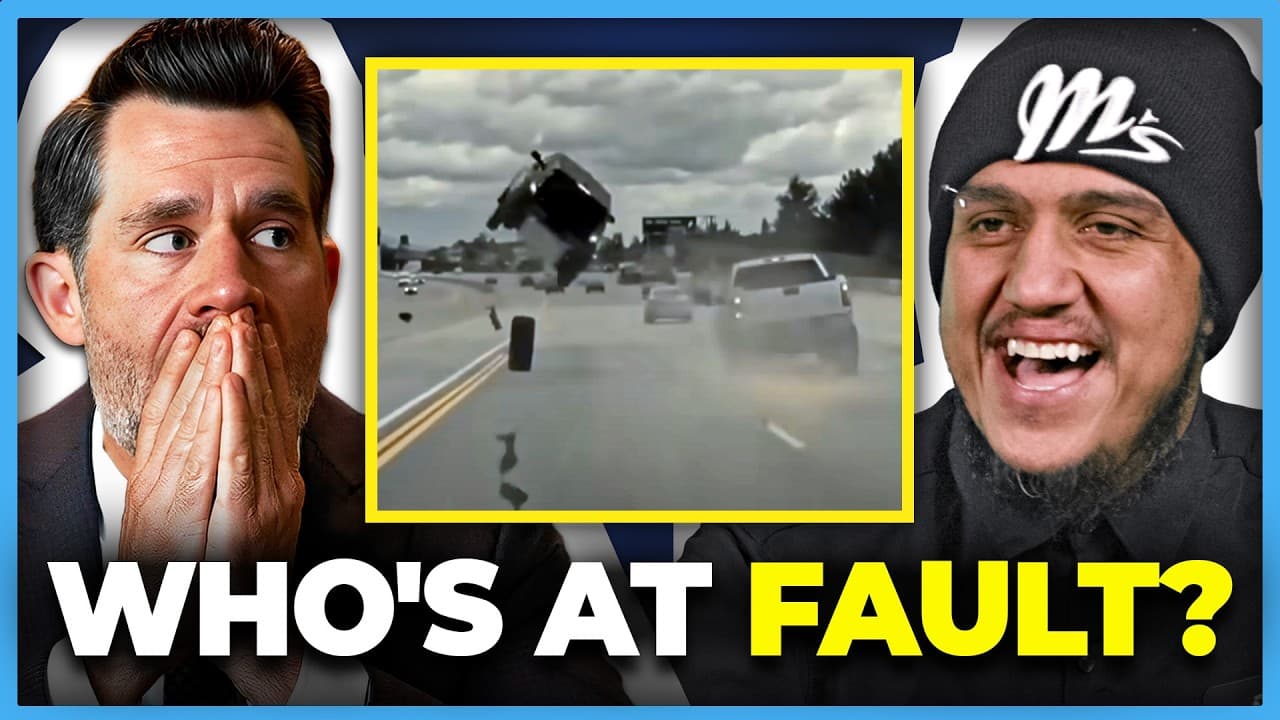
I'm in LA right now where millions of drivers wake up every morning and choose violence. And when things go wrong on the road, determining which parties are legally liable is not always straightforward. So, joining me today to break down viral clips of automotive carnage is the master mechanic, Sandro from Real Mechanic Stuff. Sandro, thanks for be... Read More
Key Insights
- Comparative fault in California allows multiple parties to share liability in an accident.
- Insurance typically covers negligence, but coverage specifics depend on the policy.
- Lifted trucks with aggressive wheels can pose liability risks if not properly maintained.
- Hit-and-run laws require stopping even if no physical contact occurred, to exchange information.
- Older vehicles, like semi-trucks, may have maintenance issues affecting liability.
- Tesla's autopilot system has led to liability cases due to perceived safety limitations.
- Manufacturers can be liable for design defects, as seen in Toyota's rusted frame settlements.
- Legal representation can be pursued without upfront costs, with lawyers paid upon successful claims.
Install to Summarize YouTube Videos and Get Transcripts
Explore YouTube Video Summarizer or Get YouTube Transcript Extractor
Questions & Answers
Q: How is liability determined in car accidents?
Liability in car accidents is determined by assessing the actions of all parties involved, including drivers, mechanics, and potentially municipalities. Factors like vehicle maintenance, adherence to traffic laws, and road conditions are considered. In states like California, comparative fault allows liability to be shared among multiple parties, rather than assigning it to just one individual or entity.
Q: Does insurance cover negligence in car accidents?
Insurance typically covers negligence in car accidents, as it is considered an accident rather than an intentional act. However, the specifics of coverage depend on the terms of the insurance policy. Some policies may exclude certain scenarios, such as modifications made by the vehicle owner, so it's important to understand the details of your coverage.
Q: What is comparative fault in California?
Comparative fault in California is a legal doctrine that allows multiple parties to share responsibility for damages in a car accident. Instead of assigning full liability to one party, the fault is divided based on each party's contribution to the accident. This means a driver, mechanic, or even a city could each be partially liable, depending on the circumstances.
Q: How can vehicle modifications affect liability?
Vehicle modifications, such as installing lift kits or aggressive wheels, can affect liability if they contribute to an accident. If modifications are improperly installed or maintained, the vehicle owner or mechanic could be held liable for any resulting damages. It's crucial to ensure such modifications meet safety standards and are regularly checked for maintenance.
Q: What are the legal obligations in a hit-and-run accident?
In a hit-and-run accident, drivers are legally obligated to stop and exchange information, even if no physical contact occurred. Failing to do so can result in severe penalties, including felony charges in some states like California. The law aims to ensure that all parties involved in an accident can be identified and held accountable for their actions.
Q: Why might older vehicles have liability issues?
Older vehicles, such as semi-trucks, may have liability issues due to maintenance problems. Components like brakes and suspension can fail if not properly maintained, leading to accidents. Liability may fall on the vehicle owner, operator, or maintenance provider if negligence in upkeep is proven. Regular inspections and adherence to safety regulations are crucial for these vehicles.
Q: What role do manufacturers play in vehicle liability cases?
Manufacturers can be held liable in vehicle liability cases if a design or manufacturing defect contributes to an accident. For instance, Toyota faced class action lawsuits due to rusted frames in certain models. Such cases often involve proving that the defect was known or should have been known by the manufacturer and that it directly caused the damages.
Q: How can legal representation be accessible after an accident?
Legal representation can be accessible through law firms that offer contingency-based services, meaning clients do not pay upfront fees. Lawyers are compensated only if they successfully resolve the case. This model reduces the financial risk for clients and ensures that they receive appropriate legal support to navigate the complexities of insurance claims and liability disputes.
Summary & Key Takeaways
-
Liability in car accidents often involves multiple parties, including drivers, mechanics, and even municipalities. In California, the concept of comparative fault allows for shared liability, meaning more than one party can be responsible for the damages. Insurance coverage typically applies to negligence, but the specifics of each policy can significantly impact coverage.
-
The video highlights several examples of automotive incidents, such as lifted trucks losing wheels due to improper maintenance, and semi-trucks with potential brake failures. These scenarios illustrate the complexities of determining liability, which can also involve manufacturers if vehicle defects are involved, as seen in past class action lawsuits against companies like Toyota.
-
Legal representation in such cases is crucial, especially when navigating the nuances of insurance policies and liability laws. Many law firms offer services where clients do not pay upfront, and lawyers are compensated only if the case is successful. This approach can make legal assistance more accessible to those affected by automotive accidents.
Read in Other Languages (beta)
Share This Summary 📚
Summarize YouTube Videos and Get Video Transcripts with 1-Click
Try YouTube Summary with ChatGPT & Claude or YouTube Transcript Generator
Explore More Summaries from LegalEagle 📚





Summarize YouTube Videos and Get Video Transcripts with 1-Click
Try YouTube Summary with ChatGPT & Claude or YouTube Transcript Generator