StatQuest: K-nearest neighbors, Clearly Explained
TL;DR
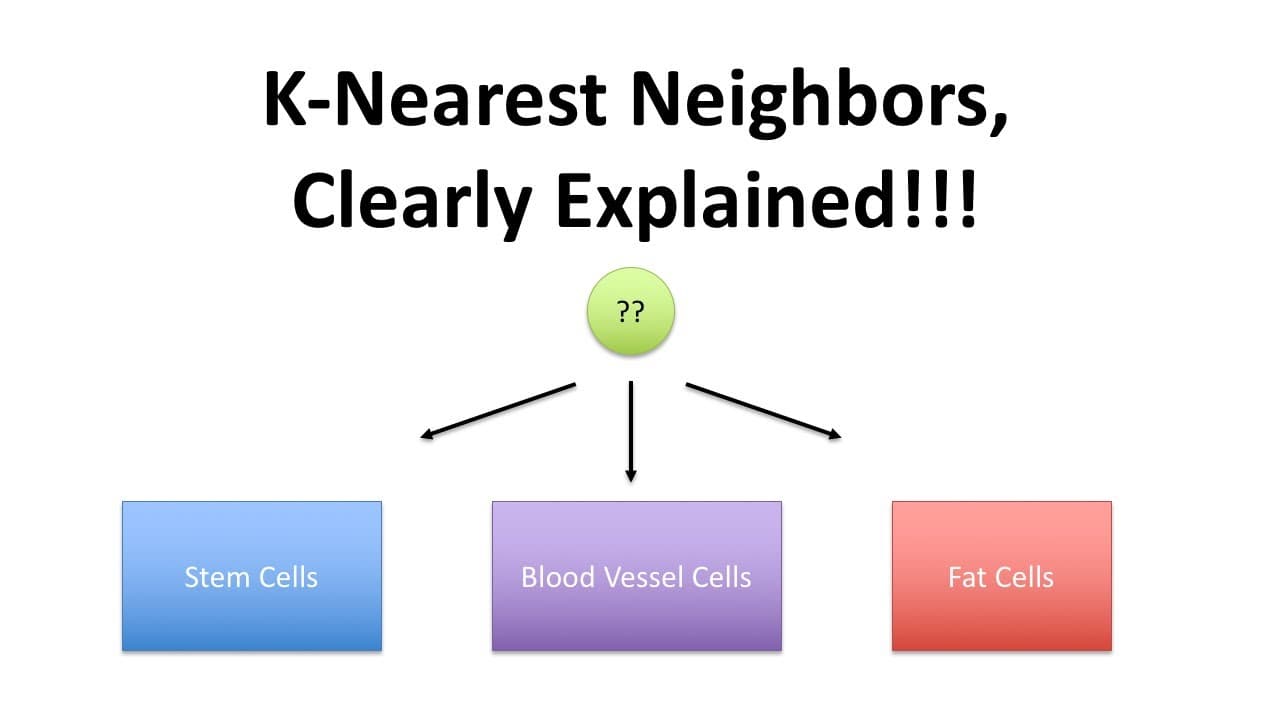
Simple explanation of K nearest neighbors algorithm for classifying data using known categories.
Transcript
that glass that glass step quest hello and welcome to step quest stack quest is brought to you by the friendly folks in the genetics department at the University of North Carolina at Chapel Hill today we're going to be talking about the K nearest neighbors algorithm which is a super simple way to classify data in a nutshell if you already had a lot... Read More
Key Insights
- 😒 K Nearest Neighbors algorithm uses similarity to classify new data.
- 👉 Selecting the right K value influences the accuracy of classification.
- 😥 Training data is crucial for clustering and classifying new data points.
- 🤩 Experimentation is key to finding the optimal K value.
- 🍵 The algorithm's flexibility in handling ties ensures robust classification.
- 👌 Outliers and noise need to be considered when choosing the K value.
- 🎰 Understanding the concept of training data is essential in machine learning.
Install to Summarize YouTube Videos and Get Transcripts
Explore YouTube Video Summarizer or Get YouTube Transcript Extractor
Questions & Answers
Q: What is the K Nearest Neighbors algorithm and how does it work?
The K Nearest Neighbors algorithm classifies new data points by comparing them to the K nearest known data points based on a chosen similarity metric.
Q: How is the K value selected in the K Nearest Neighbors algorithm?
The K value in the algorithm is typically determined through experimentation, testing various values on a subset of known data to find the optimal value for accurate classification.
Q: What are the considerations when choosing a K value in the K Nearest Neighbors algorithm?
Low K values can be noisy and sensitive to outliers, while high K values can smooth over distinctions. The ideal K value balances these factors for accurate classification.
Q: How does the K Nearest Neighbors algorithm handle ties in voting for the category of a new data point?
In case of tied votes when determining the category of a new data point, the algorithm may choose randomly between tied categories or choose not to assign a category.
Summary & Key Takeaways
-
K Nearest Neighbors algorithm classifies new data based on similarity to known data points.
-
Choosing the right K value is essential for accurate classification.
-
Training data with known categories is used to cluster and classify new data points.
Read in Other Languages (beta)
Share This Summary 📚
Summarize YouTube Videos and Get Video Transcripts with 1-Click
Try YouTube Summary with ChatGPT & Claude or YouTube Transcript Generator
Explore More Summaries from StatQuest with Josh Starmer 📚
Summarize YouTube Videos and Get Video Transcripts with 1-Click
Try YouTube Summary with ChatGPT & Claude or YouTube Transcript Generator