Products
Features
YouTube Video Summarizer
Summarize YouTube videos
Web & PDF Highlighter
Highlight web pages & PDFs
Chat with PDF
Ask any PDF questions with AI
Ask AI Clone
Chat with your highlights & memories
Audio Transcriber
Transcribe audio files to text
Glasp Reader
Read and highlight articles
Kindle Highlight Export
Export your Kindle highlights
Idea Hatch
Hatch ideas from your highlights
Integrations
Obsidian Plugin
Notion Integration
Pocket Integration
Instapaper Integration
Medium Integration
Readwise Integration
Snipd Integration
Hypothesis Integration
Apps & Extensions
Chrome Extension
Safari Extension
Edge Add-ons
Firefox Add-ons
iOS App
Android App
Discover
Discover
Ideas
Discover new ideas and insights
Articles
Curated articles and insights
Books
Book recommendations by great minds
Posts
Essays and notes from readers
Quotes
Inspiring quotes collection
Videos
Curated videos and summaries
Explore Glasp
Glasp Newsletter
Weekly insights and updates
Glasp Talk
Interview series with great minds
Glasp Blog
Latest news and articles
Glasp Use Cases
Learn how others use Glasp
Build & Support
Glasp API
Access Glasp's API for developers
MCP Connector
Connect Glasp to Claude & ChatGPT
Community
Glasp Reddit Community
Students
Student discount and benefits
FAQs
Frequently Asked Questions
AboutPricing
DashboardLog inSign up

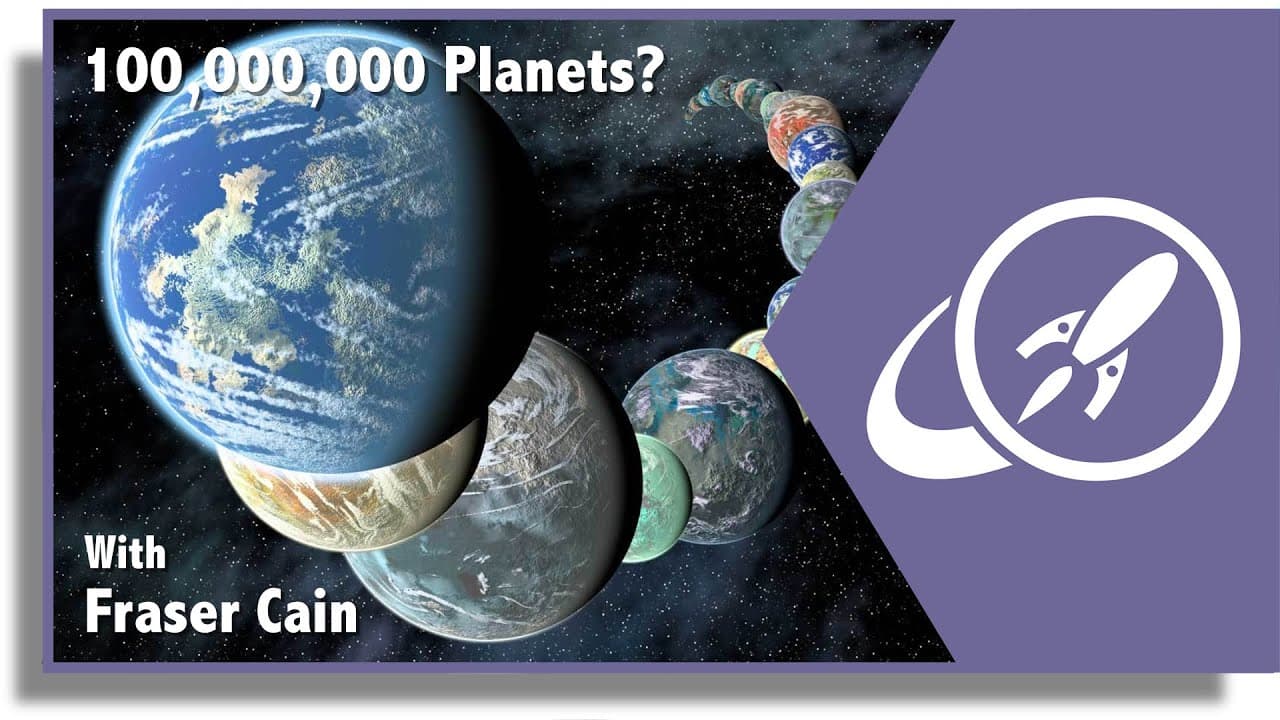
100 Million Exoplanets By 2050? How Will We Get There?
28.2K views
•
December 17, 2019
by
Fraser Cain
YouTube video player
100 Million Exoplanets By 2050? How Will We Get There?

TL;DR

By 2050, we could know of 100 million exoplanets using advancing techniques and telescopes.

Transcript

as I'm recording this video near the end of 2019 the total number of confirmed exoplanets stands at four thousand 104 we've come a long way since the discovery of the first exoplanet orbiting a sun-like star back in 1995 with 51 pegasi B and the reality is that the race to find new exoplanets is only accelerating new ground and space-based telescop... Read More

Key Insights

  • ❓ Exoplanet discoveries have increased significantly, with over 4,000 confirmed exoplanets by 2019.
  • 👾 Researchers predict that we could know of 100 million exoplanets by 2050 if the current pace of discovery continues.
  • 🔭 Advancements in telescope technology, such as the James Webb Space Telescope and ESA's Gaia spacecraft, will contribute to the discovery of more exoplanets.
  • 🤩 Techniques like astrometry and gravitational microlensing will aid in finding exoplanets that do not cross directly in front of their stars.
  • 👶 The future of exoplanet discovery may involve new techniques or advancements in existing methods.
  • 🌍 Mission proposals like Theia aim to enhance astrometry precision for discovering earth-like planets.
  • 👶 New telescopes like NASA's Havoc's mission and the European Extremely Large Telescope will enable direct imaging of exoplanets.

Install to Summarize YouTube Videos and Get Transcripts

Explore YouTube Video Summarizer or Get YouTube Transcript Extractor

Questions & Answers

Q: How many exoplanets have been confirmed as of the end of 2019?

As of the end of 2019, there have been 4,104 confirmed exoplanets.

Q: What is the projection for the number of exoplanets we could know of by 2050?

Researchers estimate that by 2050, we could know of 100 million exoplanets.

Q: What are the key techniques used to discover exoplanets?

The radial velocity and transit methods are key techniques used to discover exoplanets.

Q: How does the Gaia spacecraft contribute to exoplanet discoveries?

The Gaia spacecraft tracks the positions and motions of over a billion stars, indirectly helping in the discovery of tens of thousands of exoplanets.

Summary & Key Takeaways

  • Exoplanet discoveries have accelerated, with 4,104 confirmed exoplanets so far.

  • Researchers predict we could know of 100 million exoplanets by 2050.

  • Advancements in telescope technology and techniques like astrometry will contribute to this massive increase in exoplanet discoveries.


Read in Other Languages (beta)

English

Share This Summary 📚

Summarize YouTube Videos and Get Video Transcripts with 1-Click

Download browser extensions on:

Try YouTube Summary with ChatGPT & Claude or YouTube Transcript Generator

Explore More Summaries from Fraser Cain 📚
What's On The Far Side Of The Moon? thumbnail
What's On The Far Side Of The Moon?
Fraser Cain
Exploring Space Lava Tubes: How To Prepare For It thumbnail
Exploring Space Lava Tubes: How To Prepare For It
Fraser Cain / Universe Today Podcast
Are We Living in a Simulation? Understanding the Simulation Hypothesis thumbnail
Are We Living in a Simulation? Understanding the Simulation Hypothesis
Fraser Cain
Why Did Mars Lose Its Atmosphere? And How Can We Get It Back? thumbnail
Why Did Mars Lose Its Atmosphere? And How Can We Get It Back?
Fraser Cain
Why Isn't the Asteroid Belt a Planet? thumbnail
Why Isn't the Asteroid Belt a Planet?
Fraser Cain

Summarize YouTube Videos and Get Video Transcripts with 1-Click

Download browser extensions on:

Try YouTube Summary with ChatGPT & Claude or YouTube Transcript Generator

Apps & Extensions

  • Chrome Extension
  • Safari Extension
  • Edge Add-ons
  • Firefox Add-ons
  • iOS App
  • Android App

Key Features

  • YouTube Video Summarizer
  • Web & PDF Summarizer
  • Web & PDF Highlighter
  • Chat with PDF
  • Ask AI Clone
  • Audio Transcriber
  • Glasp Reader
  • Kindle Highlight Export
  • Idea Hatch

Integrations

  • Obsidian Plugin
  • Notion Integration
  • Pocket Integration
  • Instapaper Integration
  • Medium Integration
  • Readwise Integration
  • Snipd Integration
  • Hypothesis Integration

More Features

  • APIs
  • MCP Connector
  • Blog & Post
  • Embed Links
  • Image Highlight
  • Personality Test
  • Quote Shots

Company

  • About us
  • Blog
  • Community
  • FAQs
  • Job Board
  • Newsletter
  • Pricing
Terms

•

Privacy

•

Guidelines

© 2026 Glasp Inc. All rights reserved.