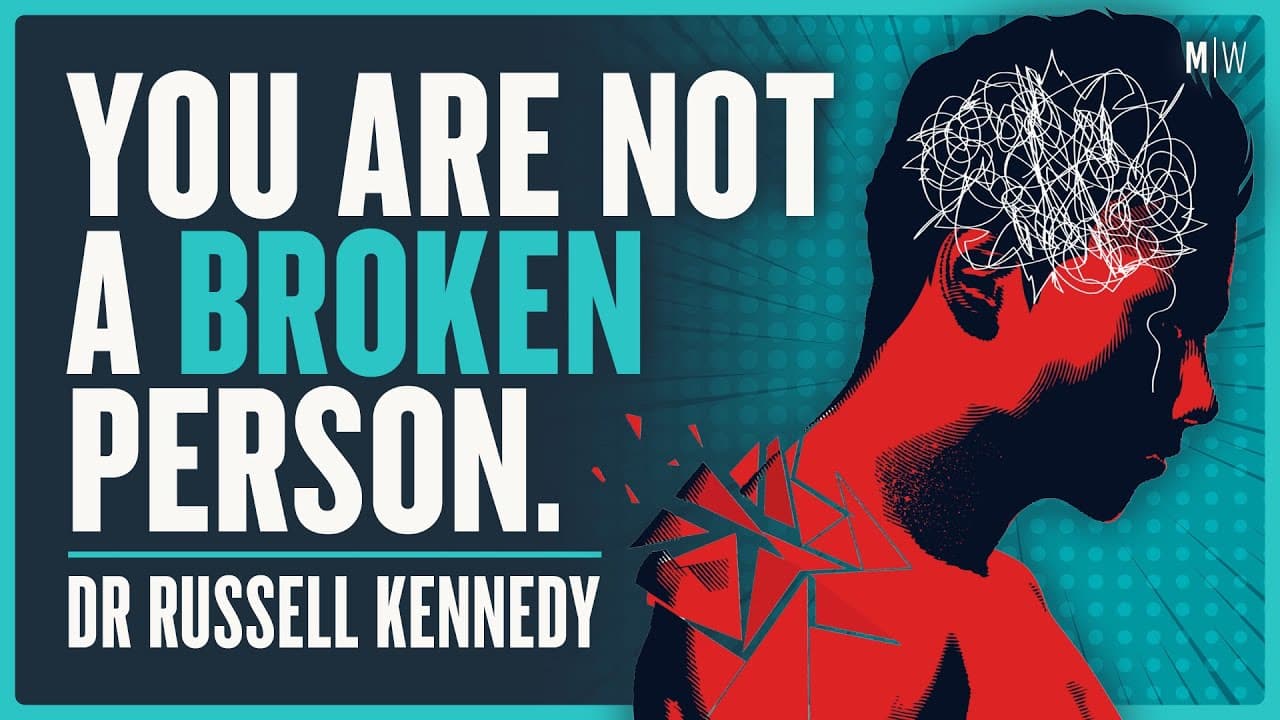
Why You Feel So Anxious All The Time - Dr Russell Kennedy | Modern Wisdom Podcast 563
TL;DR
Childhood trauma can lead to anxiety later in life due to the impact on brain development and the formation of neural pathways, causing individuals to struggle with uncertainty and emotional regulation.
Transcript
there's this great saying that says if you abuse abandon or neglect the child the child doesn't stop loving the parent they stop loving themselves and I think that's the start of the alarm situation because when we split from ourselves when we start judging abandoning blaming and shaming ourselves as children that model becomes the way we interact ... Read More
Key Insights
- 🧠 The impact of childhood trauma on anxiety: Growing up with a father with schizophrenia and bipolar disorder led to personal experiences of anxiety and a desire to understand the mind.
- 💔 Traumatic experiences create a separation from oneself, leading to self-blame and self-judgment. This internal conflict becomes the basis for how individuals interact with the world.
- 🤔 Men have a harder time understanding and expressing emotions compared to women due to societal conditioning and limited emotional language.
- 💡 Anxiety is a state of alarm in the body, and worries are the mind's attempt to make sense of that alarm. Reconnecting with the body can help manage and resolve anxiety.
- 🌟 Somatic therapies and internal family systems work can be effective in healing anxiety by addressing trauma stored in the body and connecting with different parts of oneself.
- ❌ Men often perceive vulnerability as weakness, so finding healthy ways to express emotions can be challenging. Building emotional intelligence and connections with others can help break this pattern.
- 🔄 Explaining the source of anxiety provides a sense of certainty, making it easier to cope with, but embracing uncertainty is necessary for healing.
- ✨ Combination of somatic therapies, such as somatic experiencing, internal family systems work, and breathwork, can help shift ingrained anxious patterns and promote lasting change.
- 😌 Connecting with oneself, resolving past trauma, and developing emotional understanding are key to managing anxiety and finding healing.
Install to Summarize YouTube Videos and Get Transcripts
Explore YouTube Video Summarizer or Get YouTube Transcript Extractor
Questions & Answers
Q: How does childhood trauma impact brain development and contribute to anxiety later in life?
Childhood trauma can lead to changes in brain development, particularly in the prefrontal cortex. Chronic trauma can impair the growth and functioning of pyramidal cells in the prefrontal cortex, leading to difficulties in emotional regulation and stress response. This can result in an increased vulnerability to anxiety when faced with uncertain or stressful situations later in life.
Q: How does trauma affect the body, and why is it important to connect with the body in healing from anxiety?
Trauma can be stored in the body, and individuals may experience physical sensations or discomfort linked to past traumatic experiences. By connecting with the body and paying attention to these sensations, individuals can gain greater insight into the roots of their anxiety. This somatic approach allows for the resolution of trauma and helps individuals process and release the stored energy and emotions that contribute to anxiety.
Q: Can a person's upbringing and childhood experiences contribute to their susceptibility to anxiety and other mental health issues?
Yes, childhood experiences, particularly traumatic experiences, can contribute to a person's susceptibility to anxiety and other mental health issues. Adverse childhood experiences, such as abuse, neglect, or witnessing domestic violence, can disrupt healthy brain development and impair coping mechanisms, leading to increased vulnerability to anxiety and other mental health conditions in adulthood.
Q: How can men overcome societal expectations and cultural conditioning to seek help for anxiety and other mental health issues?
Overcoming societal expectations and cultural conditioning can be challenging for men, but it is essential for their mental health and well-being. Men can break the stigma surrounding mental health by acknowledging and accepting their emotions, seeking support from trusted individuals, and accessing professional help. Creating safe spaces for open dialogue about mental health for men is crucial in fostering a culture that encourages seeking help and addressing mental health concerns.
Summary & Key Takeaways
-
Childhood trauma, such as growing up with a mentally ill parent, can cause anxiety later in life due to the impact on brain development.
-
Trauma affects the prefrontal cortex, making it difficult to regulate stress and respond effectively to uncertainty.
-
The body stores trauma, and individuals may experience anxiety as a means of avoiding or escaping feelings associated with past trauma.
-
The alarm anxiety cycle is a self-perpetuating cycle where anxiety triggers the body's alarm system, leading to more anxiety and worry.
-
Men often struggle with expressing emotions and may rely on unhealthy coping mechanisms such as substance abuse or violence.
-
Healing trauma requires a combination of somatic therapy, internal family systems work, and developing emotional awareness and connection with oneself.
Read in Other Languages (beta)
Share This Summary 📚
Summarize YouTube Videos and Get Video Transcripts with 1-Click
Try YouTube Summary with ChatGPT & Claude or YouTube Transcript Generator
Explore More Summaries from Chris Williamson 📚






Summarize YouTube Videos and Get Video Transcripts with 1-Click
Try YouTube Summary with ChatGPT & Claude or YouTube Transcript Generator