Products
Features
YouTube Video Summarizer
Summarize YouTube videos
Web & PDF Highlighter
Highlight web pages & PDFs
Chat with PDF
Ask any PDF questions with AI
Ask AI Clone
Chat with your highlights & memories
Audio Transcriber
Transcribe audio files to text
Glasp Reader
Read and highlight articles
Kindle Highlight Export
Export your Kindle highlights
Idea Hatch
Hatch ideas from your highlights
Integrations
Obsidian Plugin
Notion Integration
Pocket Integration
Instapaper Integration
Medium Integration
Readwise Integration
Snipd Integration
Hypothesis Integration
Apps & Extensions
Chrome Extension
Safari Extension
Edge Add-ons
Firefox Add-ons
iOS App
Android App
Discover
Discover
Ideas
Discover new ideas and insights
Articles
Curated articles and insights
Books
Book recommendations by great minds
Posts
Essays and notes from readers
Quotes
Inspiring quotes collection
Videos
Curated videos and summaries
Explore Glasp
Glasp Newsletter
Weekly insights and updates
Glasp Talk
Interview series with great minds
Glasp Blog
Latest news and articles
Glasp Use Cases
Learn how others use Glasp
Build & Support
Glasp API
Access Glasp's API for developers
MCP Connector
Connect Glasp to Claude & ChatGPT
Community
Glasp Reddit Community
Students
Student discount and benefits
FAQs
Frequently Asked Questions
AboutPricing
DashboardLog inSign up

What is a force?

9.8K views
•
March 22, 2010
by
Step by Step Science
YouTube video player
What is a force?

TL;DR

Forces are pushes or pulls causing motion changes, categorized as contact and non-contact forces, measured in Newtons as vector quantities.

Transcript

okay one of the big things we've been talking about in this chapter is forces obviously and chapter 8 part 3 and I just want to go really quickly what forces are so that we can be very clear about that okay here's a definition of a force force is a push a pull that causes an object to change its motion so if it's the changes motion it's going to ac... Read More

Key Insights

  • 🫷 Forces in physics are defined as pushes or pulls that change an object's motion through acceleration.
  • 🧑‍🏭 Contact forces occur when objects physically touch each other, while non-contact forces like gravity act at a distance.
  • 👱 Different types of forces include gravitational, normal, frictional, applied, air resistance, tension, and spring forces.
  • ❓ Forces are measured in Newtons, with one Newton defined as the force required to give a 1kg object an acceleration of 1m/s^2.
  • 📶 Force is a vector quantity, possessing both magnitude and direction to indicate the strength and orientation of the force.
  • 🖐️ Frictional force plays a significant role in bringing objects to a stop by counteracting their motion.
  • 🚠 Tension forces arise from strings, cables, or chains exerting forces on objects, maintaining stability or causing motion.

Install to Summarize YouTube Videos and Get Transcripts

Explore YouTube Video Summarizer or Get YouTube Transcript Extractor

Questions & Answers

Q: What are the two categories of forces mentioned in the video?

The two categories of forces are contact forces, where objects touch, and non-contact forces like gravity acting at a distance.

Q: How is force defined and what does it cause an object to do?

Force is defined as a push or pull causing an object to change its motion, leading to acceleration in terms of speeding up, slowing down, or changing direction.

Q: How is the normal force described in relation to other forces?

The normal force opposes the gravitational force, keeping objects from falling through surfaces and maintaining equilibrium when objects are in contact with each other.

Q: Why is frictional force significant in affecting an object's motion?

Frictional force causes objects to come to a stop, following Newton's first law, and acts as the primary force on Earth to counteract motion and bring objects to a halt.

Summary & Key Takeaways

  • Forces are pushes or pulls that change an object's motion, causing acceleration to speed up, slow down, or change direction.

  • Contact forces occur when objects touch, while non-contact forces like gravity act at a distance.

  • Forces include gravitational, normal, frictional, applied, air resistance, tension, and spring forces, measured in Newtons as vector quantities.


Read in Other Languages (beta)

English

Share This Summary 📚

Summarize YouTube Videos and Get Video Transcripts with 1-Click

Download browser extensions on:

Try YouTube Summary with ChatGPT & Claude or YouTube Transcript Generator

Explore More Summaries from Step by Step Science 📚
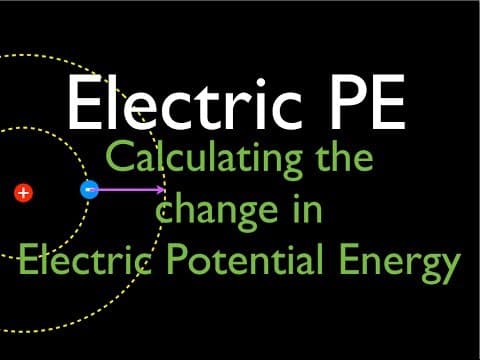
Point Charges (4 of 10) Change in Electric Potential Energy thumbnail
Point Charges (4 of 10) Change in Electric Potential Energy
Step by Step Science
Coulomb's Law (5 of 7) Force from Three Charges in a Straight Line thumbnail
Coulomb's Law (5 of 7) Force from Three Charges in a Straight Line
Step by Step Science
Set Equal to Each Other, Systems of Linear Equations, No. 2 thumbnail
Set Equal to Each Other, Systems of Linear Equations, No. 2
Step by Step Science
Farsighteness vs. Nearsightedness, An Explanation thumbnail
Farsighteness vs. Nearsightedness, An Explanation
Step by Step Science
Momentum (3 of 16) Impulse, An Explanation thumbnail
Momentum (3 of 16) Impulse, An Explanation
Step by Step Science
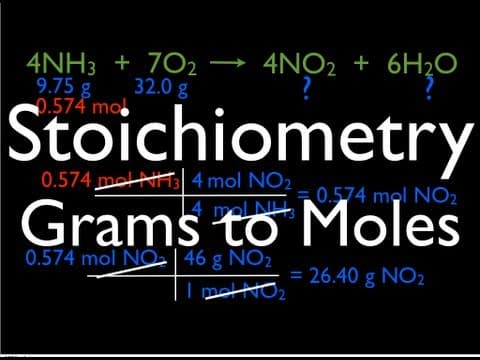
Chemical Reactions (7 of 11) Stoichiometry: Grams to Moles thumbnail
Chemical Reactions (7 of 11) Stoichiometry: Grams to Moles
Step by Step Science

Summarize YouTube Videos and Get Video Transcripts with 1-Click

Download browser extensions on:

Try YouTube Summary with ChatGPT & Claude or YouTube Transcript Generator

Apps & Extensions

  • Chrome Extension
  • Safari Extension
  • Edge Add-ons
  • Firefox Add-ons
  • iOS App
  • Android App

Key Features

  • YouTube Video Summarizer
  • Web & PDF Summarizer
  • Web & PDF Highlighter
  • Chat with PDF
  • Ask AI Clone
  • Audio Transcriber
  • Glasp Reader
  • Kindle Highlight Export
  • Idea Hatch

Integrations

  • Obsidian Plugin
  • Notion Integration
  • Pocket Integration
  • Instapaper Integration
  • Medium Integration
  • Readwise Integration
  • Snipd Integration
  • Hypothesis Integration

More Features

  • APIs
  • MCP Connector
  • Blog & Post
  • Embed Links
  • Image Highlight
  • Personality Test
  • Quote Shots

Company

  • About us
  • Blog
  • Community
  • FAQs
  • Job Board
  • Newsletter
  • Pricing
Terms

•

Privacy

•

Guidelines

© 2026 Glasp Inc. All rights reserved.