How Do Convolutional Neural Networks Classify Images?
TL;DR
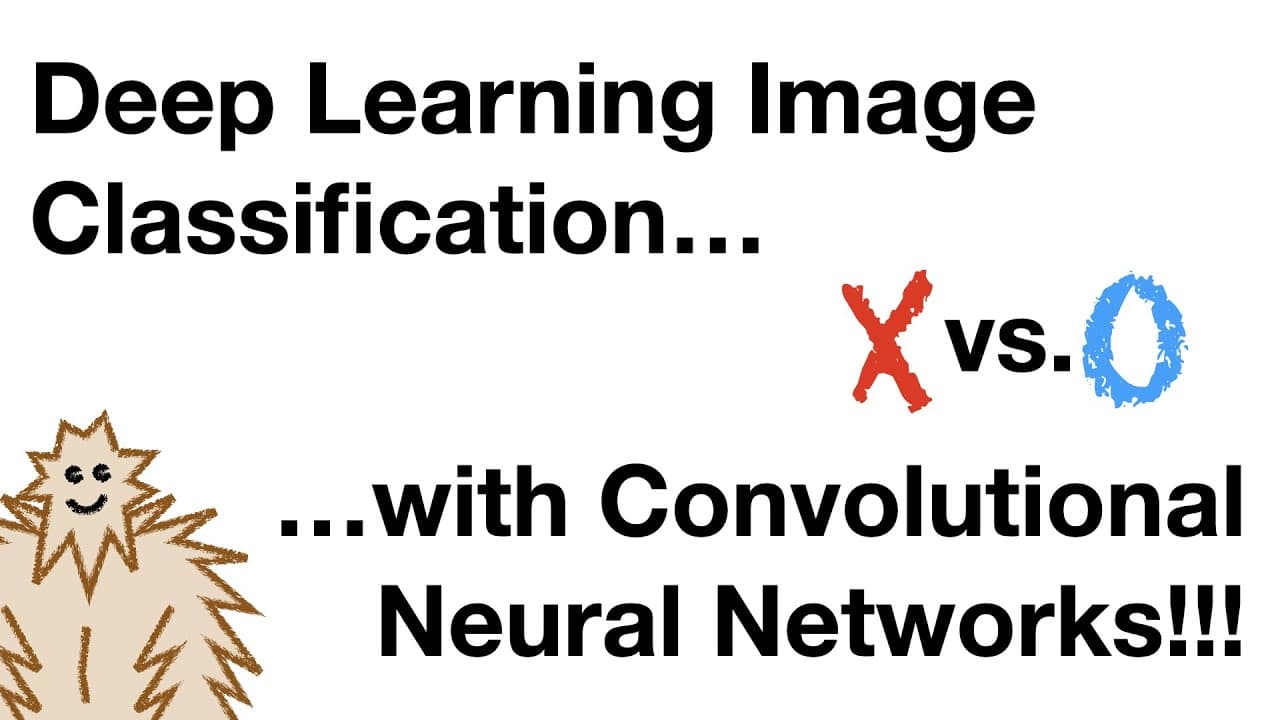
Convolutional Neural Networks (CNNs) classify images by applying filters to input data, reducing complexity while maintaining important features. They tolerate small shifts in pixel positions and exploit pixel correlations, allowing effective pattern recognition across various images.
Transcript
convolutional neural networks are used for image classification and other stuff statquest hello i'm josh starmer and welcome to statquest today we're going to talk about neural networks part 8 image classification with convolutional neural networks note this stack quest assumes that you are already familiar with the main ideas behind neural network... Read More
Key Insights
- 😒 CNNs use filters to extract features and reduce the input nodes in neural networks.
- 🚱 Activation functions like ReLU help in capturing non-linear relationships in image data.
- 💁 Pooling techniques like max pooling assist in downsampling and retaining essential image information.
- ❓ CNNs leverage correlations in complex images and can classify images even with pixel shifts.
- ❓ CNNs are efficient for image classification tasks due to their specialized architecture.
- 🥺 The application of filters, convolutions, and pooling leads to improved image recognition.
- 🆘 CNNs help in reducing computational complexity while maintaining accuracy in image classification.
Install to Summarize YouTube Videos and Get Transcripts
Explore YouTube Video Summarizer or Get YouTube Transcript Extractor
Questions & Answers
Q: How do Convolutional Neural Networks (CNNs) reduce the number of input nodes?
CNNs utilize filters to extract features from images, reducing the input nodes needed in the neural network. This process helps in efficient image classification.
Q: What is the purpose of pooling in a convolutional neural network?
Pooling in CNNs helps downsample the feature maps, retaining essential information while reducing computational complexity. It aids in capturing spatial patterns effectively.
Q: Why are convolutional neural networks better suited for image classification than standard neural networks?
CNNs improve image recognition by considering pixel correlations, tolerating shifts in images, and utilizing filters for feature extraction. These aspects make them more efficient for image classification tasks.
Q: How do convolutional neural networks handle pixel shifts in images?
CNNs can tolerate small shifts in images due to their filter-based approach. By applying filters, activation functions, and pooling, they can still accurately classify images despite pixel displacements.
Summary & Key Takeaways
-
CNNs use filters to reduce the number of input nodes in neural networks.
-
The application of activation functions and pooling helps detect patterns in images.
-
CNNs are adept at image classification by leveraging correlations and tolerating pixel shifts.
Read in Other Languages (beta)
Share This Summary 📚
Summarize YouTube Videos and Get Video Transcripts with 1-Click
Try YouTube Summary with ChatGPT & Claude or YouTube Transcript Generator
Explore More Summaries from StatQuest with Josh Starmer 📚



Summarize YouTube Videos and Get Video Transcripts with 1-Click
Try YouTube Summary with ChatGPT & Claude or YouTube Transcript Generator