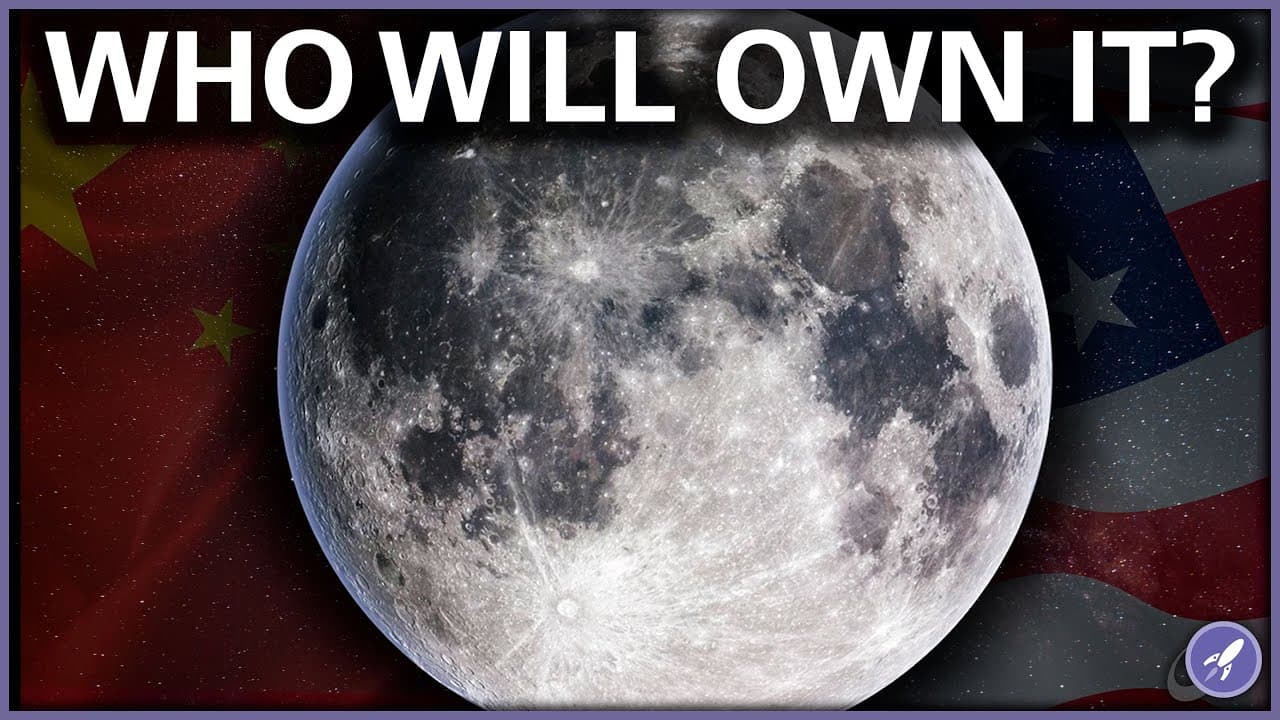
Space Railgun, JWST's Plans, Claiming The Moon | Q&A 216
TL;DR
Answering intriguing space-related questions, covering topics like mass drivers, dark matter, and observing Earth-sized planets.
Transcript
could we build an electromagnetic Mass driver to launch payloads in space could Brown dwarfs be dark matter and does Humanity have the ability to see an earth-sized World orbiting a sun-like star in the habitable zone all this and more in this week's question show it's time for the question show your questions my answers now as always wherever you ... Read More
Key Insights
- 👾 Mass drivers on the moon or asteroids can accelerate payloads for space launches, feasible but costly on Earth.
- 😪 Brown dwarfs and red dwarfs are not the primary sources of dark matter due to insufficient detected quantities.
- 🌍 Future telescopes like the Extremely Large Telescope aim to observe Earth-sized exoplanets in habitable zones.
- 👾 Monopolies in the space industry are undesirable, as competition fosters innovation and cost-effectiveness.
- ✊ Utilizing temperature differentials on Venus for power generation poses engineering challenges but is theoretically possible with altitude variations.
- 👾 Space exploration requires diverse launch services for innovation and cost-effective access to space.
- 🌍 Discovery of potential Earth-like exoplanets is crucial for further understanding habitable environments in the universe.
Install to Summarize YouTube Videos and Get Transcripts
Explore YouTube Video Summarizer or Get YouTube Transcript Extractor
Questions & Answers
Q: Can an electromagnetic tunnel in space launch payloads using mass drivers?
Mass drivers conceptually accelerate payloads in vacuum using electricity, feasible for space launches from the moon or asteroids, but not economically viable on Earth.
Q: Are brown dwarfs and red dwarfs considered as dark matter sources?
Extensive observations have ruled out brown dwarfs as dominant dark matter sources, as they are not numerous enough based on detected data.
Q: Can current telescopes observe Earth-sized planets in habitable zones around sun-like stars?
No, current telescopes lack the resolution to directly observe such exoplanets, but future projects like the Extremely Large Telescope aim to accomplish this.
Q: Should SpaceX be the only launch service for the USA?
Having a monopoly on launch services would be detrimental to innovation and cost-effectiveness, as competition is essential for progress in the space industry.
Q: Could a balloon on Venus harness temperature differentials for power?
Theoretically, exploiting temperature differentials on Venus is challenging due to uniform temperatures, but utilizing altitude variations for power could be considered, although complex engineering obstacles exist.
Summary & Key Takeaways
-
Analysis of building electromagnetic Mass drivers for space launches and their feasibility.
-
Discussion on the potential of brown dwarfs and red dwarfs as dark matter sources and their detection.
-
Insights into the technology required to observe Earth-sized exoplanets orbiting sun-like stars in habitable zones.
Read in Other Languages (beta)
Share This Summary 📚
Summarize YouTube Videos and Get Video Transcripts with 1-Click
Try YouTube Summary with ChatGPT & Claude or YouTube Transcript Generator
Explore More Summaries from Fraser Cain / Universe Today Podcast 📚
Summarize YouTube Videos and Get Video Transcripts with 1-Click
Try YouTube Summary with ChatGPT & Claude or YouTube Transcript Generator