How Does Oxygen Travel Through the Body?
TL;DR
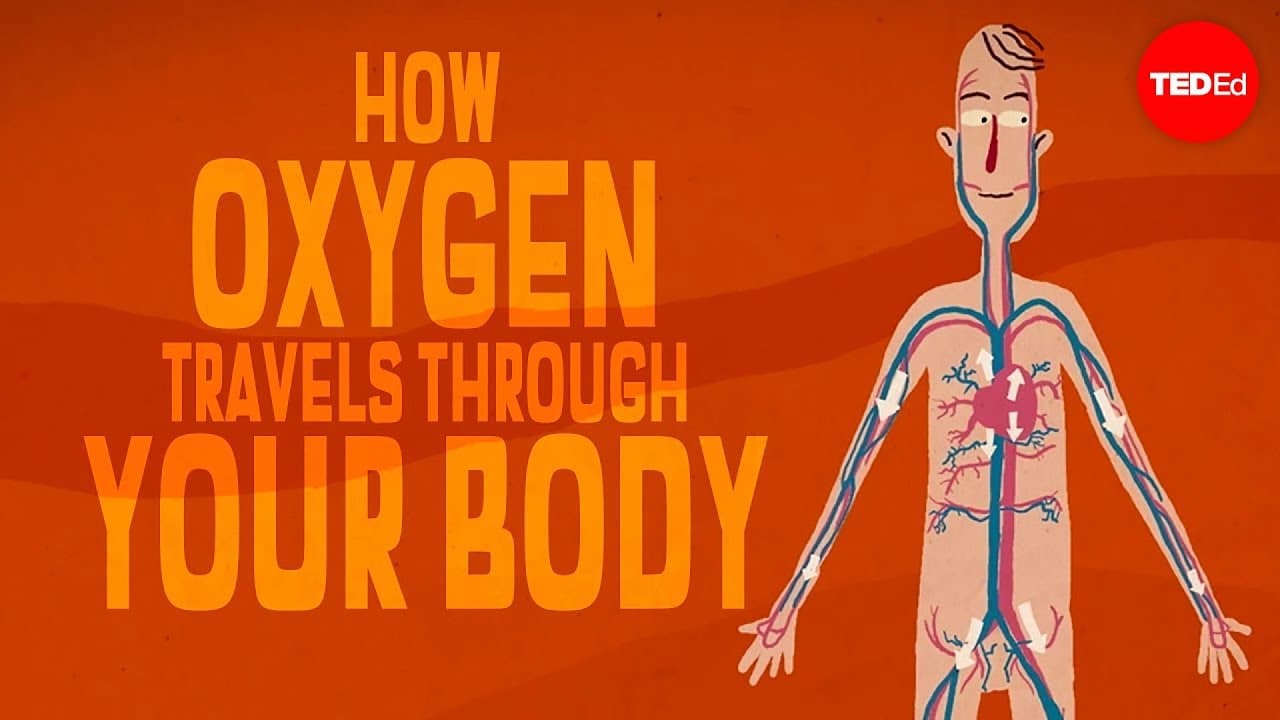
Oxygen travels through the body via red blood cells that bind to it using hemoglobin, starting from the lungs and reaching every cell through an extensive cardiovascular network. This intricate process involves the gut breaking down food for nutrients, the brain initiating breathing, and the heart pumping blood to ensure efficient delivery. Each part of this system plays a crucial role in sustaining life.
Transcript
You breathe in about 17,000 times per day. It's a process you rarely think about, but behind the scenes, a huge coordinated effort is playing out. Your vital organs, the gut, brain, bones, lungs, blood, and heart work together to sustain your life by delivering oxygen to tissues throughout your body. Most of our cells need oxygen because it's one o... Read More
Key Insights
- 🫁 Oxygen is a vital ingredient in aerobic respiration and is transported through our bodies by our red blood cells, which contain hemoglobin that binds to oxygen.
- 🍽️ The process of oxygen's journey begins in the gut, where food is broken down and its raw materials, such as iron, become available to produce hemoglobin.
- 🩸 The body's hematopoietic tissue, located in the bone marrow, is where red blood cells are born, and their production is regulated by the kidneys.
- ⚡ The brain initiates breathing by sending signals to the diaphragm and ribs, causing them to contract and expand the space in the rib cage, allowing the lungs to inflate.
- 💡 Our lungs have a complex architecture with alveoli, balloon-like projections that dramatically increase the contact area for oxygen exchange with red blood cells.
- 🌍 The cardiovascular network, consisting of blood vessels, reaches every cell in the body and transports oxygen-enriched cells from the lungs to tissues.
- 💪 The heart, pumping about 100,000 times per day, acts as a powerful pump to propel red blood cells through the extensive cardiovascular network, ensuring oxygen delivery.
- 🌬️ The coordinated effort of the gut, brain, bones, lungs, blood, and heart is essential for the delivery of oxygen, highlighting the remarkable complexity of our respiratory system.
Install to Summarize YouTube Videos and Get Transcripts
Explore YouTube Video Summarizer or Get YouTube Transcript Extractor
Questions & Answers
Q: How does oxygen reach the cells within our bodies efficiently?
Oxygen enters cells through diffusion, but because it only efficiently diffuses over tiny distances, it needs a transportation network. This is where red blood cells, containing hemoglobin, come in. The red blood cells bind with oxygen molecules and deliver them to cells throughout the body.
Q: What is the role of the brain in the transportation of oxygen?
The brain initiates breathing, which expands the lungs and increases the space inside the rib cage. This allows the lungs to take in air, which is necessary for oxygen to be transported to the cells.
Q: How does the shape and architecture of the lungs facilitate efficient oxygen exchange?
The lungs have a complex interior structure with millions of miniature projections called alveoli. These alveoli dramatically increase the contact area, allowing for efficient oxygen exchange. The alveolar walls, composed of thin, flat cells, are surrounded by capillaries, creating a two-cell thick membrane for oxygen diffusion.
Q: How does the cardiovascular system aid in the transportation of oxygen throughout the body?
The oxygen-enriched red blood cells from the lungs are carried through the massive collection of blood vessels known as the cardiovascular system. This system reaches every cell in the body, ensuring oxygen is delivered where it needs to go.
Q: What role does the heart play in the transportation of oxygen?
The heart pumps approximately 100,000 times a day to propel red blood cells through the extensive cardiovascular network. It acts as a powerful pump, ultimately delivering oxygen to the cells. Without the functioning of the heart, the transportation of oxygen would be disrupted, affecting overall bodily functions.
Summary & Key Takeaways
-
Oxygen enters cells through diffusion but needs a transportation network to efficiently reach all cells in the body.
-
Red blood cells containing hemoglobin bind with oxygen molecules and are produced in the bone marrow.
-
The brain initiates breathing to expand the lungs, and oxygen is exchanged in the alveoli, then carried through the cardiovascular system by the heart.
Read in Other Languages (beta)
Share This Summary 📚
Summarize YouTube Videos and Get Video Transcripts with 1-Click
Try YouTube Summary with ChatGPT & Claude or YouTube Transcript Generator
Explore More Summaries from TED-Ed 📚






Summarize YouTube Videos and Get Video Transcripts with 1-Click
Try YouTube Summary with ChatGPT & Claude or YouTube Transcript Generator