SpaceX Just Reused a Rocket. Why This Changes Everything
TL;DR
SpaceX achieves groundbreaking rocket reusability, lowering launch costs and paving the way for the future of space exploration.
Transcript
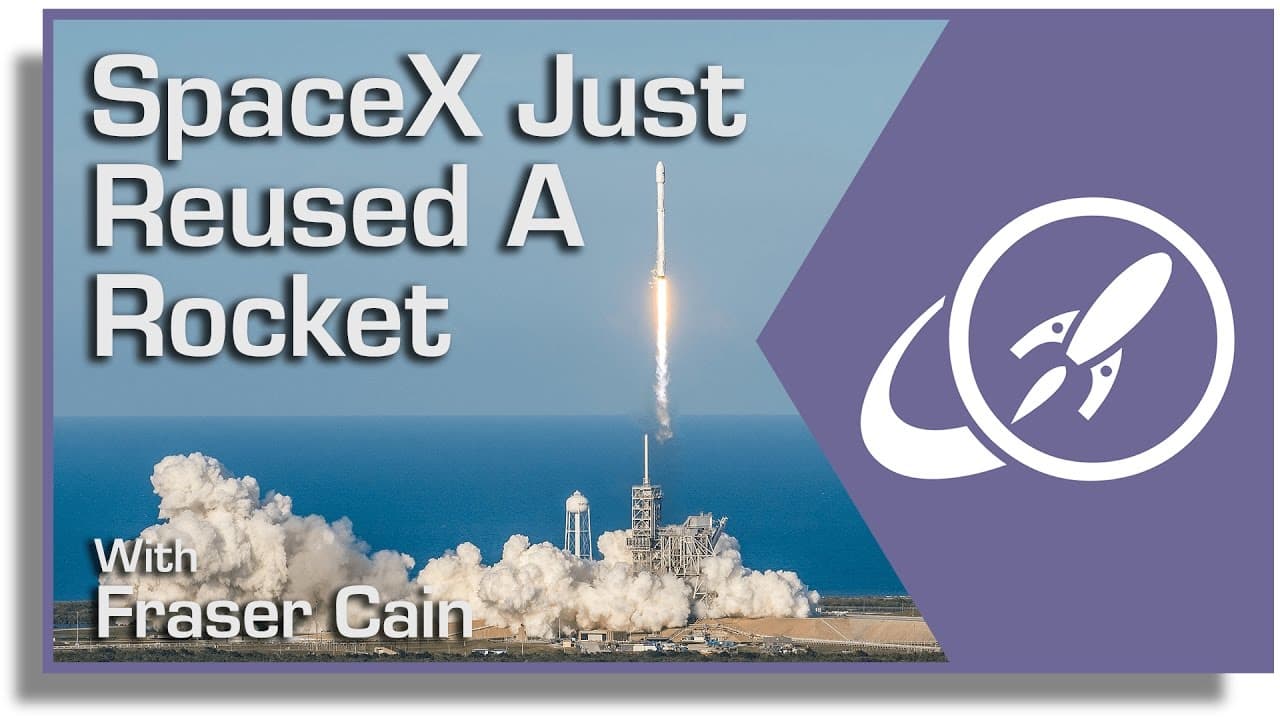
On March 30, 2017, SpaceX performed a pretty routine rocket launch. The payload was a communications satellite called SES-10, owned by a company in Luxembourg. And if all goes well, the satellite will eventually make its way to a high orbit of 35,000 km (22,000 miles) and deliver broadcasting and television services to Latin America. For all intent... Read More
Key Insights
- 🚀 SpaceX successfully launches a reused Falcon 9 rocket, achieving a milestone in rocket reusability.
- 🚀 Reusable rockets offer significant cost savings, potentially revolutionizing the economics of spaceflight.
- 🚀 Blue Origin, United Launch Alliance, and other companies are also investing in reusable rocket technology.
- 🌱 SpaceX's ambitious plans include reusing fairings and second-stage boosters, further advancing the concept of rocket reusability.
- 🚀 Rocket reusability is expected to drive down launch costs, making space exploration more affordable and accessible.
- 👾 The future of space exploration is poised for significant advancements with the adoption of reusable rocket technology.
- 🚀 Rocket companies are focusing on efficiency, reliability, and turnaround time to further optimize the benefits of reusability.
Install to Summarize YouTube Videos and Get Transcripts
Explore YouTube Video Summarizer or Get YouTube Transcript Extractor
Questions & Answers
Q: Why is SpaceX's achievement of reusability significant in the space industry?
SpaceX's achievement of reusability is groundbreaking as it dramatically lowers launch costs, making space exploration more accessible and cost-effective.
Q: How does SpaceX plan to continue advancing rocket reusability in the future?
SpaceX aims to reuse not only first-stage boosters but also fairings and second-stage boosters, with plans to decrease reuse time to under 24 hours.
Q: What other companies are working on reusable rocket technology?
Blue Origin, founded by Jeff Bezos, is a notable competitor to SpaceX, with plans for the New Glenn rocket capable of competing with SpaceX's Falcon Heavy.
Q: How will rocket reusability impact the future of space exploration?
Rocket reusability is expected to revolutionize space exploration by making missions more affordable, enabling new scientific platforms, communications systems, and even human flights.
Summary & Key Takeaways
-
SpaceX successfully launches a reused Falcon 9 rocket, marking a monumental achievement in spaceflight.
-
Reusable rockets offer significant cost savings, potentially reducing subsequent launches to a few hundred thousand dollars.
-
SpaceX's ambitious plans include reusing not only first-stage boosters but also fairings and second-stage boosters.
Read in Other Languages (beta)
Share This Summary 📚
Summarize YouTube Videos and Get Video Transcripts with 1-Click
Try YouTube Summary with ChatGPT & Claude or YouTube Transcript Generator
Explore More Summaries from Fraser Cain 📚




Summarize YouTube Videos and Get Video Transcripts with 1-Click
Try YouTube Summary with ChatGPT & Claude or YouTube Transcript Generator