Products
Features
YouTube Video Summarizer
Summarize YouTube videos
Web & PDF Highlighter
Highlight web pages & PDFs
Chat with PDF
Ask any PDF questions with AI
Ask AI Clone
Chat with your highlights & memories
Audio Transcriber
Transcribe audio files to text
Glasp Reader
Read and highlight articles
Kindle Highlight Export
Export your Kindle highlights
Idea Hatch
Hatch ideas from your highlights
Integrations
Obsidian Plugin
Notion Integration
Pocket Integration
Instapaper Integration
Medium Integration
Readwise Integration
Snipd Integration
Hypothesis Integration
Apps & Extensions
Chrome Extension
Safari Extension
Edge Add-ons
Firefox Add-ons
iOS App
Android App
Discover
Discover
Ideas
Discover new ideas and insights
Articles
Curated articles and insights
Books
Book recommendations by great minds
Posts
Essays and notes from readers
Quotes
Inspiring quotes collection
Videos
Curated videos and summaries
Explore Glasp
Glasp Newsletter
Weekly insights and updates
Glasp Talk
Interview series with great minds
Glasp Blog
Latest news and articles
Glasp Use Cases
Learn how others use Glasp
Build & Support
Glasp API
Access Glasp's API for developers
MCP Connector
Connect Glasp to Claude & ChatGPT
Community
Glasp Reddit Community
Students
Student discount and benefits
FAQs
Frequently Asked Questions
AboutPricing
DashboardLog inSign up

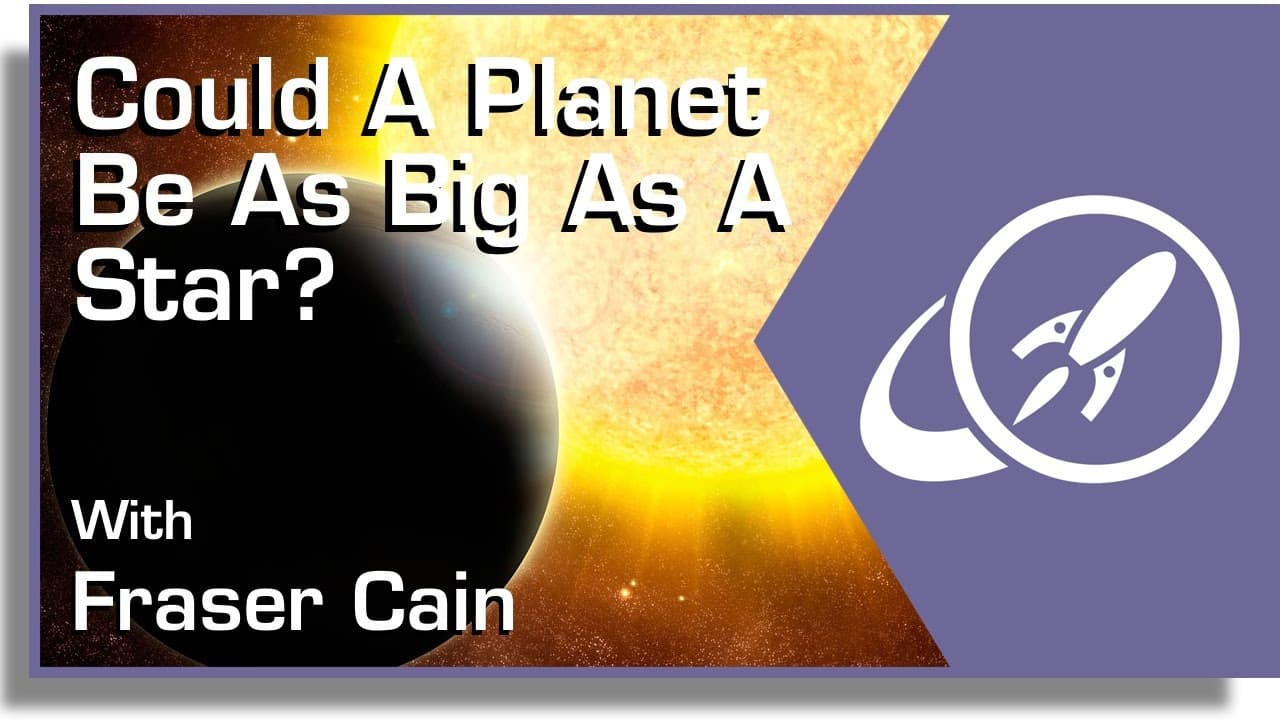
Could A Planet Be As Big As A Star?
49.3K views
•
October 16, 2014
by
Fraser Cain
YouTube video player
Could A Planet Be As Big As A Star?

TL;DR

Planets can be more massive than stars depending on composition.

Transcript

everybody wants the biggest stuff soft drink sizes SUVs baseball caps hot dogs and truck nuts astronomers mostly measure stars in terms of mass and use the Sun as a yardstick this star is three solar masses and that star is ten solar masses and so on but we're pandering to those of you who want the most massive stuff as opposed to the most volumetr... Read More

Key Insights

  • 🤩 Gas giants like Jupiter are less massive than the smallest stars.
  • 👨‍🎤 Rock planets would need to be significantly larger to ignite in fusion like a star.
  • ✴️ Iron in stars can lead to supernovae and potential black hole formation.
  • 🛩️ The largest rocky planet discovered is still much smaller than the smallest star.
  • 🤩 Heavy elements from supernovae could collect and potentially form unique metal stars.
  • 🪐 Gas planets and rocky planets have different requirements for igniting in fusion.
  • 🤩 Metal stars made from planet materials are theoretically possible.

Install to Summarize YouTube Videos and Get Transcripts

Explore YouTube Video Summarizer or Get YouTube Transcript Extractor

Questions & Answers

Q: Can planets be more massive than stars?

Yes, depending on their composition, gas giants like Jupiter are less massive than even small stars, while rocky planets like Earth would need to be much larger to ignite in fusion.

Q: What happens when stars develop iron in their core?

Stars shut down suddenly and can result in a supernova, but no star can burn iron and turn it into a star. Iron could potentially lead to the formation of a black hole.

Q: Could there be stars made up of planet materials?

Theoretically, heavy elements from supernovae could collect and form stars made up of planet materials like metals, creating unique metal stars in the universe.

Summary & Key Takeaways

  • Planets can be more massive than stars depending on their composition, with gas giants like Jupiter being much less massive than even the smallest red dwarf star.

  • Rock planets like Earth would need to be significantly larger to ignite in fusion like a star due to their composition.

  • Heavy elements from supernovae could collect and form stars made up of planet materials, potentially creating giant metal stars.


Read in Other Languages (beta)

English

Share This Summary 📚

Summarize YouTube Videos and Get Video Transcripts with 1-Click

Download browser extensions on:

Try YouTube Summary with ChatGPT & Claude or YouTube Transcript Generator

Explore More Summaries from Fraser Cain 📚
Why Isn't the Asteroid Belt a Planet? thumbnail
Why Isn't the Asteroid Belt a Planet?
Fraser Cain
Why Did Mars Lose Its Atmosphere? And How Can We Get It Back? thumbnail
Why Did Mars Lose Its Atmosphere? And How Can We Get It Back?
Fraser Cain
What's On The Far Side Of The Moon? thumbnail
What's On The Far Side Of The Moon?
Fraser Cain
Are We Living in a Simulation? Understanding the Simulation Hypothesis thumbnail
Are We Living in a Simulation? Understanding the Simulation Hypothesis
Fraser Cain
Exploring Space Lava Tubes: How To Prepare For It thumbnail
Exploring Space Lava Tubes: How To Prepare For It
Fraser Cain / Universe Today Podcast

Summarize YouTube Videos and Get Video Transcripts with 1-Click

Download browser extensions on:

Try YouTube Summary with ChatGPT & Claude or YouTube Transcript Generator

Apps & Extensions

  • Chrome Extension
  • Safari Extension
  • Edge Add-ons
  • Firefox Add-ons
  • iOS App
  • Android App

Key Features

  • YouTube Video Summarizer
  • Web & PDF Summarizer
  • Web & PDF Highlighter
  • Chat with PDF
  • Ask AI Clone
  • Audio Transcriber
  • Glasp Reader
  • Kindle Highlight Export
  • Idea Hatch

Integrations

  • Obsidian Plugin
  • Notion Integration
  • Pocket Integration
  • Instapaper Integration
  • Medium Integration
  • Readwise Integration
  • Snipd Integration
  • Hypothesis Integration

More Features

  • APIs
  • MCP Connector
  • Blog & Post
  • Embed Links
  • Image Highlight
  • Personality Test
  • Quote Shots

Company

  • About us
  • Blog
  • Community
  • FAQs
  • Job Board
  • Newsletter
  • Pricing
Terms

•

Privacy

•

Guidelines

© 2026 Glasp Inc. All rights reserved.