What Is a Brown Dwarf and Why Is It Mysterious?
TL;DR
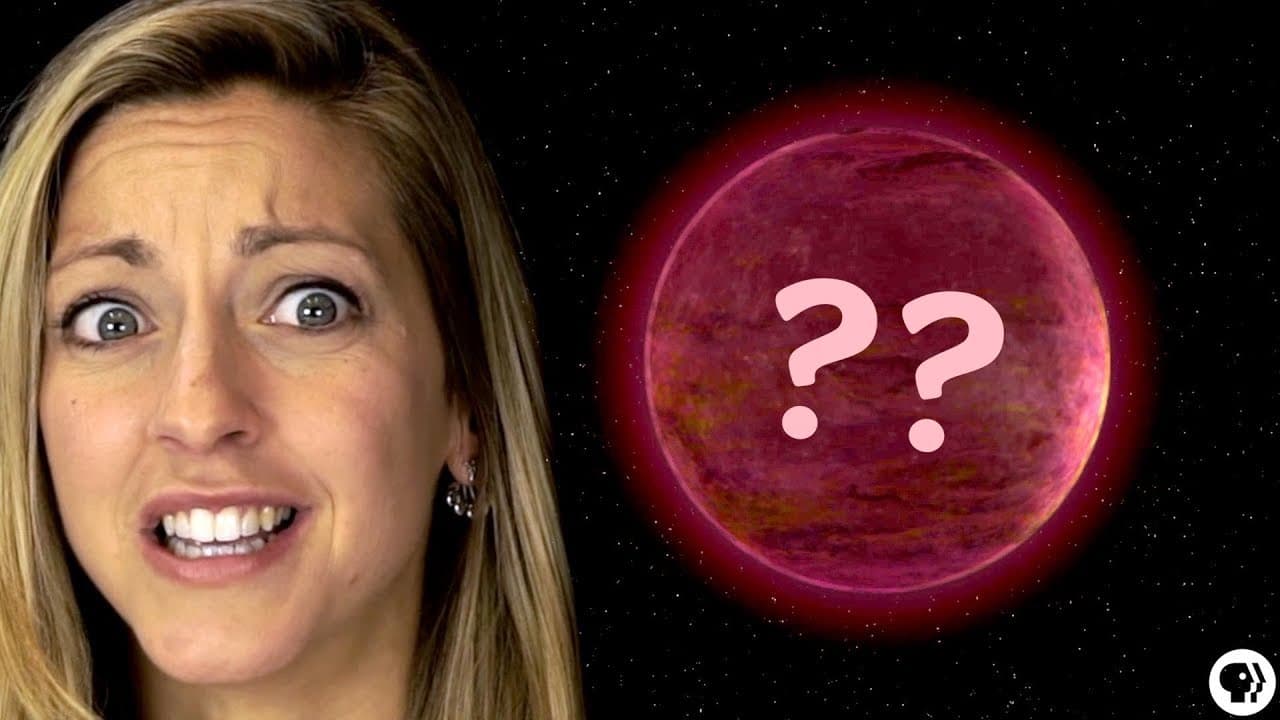
A brown dwarf is a celestial object between stars and giant planets, about the size of Jupiter but significantly denser, comprising about 8% of the sun's mass. Unlike stars, brown dwarfs cannot fuse hydrogen in their cores, making them faint and difficult to detect; they primarily emit infrared light. Their formation and exact characteristics remain largely a mystery in astrophysics.
Transcript
Hey, it's Diana, and you're watching "Physics Girl." I am very excited to be back making videos, because I just got back from a trip to New York City. I got to go to the Creator Summit, the YouTube Creator Summit, and hang out with a bunch of your favorite creators and my favorite creators and schmooze and pretend like I belonged there. It was awe... Read More
Key Insights
- 🫢 "Cool Stars 9" conference in 1995 unveiled the discovery of the first brown dwarf and the first gas giant exoplanet outside our solar system.
- 🤩 Brown dwarfs are celestial objects intermediate between stars and giant planets, about the size of Jupiter but denser.
- 🙂 They cannot fuse hydrogen in their core and, therefore, do not shine like stars but emit mostly infrared light.
- 🤎 The development of infrared cameras and telescopes was crucial in detecting brown dwarfs.
- 🤩 Brown dwarf formation remains a mystery, and scientists are still working on defining their characteristics and distinguishing them from planets or stars.
- 🤎 Brown dwarf binaries, where a brown dwarf orbits another object, are also of interest in research.
Install to Summarize YouTube Videos and Get Transcripts
Explore YouTube Video Summarizer or Get YouTube Transcript Extractor
Questions & Answers
Q: What are brown dwarfs?
Brown dwarfs are celestial bodies that are intermediate in size and characteristics between stars like the sun and giant planets like Jupiter. They are about the size of Jupiter but much denser, with about 8% of the mass of the sun.
Q: How do brown dwarfs differ from stars and planets?
Brown dwarfs cannot fuse hydrogen in their cores, which is a crucial characteristic of stars. They don't shine like stars and are faint, small, and cold. They are also harder to characterize due to their intermediate properties.
Q: How were brown dwarfs discovered?
Brown dwarfs emit mostly infrared light, so the development of strong infrared cameras and telescopes was necessary to find them. It wasn't until 1995 that a brown dwarf showing methane in its atmosphere was confirmed, leading to the discovery of more candidates.
Q: What is still unknown about brown dwarfs?
The formation of brown dwarfs remains a mystery. Scientists have different scenarios for their formation, but no definitive answer. Observational signatures are being sought to understand brown dwarf formation and distinguish it from planet formation pathways.
Summary & Key Takeaways
-
In 1995, astronomers made a groundbreaking announcement at the "Cool Stars 9" conference in Florence, Italy, where they discovered the first gas giant exoplanet outside of our solar system.
-
At the same conference, they also found the first incontrovertible brown dwarf, a mysterious and confusing celestial object that is intermediate in size and characteristics between stars and giant planets.
-
Brown dwarfs are about the size of Jupiter but only have about 8% of the mass of the sun, making them way denser than planets. They cannot fuse hydrogen in their core and, therefore, do not shine like stars.
Read in Other Languages (beta)
Share This Summary 📚
Summarize YouTube Videos and Get Video Transcripts with 1-Click
Try YouTube Summary with ChatGPT & Claude or YouTube Transcript Generator
Explore More Summaries from Physics Girl 📚




Summarize YouTube Videos and Get Video Transcripts with 1-Click
Try YouTube Summary with ChatGPT & Claude or YouTube Transcript Generator