Products
Features
YouTube Video Summarizer
Summarize YouTube videos
Web & PDF Highlighter
Highlight web pages & PDFs
Chat with PDF
Ask any PDF questions with AI
Ask AI Clone
Chat with your highlights & memories
Audio Transcriber
Transcribe audio files to text
Glasp Reader
Read and highlight articles
Kindle Highlight Export
Export your Kindle highlights
Idea Hatch
Hatch ideas from your highlights
Integrations
Obsidian Plugin
Notion Integration
Pocket Integration
Instapaper Integration
Medium Integration
Readwise Integration
Snipd Integration
Hypothesis Integration
Apps & Extensions
Chrome Extension
Safari Extension
Edge Add-ons
Firefox Add-ons
iOS App
Android App
Discover
Discover
Ideas
Discover new ideas and insights
Articles
Curated articles and insights
Books
Book recommendations by great minds
Posts
Essays and notes from readers
Quotes
Inspiring quotes collection
Videos
Curated videos and summaries
Explore Glasp
Glasp Newsletter
Weekly insights and updates
Glasp Talk
Interview series with great minds
Glasp Blog
Latest news and articles
Glasp Use Cases
Learn how others use Glasp
Build & Support
Glasp API
Access Glasp's API for developers
MCP Connector
Connect Glasp to Claude & ChatGPT
Community
Glasp Reddit Community
Students
Student discount and benefits
FAQs
Frequently Asked Questions
AboutPricing
DashboardLog inSign up

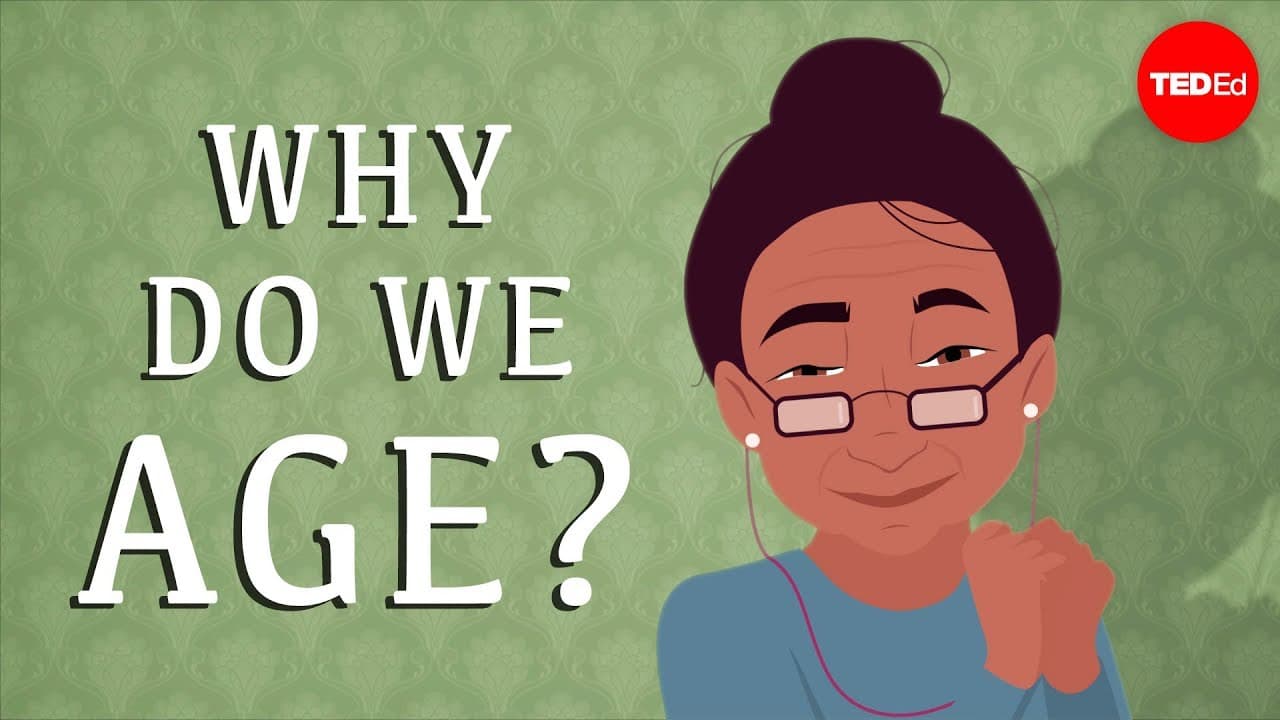
Why do our bodies age? - Monica Menesini
2.9M views
•
June 9, 2016
by
TED-Ed
YouTube video player
Why do our bodies age? - Monica Menesini

TL;DR

Aging is a complex process involving genetic damage, cellular regeneration decline, and epigenetic alterations, limiting human lifespan.

Transcript

In 1997, a French woman named Jeanne Calment passed away after 122 years and 164 days on this Earth, making her the oldest known person in history. Her age was so astounding that a millionaire pledged $1 million to anyone who could break her record. But in reality, living to this age or beyond is a feat that very few, maybe even no humans, are l... Read More

Key Insights

  • 🤩 Genetic damage, epigenetic alterations, and telomere shortening are key factors in the aging process.
  • 🤕 Decreased mitochondrial function and cellular regeneration with age contribute to organ deterioration.
  • #️⃣ Stem cells decline in number and regenerative potential, impacting tissue renewal and organ functions.
  • 🤩 Protein quality control decline and intercellular communication slowdown are key aspects of aging.
  • ❓ Future technologies like gene therapy could potentially artificially extend human lifespan.
  • 😷 The balance between diet, exercise, and medical intervention may influence the aging process.
  • 🤨 Longevity beyond current limits raises questions about the desirability and ethics of extending human lifespan.

Install to Summarize YouTube Videos and Get Transcripts

Explore YouTube Video Summarizer or Get YouTube Transcript Extractor

Questions & Answers

Q: What are some key genetic changes that occur with aging?

Genetic changes include DNA lesions, epigenetic alterations leading to diseases like Alzheimer's, and telomere shortening, impacting cellular regeneration.

Q: How do mitochondria play a role in the aging process?

Mitochondria are prone to genetic damage, affecting ATP production, cell activities, and cell death, leading to cell and organ deterioration with age.

Q: How do stem cells contribute to the aging process?

Stem cells decline in number and regenerative ability with age, impacting tissue renewal and organ functions, contributing to the overall aging process.

Q: Why does intercellular communication slow down with aging?

Intercellular communication declines with age, affecting the body's functional ability, as cells lose the ability to properly control protein quality and accumulate damaged nutrients.

Summary & Key Takeaways

  • Jeanne Calment set the record for the oldest human at 122 years, showcasing the limits of human aging.

  • Aging involves genetic damage, cellular decline, and changes in gene expression leading to degenerative diseases.

  • Stem cells, protein quality control, and intercellular communication also play key roles in the aging process.


Read in Other Languages (beta)

English

Share This Summary 📚

Summarize YouTube Videos and Get Video Transcripts with 1-Click

Download browser extensions on:

Try YouTube Summary with ChatGPT & Claude or YouTube Transcript Generator

Explore More Summaries from TED-Ed 📚
Can you solve the penniless pilgrim riddle? - Daniel Finkel thumbnail
Can you solve the penniless pilgrim riddle? - Daniel Finkel
TED-Ed
How do vitamins work? - Ginnie Trinh Nguyen thumbnail
How do vitamins work? - Ginnie Trinh Nguyen
TED-Ed
The science of attraction - Dawn Maslar thumbnail
The science of attraction - Dawn Maslar
TED-Ed
How do carbohydrates impact your health? - Richard J. Wood thumbnail
How do carbohydrates impact your health? - Richard J. Wood
TED-Ed
Why are sloths so slow? - Kenny Coogan thumbnail
Why are sloths so slow? - Kenny Coogan
TED-Ed
How stress affects your brain - Madhumita Murgia thumbnail
How stress affects your brain - Madhumita Murgia
TED-Ed

Summarize YouTube Videos and Get Video Transcripts with 1-Click

Download browser extensions on:

Try YouTube Summary with ChatGPT & Claude or YouTube Transcript Generator

Apps & Extensions

  • Chrome Extension
  • Safari Extension
  • Edge Add-ons
  • Firefox Add-ons
  • iOS App
  • Android App

Key Features

  • YouTube Video Summarizer
  • Web & PDF Summarizer
  • Web & PDF Highlighter
  • Chat with PDF
  • Ask AI Clone
  • Audio Transcriber
  • Glasp Reader
  • Kindle Highlight Export
  • Idea Hatch

Integrations

  • Obsidian Plugin
  • Notion Integration
  • Pocket Integration
  • Instapaper Integration
  • Medium Integration
  • Readwise Integration
  • Snipd Integration
  • Hypothesis Integration

More Features

  • APIs
  • MCP Connector
  • Blog & Post
  • Embed Links
  • Image Highlight
  • Personality Test
  • Quote Shots

Company

  • About us
  • Blog
  • Community
  • FAQs
  • Job Board
  • Newsletter
  • Pricing
Terms

•

Privacy

•

Guidelines

© 2026 Glasp Inc. All rights reserved.