Connecting f, f', and f'' graphically (another example) | AP Calculus AB | Khan Academy
TL;DR
Analyzing the graphs of three functions and their derivatives to determine which graph represents which derivative.
Transcript
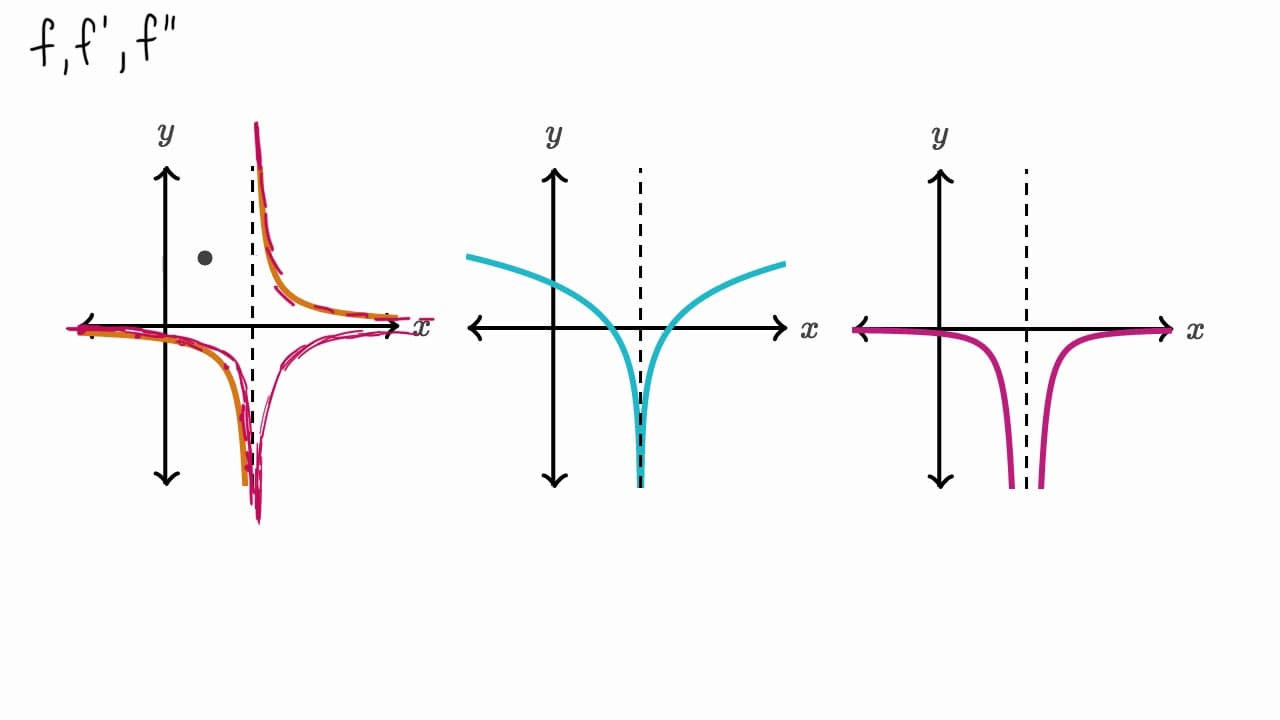
- [Narrator] We have the graph of three functions here. And we're told that one of them is the function F, one is its' first derivative, and then one of them is the second derivative. We just don't know which one is which. And so, like always, pause this video and see if you can figure it out. Alright, now the way I'm going to tackle it is I'm gonn... Read More
Key Insights
- 📈 Analyzing the shape and slope of graphs can help determine which graph represents the original function and its derivatives.
- ↔️ The first derivative of a function exhibits different characteristics depending on whether it is to the left or right of a vertical asymptote.
- 🫥 Comparing the behavior of tangent lines can provide clues about the relationship between different graphs.
Install to Summarize YouTube Videos and Get Transcripts
Explore YouTube Video Summarizer or Get YouTube Transcript Extractor
Questions & Answers
Q: How does the speaker determine which graph represents the original function?
The speaker looks at the shape and characteristics of each graph and compares it to what the derivative of the original function would look like. They analyze the slopes and behavior of the tangent lines to make their determination.
Q: What distinguishes the second graph as the first derivative?
The second graph starts with a slightly negative slope and becomes increasingly negative, approaching negative infinity. On the other side of the vertical asymptote, the slope becomes less negative and approaches zero. These characteristics align with what the first derivative of the original function would look like.
Q: Why does the speaker reject the possibility of the first graph being the derivative of the right graph?
The first graph has a slightly negative slope that becomes more and more negative, while the right graph has a positive slope. This discrepancy indicates that the first graph cannot be the derivative of the right graph.
Q: How does the speaker determine the third graph as the second derivative?
The third graph has characteristics that align with what the second derivative of the original function would look like. It starts with a slightly negative slope that becomes more and more negative and approaches negative infinity. On the other side of the vertical asymptote, the slope becomes less positive and approaches zero.
Summary & Key Takeaways
-
The speaker analyzes each graph to determine what the derivative would look like. Based on the shapes and characteristics of the graphs, they make conclusions about which graph represents the original function and its derivatives.
-
The speaker identifies the first graph as the original function, the second graph as its first derivative, and the third graph as the second derivative.
-
The shapes and slopes of the graphs confirm the speaker's conclusions about which function each graph represents.
Read in Other Languages (beta)
Share This Summary 📚
Summarize YouTube Videos and Get Video Transcripts with 1-Click
Try YouTube Summary with ChatGPT & Claude or YouTube Transcript Generator
Explore More Summaries from Khan Academy 📚




Summarize YouTube Videos and Get Video Transcripts with 1-Click
Try YouTube Summary with ChatGPT & Claude or YouTube Transcript Generator