Why Does The Earth Spin?
TL;DR
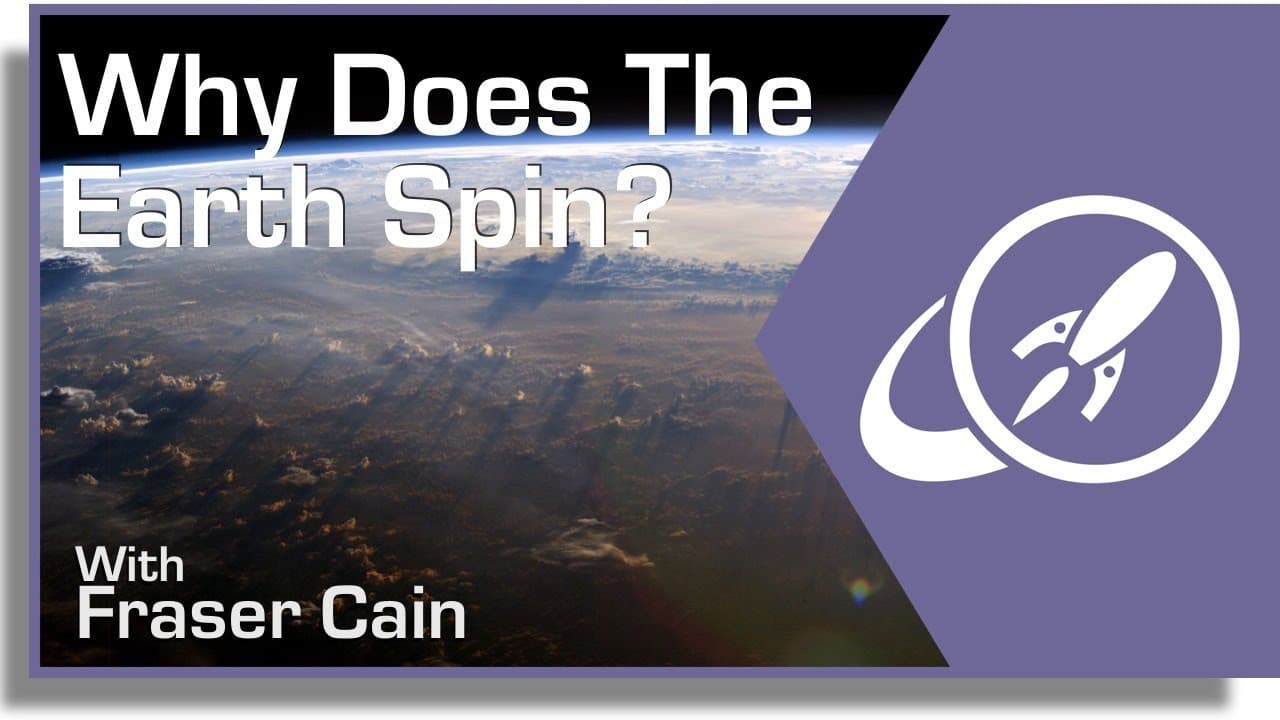
Earth and the Solar System spin due to angular momentum conservation from the formation of a cloud of hydrogen.
Transcript
I'm Fraser Cain, the publisher of Universe Today. In a classic episode of this video series, I did the calculations for how fast the Earth is spinning. We know the Earth is rotating, but why? Why is it spinning? Why is everything in the Solar System spinning? And why is it mostly all spinning in the same direction? It can't be a coincidence. Look d... Read More
Key Insights
- 💁 The Earth and other celestial bodies spin due to the conservation of angular momentum from their formation.
- 😶🌫️ The Solar System's spinning motion arose from the collapse of a cloud of hydrogen, leading to angular momentum conservation.
- 🖐️ Inertia plays a crucial role in maintaining the spin of celestial bodies over billions of years.
- 💁 The common spin direction of Earth, the Sun, and planets is a result of their shared formation in the early Solar System.
- 💠 The shape of galaxies and other cosmic structures reflects the spinning nature of celestial bodies.
- 🤩 The spinning motion of celestial bodies is a key aspect of their formation and evolution.
- 🧑🏭 Earth's spin has been maintained for billions of years and will continue until acted upon by external forces.
Install to Summarize YouTube Videos and Get Transcripts
Explore YouTube Video Summarizer or Get YouTube Transcript Extractor
Questions & Answers
Q: Why does the Earth spin?
The Earth spins due to the conservation of angular momentum from the collapsing cloud of hydrogen in which the Solar System formed. This spin has been maintained by inertia for billions of years.
Q: What caused the Solar System to start spinning?
The Solar System began spinning as the cloud of hydrogen collapsed due to mutual gravity. The need to conserve angular momentum led to the spinning motion that persists today.
Q: How did the planets inherit their rotation?
The planets inherited their rotation from the overall movement of the spinning Solar System. This rotation has been maintained by inertia over billions of years.
Q: Why do celestial bodies in the Universe typically spin in the same direction?
Celestial bodies tend to spin in the same direction because they formed from the same Solar Nebula billions of years ago, inheriting the initial spin of the system.
Summary & Key Takeaways
-
Earth spins due to the conservation of angular momentum from the collapsing cloud of hydrogen in which the Solar System formed.
-
The spin direction of Earth, the Sun, and most planets is a result of their common formation in the Solar Nebula.
-
The spinning motion of celestial bodies is a fundamental aspect of their formation and inertia.
Read in Other Languages (beta)
Share This Summary 📚
Summarize YouTube Videos and Get Video Transcripts with 1-Click
Try YouTube Summary with ChatGPT & Claude or YouTube Transcript Generator
Explore More Summaries from Fraser Cain 📚

Summarize YouTube Videos and Get Video Transcripts with 1-Click
Try YouTube Summary with ChatGPT & Claude or YouTube Transcript Generator