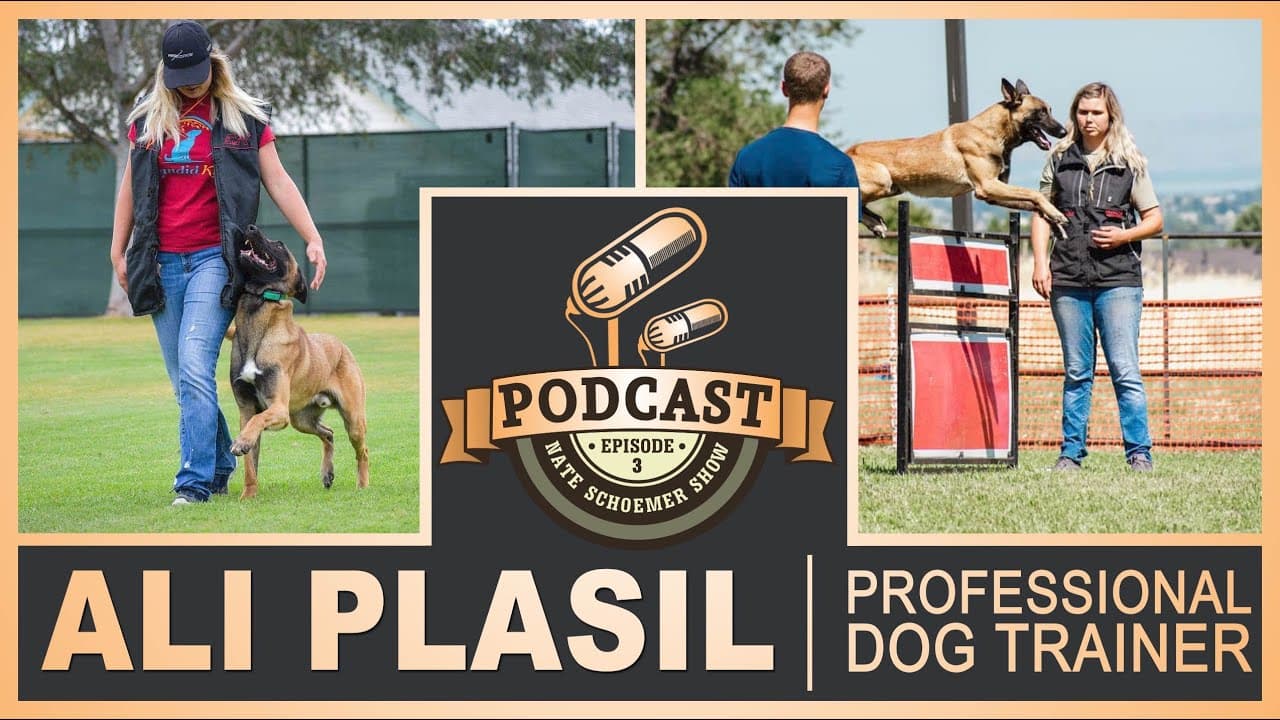
Nate Schoemer Show | Episode 3 - Ali Plasil | Professional Dog Trainer
TL;DR
Ali Plasil shares dog training tips and experiences.
Transcript
what's happening everybody thank you for joining me for my third episode of the Nate Schumer show this is going to be another dog training or dog trainer type episode for those of you that are dog lovers out there this is gonna be one that you will enjoy I'm sitting down with my good friend Ali who is a fabulous dog trainer I've worked with her bef... Read More
Key Insights
- Ali Plasil is a professional dog trainer who studied at the Michael Ellis School, gaining expertise in various dog training disciplines.
- Ali emphasizes the importance of using motivators like food to teach dogs obedience and create a bond with them.
- Management and consistent rules are crucial for effective dog training, preventing confusion and ensuring clear communication with dogs.
- Ali advises using practical rewards and frustration techniques to build excitement and reliability in dog training.
- Leash reactivity is a common issue; Ali suggests controlled environments and positive reinforcement to address this problem.
- Ali believes in using alternative behaviors and negative markers to address unwanted behaviors like digging or leash pulling.
- Ali highlights the significance of mental stimulation over physical exercise to mitigate behavioral issues in dogs.
- Ali encourages family involvement in training, teaching children to respect dogs and understand their boundaries.
Install to Summarize YouTube Videos and Get Transcripts
Explore YouTube Video Summarizer or Get YouTube Transcript Extractor
Questions & Answers
Q: How did Ali Plasil start her dog training career?
Ali Plasil began her dog training career by attending a local obedience club and later expanded her skills at the Michael Ellis School for Dog Trainers. She apprenticed under various trainers, gaining experience in obedience, decoy work, and sport dog training.
Q: What is Ali's approach to solving leash reactivity in dogs?
Ali addresses leash reactivity by using controlled environments and positive reinforcement. She suggests teaching engagement and using leash pressure to guide the dog away from reactive situations. Building a positive association with calm behavior around other dogs is key.
Q: What are Ali's views on using toys versus food in training?
Ali prefers using food over toys initially, as it keeps dogs in a calmer state of mind. Once basic obedience is reliable, toys can be introduced to add excitement and control. Ali believes using toys helps teach dogs to focus even in heightened states.
Q: How does Ali recommend addressing unwanted behaviors like digging?
Ali suggests using a negative marker to indicate when a dog is doing something wrong, followed by offering an alternative behavior. She emphasizes the importance of clear communication and consistency in addressing unwanted behaviors like digging.
Q: What role does mental stimulation play in Ali's training philosophy?
Ali believes mental stimulation is more important than physical exercise in preventing behavioral issues. Training sessions that engage a dog's mind can tire them out more effectively than physical activities, reducing problems like digging or barking.
Q: How does Ali suggest handling multiple family members in dog training?
Ali advises families to be on the same page with training rules and commands. She encourages involving children in training by teaching them tricks, while adults handle formal commands. Consistency across family members prevents confusion for the dog.
Q: What is Ali's take on the alpha theory in dog training?
Ali dismisses the alpha theory, emphasizing that it was debunked. She believes in clear communication and consistent rules rather than asserting dominance. Misguided attempts to be the 'alpha' can ruin relationships and create fear in dogs.
Q: How can practical rewards be used in training according to Ali?
Ali uses practical rewards by allowing dogs to earn what they want, like greeting guests, through calm behavior. For example, if a dog relaxes on its place, it can be released to say hi. This approach teaches dogs that desired behaviors lead to rewards.
Summary & Key Takeaways
-
Ali Plasil, a professional dog trainer, shares her journey and insights from studying under renowned trainers like Michael Ellis. She emphasizes using motivators like food to teach obedience and create a bond with dogs.
-
Ali discusses the importance of consistent rules and management in dog training to prevent confusion. She also highlights using practical rewards and frustration techniques to enhance training effectiveness.
-
Addressing common issues like leash reactivity and unwanted behaviors, Ali suggests controlled environments and alternative behaviors. She stresses mental stimulation over physical exercise for a well-balanced dog.
Read in Other Languages (beta)
Share This Summary 📚
Summarize YouTube Videos and Get Video Transcripts with 1-Click
Try YouTube Summary with ChatGPT & Claude or YouTube Transcript Generator
Explore More Summaries from Nate Schoemer 📚

Summarize YouTube Videos and Get Video Transcripts with 1-Click
Try YouTube Summary with ChatGPT & Claude or YouTube Transcript Generator