Why Did Trump Sue the Wall Street Journal Over Epstein?
TL;DR
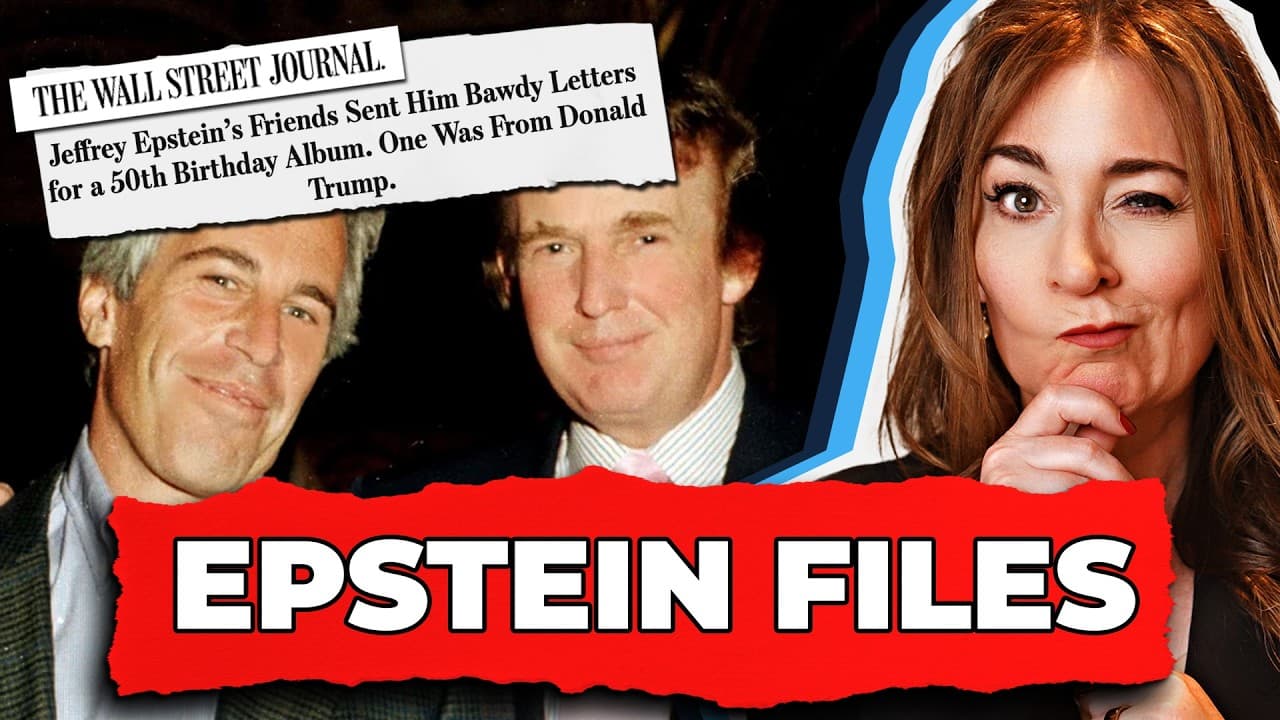
Donald Trump sued the Wall Street Journal for defamation, claiming an article falsely linked him to Jeffrey Epstein through a birthday album. The lawsuit asserts that the WSJ intended to damage Trump's reputation by exaggerating their association, but as a public figure, Trump faces the challenge of proving actual malice in court. The WSJ stands by its reporting and is ready to defend against the lawsuit.
Transcript
The Epstein Files. They exist. Or maybe they don't. It's a cover up. It's a witch hunt. It's a hoax. Or maybe the whole thing is a big old nothing burger. Maybe the Epstein files are really the friends we made along the way. Actually, they're probably the friends we lost because a very long time ago, Trump and deceased pedophile Jeffrey Epste were ... Read More
Key Insights
- Donald Trump has filed a lawsuit against the Wall Street Journal, alleging defamation over a story linking him to Jeffrey Epstein.
- The lawsuit hinges on claims that Trump contributed a drawing to Epstein's birthday album, which Trump denies.
- Trump's legal action faces significant challenges due to his status as a public figure, requiring proof of actual malice.
- The lawsuit is part of a broader pattern of Trump's litigation history, often involving defamation claims.
- Trump's legal team argues that the WSJ's article was intended to damage his reputation by associating him with Epstein.
- There are questions about the venue of the lawsuit, as Trump filed it in a division where he may not have proper jurisdiction.
- The WSJ stands by its reporting and is prepared to defend against the lawsuit, citing confidence in their journalistic rigor.
- The lawsuit may be seen as an attempt to divert attention from ongoing discussions about Trump's past associations with Epstein.
Install to Summarize YouTube Videos and Get Transcripts
Explore YouTube Video Summarizer or Get YouTube Transcript Extractor
Questions & Answers
Q: What is the basis of Trump's lawsuit against the Wall Street Journal?
Trump's lawsuit against the Wall Street Journal is based on claims of defamation. He alleges that an article falsely linked him to Jeffrey Epstein by reporting that Trump contributed a drawing to Epstein's birthday album, which Trump denies. The lawsuit argues that the article was intended to damage Trump's reputation by associating him with Epstein.
Q: Why is Trump's status as a public figure significant in this lawsuit?
As a public figure, Trump faces a higher burden of proof in defamation cases. He must demonstrate 'actual malice,' meaning he has to prove that the Wall Street Journal knew the story was false or acted with reckless disregard for the truth. This standard makes it more challenging for Trump to succeed in his defamation claim.
Q: What challenges does Trump's lawsuit face regarding venue and jurisdiction?
Trump filed the lawsuit in a division where he may not have proper jurisdiction, as he does not reside there. This raises questions about whether the court has the legal right to hear the case. The Wall Street Journal might challenge the venue, arguing that the case should be moved to a more appropriate jurisdiction.
Q: How does the Wall Street Journal respond to Trump's lawsuit?
The Wall Street Journal stands by its reporting, expressing full confidence in the rigor and accuracy of their article. They are prepared to vigorously defend against the lawsuit, indicating that they believe their report was based on credible information and not defamatory as Trump claims.
Q: What is the significance of Trump's history of defamation lawsuits?
Trump has a long history of filing defamation lawsuits, often targeting media outlets that publish unfavorable stories about him. This pattern suggests a strategy of using litigation to challenge negative press and possibly deter future critical reporting. However, many of these lawsuits have not been successful in court.
Q: How does this lawsuit relate to ongoing discussions about Trump's connections to Epstein?
The lawsuit may be seen as an attempt by Trump to divert attention from ongoing discussions about his past associations with Jeffrey Epstein. By filing the lawsuit, Trump is likely trying to challenge the narrative and distance himself from Epstein, whose criminal activities have been widely publicized.
Q: What legal arguments does Trump's team present in the lawsuit?
Trump's legal team argues that the Wall Street Journal's article was defamatory per se, meaning it was inherently damaging without needing to prove harm. They claim the article falsely portrayed Trump as closely associated with Epstein and that the WSJ knew the information was false or acted recklessly in publishing it.
Q: What potential outcomes could result from this lawsuit?
Potential outcomes of the lawsuit include dismissal if the court finds the claims insufficient or a settlement if both parties agree to resolve the matter out of court. If the case proceeds, Trump would need to provide evidence of actual malice, which could be difficult. The lawsuit's progression might also influence public perception of Trump's connections to Epstein.
Summary & Key Takeaways
-
Donald Trump has filed a defamation lawsuit against the Wall Street Journal, claiming that an article falsely linked him to Jeffrey Epstein through a birthday album. The lawsuit alleges that the WSJ's report was intended to harm Trump's reputation by suggesting a closer association with Epstein than he admits.
-
The legal challenge for Trump is significant due to his public figure status, requiring proof of actual malice from the WSJ. Despite Trump's denial of the claims, the WSJ maintains confidence in its reporting and is prepared to defend against the lawsuit.
-
Trump's lawsuit is part of his broader history of defamation claims, often targeting media outlets. The case raises questions about the venue choice, as Trump filed in a division where jurisdiction may not be appropriate. The lawsuit may be seen as an effort to shift focus from discussions about his past connections with Epstein.
Read in Other Languages (beta)
Share This Summary 📚
Summarize YouTube Videos and Get Video Transcripts with 1-Click
Try YouTube Summary with ChatGPT & Claude or YouTube Transcript Generator
Explore More Summaries from LegalEagle 📚





Summarize YouTube Videos and Get Video Transcripts with 1-Click
Try YouTube Summary with ChatGPT & Claude or YouTube Transcript Generator