Europa and Enceladus Update 04/13/17
TL;DR
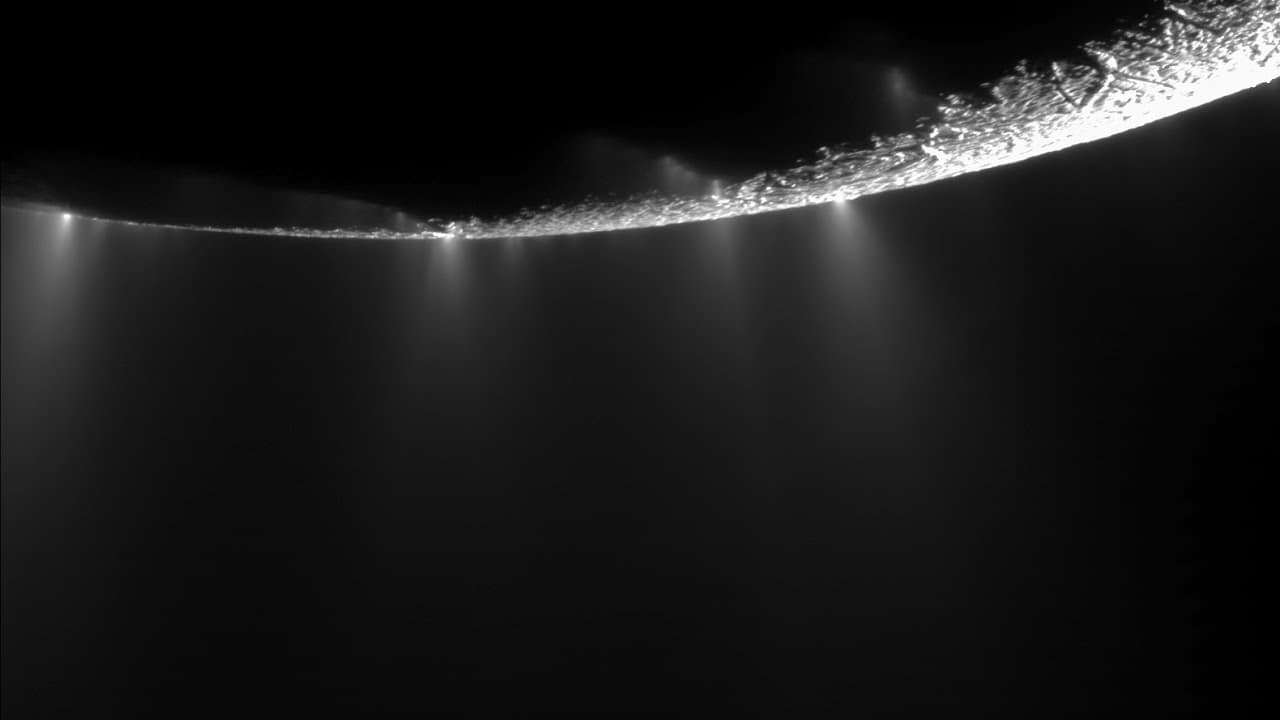
NASA announces the discovery of hydrogen in the plumes of Enceladus and the possibility of intermittent plumes on Europa, suggesting the potential for life in subsurface oceans.
Transcript
Today NASA held a press conference detailing a pair of discoveries made at both Europa and Enceladus. One of them gives us a potential way to more easily study the subsurface ocean that is believed to lie beneath the ice of Europa, and the other gives an extraordinary insight into the habitability and conditions in the ocean at Enceladus. In the pr... Read More
Key Insights
- 🛟 Hydrogen discovered in the plumes of Enceladus has implications for the presence of chemical energy needed to support life.
- 🌊 Europa's potential intermittent plumes offer an opportunity for future exploration and study of its subsurface ocean.
- 🌊 The absence of coloring in Enceladus' oceans compared to Europa suggests different chemistry and potential differences in the habitability of their subsurface oceans.
- 🤨 The age of Enceladus and the inner moons of Saturn may raise doubts about the possibility of life due to limited time for its emergence.
- 🙂 The Europa Clipper mission aims to shed more light on the composition and habitability of Europa's plumes.
- 👨🔬 The discoveries highlight the ongoing search for life in our solar system and the importance of studying subsurface oceans.
- 🛟 Europa's active surface and potential subsurface interactions may provide unique conditions for the development of life.
Install to Summarize YouTube Videos and Get Transcripts
Explore YouTube Video Summarizer or Get YouTube Transcript Extractor
Questions & Answers
Q: What was discovered in the plumes of Enceladus?
NASA found hydrogen in the plumes of Enceladus using a mass spectrometer, indicating potential habitability for microbial life.
Q: What elements are necessary for life at Enceladus?
Enceladus has all the other elements needed for life, including carbon dioxide, methane, and ammonia, with the potential for sulfur and phosphorus to be detected in the future.
Q: How is the hydrogen in Enceladus' plumes produced?
It is believed that the water at Enceladus reacts with hot rocks on the ocean floor, similar to geothermal vents on Earth, resulting in the production of hydrogen.
Q: What recent discoveries suggest the potential for life on Europa?
The Hubble Space Telescope detected intermittent plumes emanating from cracks on Europa's surface, and thermal maps from the Galileo spacecraft revealed a significantly warmer area near the same spot, indicating the existence of plumes.
Summary & Key Takeaways
-
NASA used a mass spectrometer on the Cassini spacecraft to measure the chemical makeup of Enceladus' plumes and found the presence of hydrogen, which could support microbial life.
-
Enceladus contains all the necessary elements for life, except for sulfur and phosphorus, which may be detected in the future.
-
Europa shows indications of intermittent plumes, and the upcoming Europa Clipper mission aims to study their composition, offering the opportunity to understand the habitability of Europa's subsurface ocean.
Read in Other Languages (beta)
Share This Summary 📚
Summarize YouTube Videos and Get Video Transcripts with 1-Click
Try YouTube Summary with ChatGPT & Claude or YouTube Transcript Generator
Explore More Summaries from John Michael Godier 📚



Summarize YouTube Videos and Get Video Transcripts with 1-Click
Try YouTube Summary with ChatGPT & Claude or YouTube Transcript Generator