Rethinking Cancer Medicine – a lecture by Dr. Janowitz
TL;DR
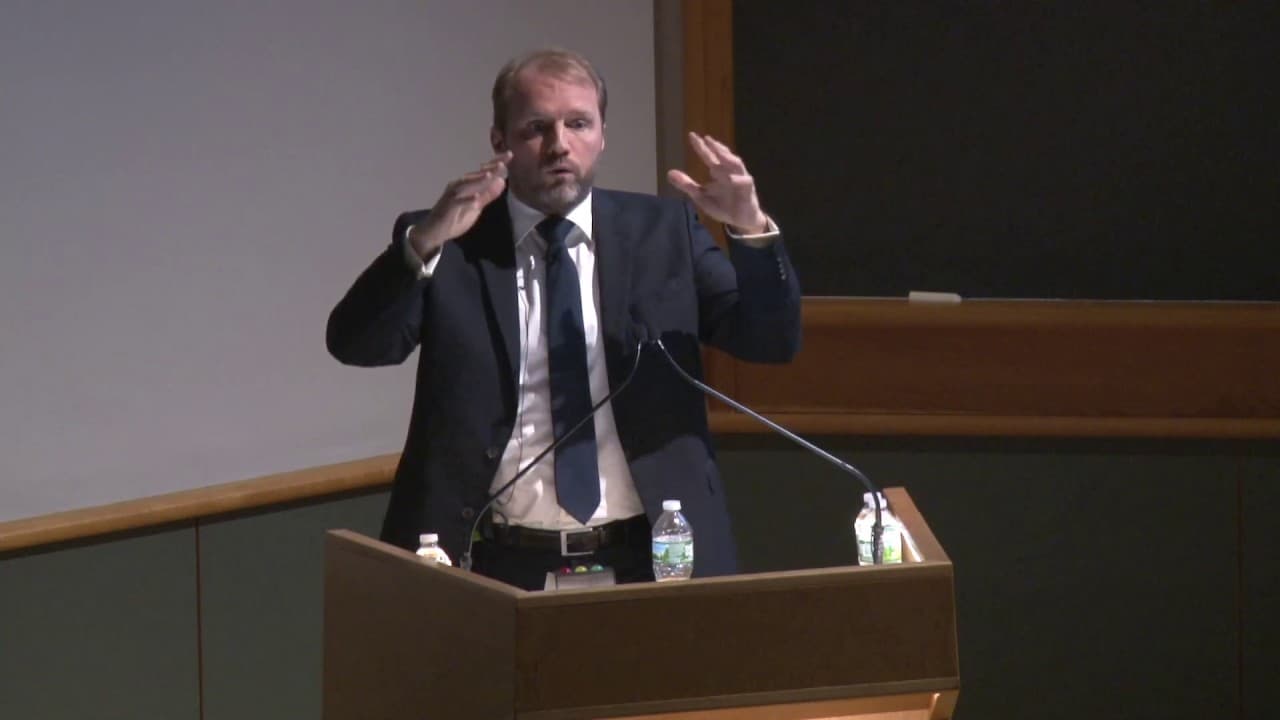
Dr. Janowitz discusses holistic cancer treatment focusing on the body's systemic response.
Transcript
And thank you very much Bruce and thank you very much to all of you for having me and before I tell you about the science and I apologize I recently interviewed for the Watson School and was ridiculed because I sent the students real problems and I've brought some real problems for you tonight as well so I want you to think with me and I'm looking ... Read More
Key Insights
- Cold Spring Harbor Laboratory offers a unique environment for cutting-edge scientific inquiry, fostering collaboration and innovative thinking among scientists.
- Dr. Janowitz emphasizes the importance of considering the entire body's response to tumors, rather than focusing solely on the tumor itself, to improve cancer treatment outcomes.
- Cancer patients often experience systemic symptoms like weight loss and appetite loss, indicating the need to study the body's overall condition in cancer treatment.
- Cachexia, a syndrome characterized by muscle loss and appetite reduction, remains a critical area of study in understanding cancer's systemic effects.
- Dr. Janowitz proposes that addressing abnormal metabolic and hormonal responses in cancer patients could enhance the effectiveness of immunotherapy.
- The interaction between tumors and metabolic systems can lead to increased stress hormones, which may inhibit the immune system's ability to combat cancer.
- Dr. Janowitz is working on clinical trials to test the hypothesis that normalizing metabolic and hormonal imbalances can improve cancer treatment effectiveness.
- Collaboration between research institutions like Cold Spring Harbor and clinical settings is crucial for translating scientific discoveries into practical treatments.
Install to Summarize YouTube Videos and Get Transcripts
Explore YouTube Video Summarizer or Get YouTube Transcript Extractor
Questions & Answers
Q: What makes Cold Spring Harbor Laboratory unique according to Dr. Janowitz?
Dr. Janowitz highlights Cold Spring Harbor Laboratory's unique environment, where scientists can ask cutting-edge questions that might not be funded elsewhere due to their risky nature. The laboratory fosters a collaborative and supportive atmosphere, encouraging scientists to advance each other's thinking. This environment attracts young scientists globally and promotes innovative scientific inquiry.
Q: Why does Dr. Janowitz emphasize a holistic approach to cancer treatment?
Dr. Janowitz emphasizes a holistic approach to cancer treatment because focusing solely on the tumor often limits treatment effectiveness. He argues that understanding the body's systemic response to cancer, including metabolic and hormonal changes, can lead to better treatment outcomes. By addressing these systemic factors, treatments like immunotherapy may become more effective, as the body's overall condition plays a crucial role in cancer progression and treatment response.
Q: What is cachexia, and why is it important in cancer treatment?
Cachexia is a syndrome characterized by significant muscle loss and appetite reduction in cancer patients, despite adequate nutritional intake. It is important in cancer treatment because it indicates systemic metabolic and hormonal imbalances that can affect the patient's overall health and treatment response. Understanding cachexia can help develop strategies to address these imbalances, potentially improving treatment effectiveness and patient quality of life.
Q: How does Dr. Janowitz propose to improve immunotherapy effectiveness?
Dr. Janowitz proposes improving immunotherapy effectiveness by addressing the abnormal metabolic and hormonal responses in cancer patients. He suggests that elevated stress hormones in cancer patients may inhibit the immune system, reducing immunotherapy effectiveness. By normalizing these responses, the immune system can be better enabled to combat cancer, potentially leading to improved treatment outcomes.
Q: What role does collaboration play in Dr. Janowitz's research approach?
Collaboration plays a crucial role in Dr. Janowitz's research approach, as he emphasizes the importance of integrating scientific research with clinical practice. By working with clinical settings like Northwell Health, his team can test hypotheses and translate scientific discoveries into practical treatments. This collaborative approach ensures that research is informed by real-world clinical challenges and that new treatments are developed with patient needs in mind.
Q: What is the significance of the clinical trials mentioned by Dr. Janowitz?
The clinical trials mentioned by Dr. Janowitz are significant because they aim to test the hypothesis that normalizing metabolic and hormonal imbalances can improve cancer treatment effectiveness. These trials involve collaboration with Northwell Health and will evaluate whether addressing these systemic factors can enhance the response to treatments like immunotherapy. Successful trials could lead to new treatment strategies that consider the whole body's response to cancer.
Q: How does Dr. Janowitz view the relationship between nutrition and cancer?
Dr. Janowitz views the relationship between nutrition and cancer as a complex interplay where abnormal nutrient processing can contribute to cancer progression. He proposes that addressing nutritional imbalances and ensuring the body can process nutrients effectively may help reduce hormonal stress and support the immune system. This approach could potentially improve cancer treatment outcomes by creating a more favorable environment for therapies to work.
Q: What challenges does Dr. Janowitz identify in current cancer treatment approaches?
Dr. Janowitz identifies challenges in current cancer treatment approaches, such as the focus on tumor-centric strategies that often overlook the body's systemic response to cancer. He notes that many treatments fail to consider the whole body's condition, leading to limited effectiveness. Additionally, the lack of understanding of systemic symptoms like cachexia presents challenges in developing comprehensive treatment plans. Addressing these challenges requires a shift towards a more holistic approach that considers the entire body's response to cancer.
Summary & Key Takeaways
-
Dr. Janowitz's lecture at Cold Spring Harbor Laboratory highlights the importance of a holistic approach to cancer treatment, considering the entire body's response to tumors. He argues that focusing solely on the tumor limits treatment effectiveness and that understanding systemic effects can lead to better outcomes.
-
The lecture addresses the paradox of cachexia, where cancer patients lose weight and appetite despite nutritional intake. Dr. Janowitz proposes studying the body's metabolic and hormonal responses to cancer to understand and potentially reverse this syndrome.
-
Clinical trials are underway to test the hypothesis that normalizing metabolic and hormonal imbalances in cancer patients can enhance immunotherapy effectiveness. Dr. Janowitz emphasizes the importance of collaboration between research and clinical settings to advance cancer treatment.
Read in Other Languages (beta)
Share This Summary 📚
Summarize YouTube Videos and Get Video Transcripts with 1-Click
Try YouTube Summary with ChatGPT & Claude or YouTube Transcript Generator
Explore More Summaries from Cold Spring Harbor Laboratory 📚
Summarize YouTube Videos and Get Video Transcripts with 1-Click
Try YouTube Summary with ChatGPT & Claude or YouTube Transcript Generator