How to Classify Living Organisms in Taxonomy
TL;DR
Taxonomy is the science of classifying living things, providing a structured way to understand the relationships between all life forms. It uses a hierarchical system, including domains and kingdoms, to organize species based on common ancestry and evolutionary traits. This system, largely developed by Carl Linnaeus, remains a fundamental tool in biology despite its imperfections.
Transcript
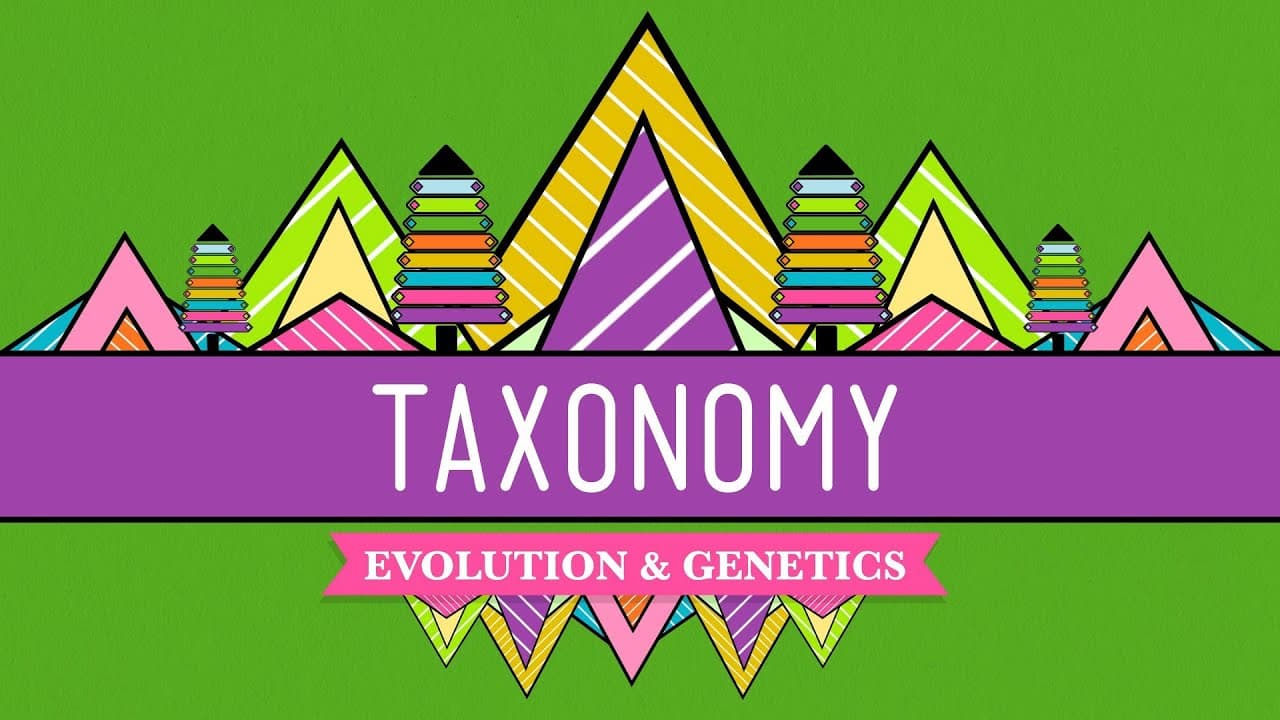
Taxonomy! It's the science of classifying living things. That sounds exciting. Today we'll basically be learning the Dewey Decimel System of evolution! It's like filing! You must be on the edge of your seat. OK, shut up. When it comes down to it, this science doesn't just categorize organisms, when you look a little deeper, you realize it's telling... Read More
Key Insights
- Taxonomy is the science of classifying living organisms to understand their evolutionary relationships.
- All living things share a common ancestor, illustrating life's interconnectedness.
- The Phylogenetic Tree, or Tree of Life, shows evolutionary relationships among species.
- Carl Linnaeus developed the binomial nomenclature system, still used today to name species.
- Linnaeus classified organisms based on morphology, a method that aligns well with genetic evidence.
- The taxonomic hierarchy includes Domain, Kingdom, Phylum, Class, Order, Family, Genus, and Species.
- Domains include Bacteria, Archaea, and Eukarya, with Eukarya encompassing Protista, Fungi, Plantae, and Animalia.
- Taxonomy evolves as new species are discovered and scientific understanding advances.
Install to Summarize YouTube Videos and Get Transcripts
Explore YouTube Video Summarizer or Get YouTube Transcript Extractor
Questions & Answers
Q: How does taxonomy help in understanding life on Earth?
Taxonomy provides a structured system for classifying living organisms, which helps scientists understand the evolutionary relationships between different species. By organizing life forms into hierarchical categories such as domains and kingdoms, taxonomy illustrates how all organisms are interconnected through common ancestry, offering insights into the diversity and complexity of life on Earth.
Q: What is the Phylogenetic Tree?
The Phylogenetic Tree, also known as the Tree of Life, is a diagram that represents the evolutionary relationships among various biological species based on similarities and differences in their physical or genetic characteristics. It shows how species are related through common ancestry and helps scientists trace the evolutionary history of life on Earth.
Q: Who was Carl Linnaeus and what was his contribution to taxonomy?
Carl Linnaeus was an 18th-century Swedish botanist who developed the system of binomial nomenclature, which is still used today to name and classify species. His work laid the foundation for the modern taxonomic system, organizing organisms based on morphological traits and creating a standardized method for naming species, significantly advancing the field of biology.
Q: What is binomial nomenclature?
Binomial nomenclature is a formal system of naming species of living things by giving each a name composed of two parts: the genus name and the species name. This system, developed by Carl Linnaeus, provides a universal language for scientists to accurately and consistently identify species, facilitating communication and research across different fields of biology.
Q: What are the main domains in taxonomy?
The main domains in taxonomy are Bacteria, Archaea, and Eukarya. Bacteria and Archaea consist of prokaryotic organisms, which lack a nucleus, while Eukarya includes all eukaryotic organisms, which have a nucleus. These domains represent the broadest classification levels and encompass all known life forms, illustrating the fundamental divisions in the tree of life.
Q: How are kingdoms classified within the domain Eukarya?
Within the domain Eukarya, organisms are classified into four kingdoms: Protista, Fungi, Plantae, and Animalia. Protista includes mostly single-celled organisms, Fungi includes organisms like mushrooms and molds, Plantae consists of autotrophic, photosynthetic organisms, and Animalia includes multicellular, heterotrophic organisms. These kingdoms reflect major evolutionary branches in the tree of life.
Q: What role does morphology play in taxonomy?
Morphology, the study of the form and structure of organisms, plays a crucial role in taxonomy by providing a basis for classifying organisms based on physical traits. Although genetic analysis has become more prominent, morphological characteristics continue to be important for identifying and categorizing species, especially when genetic data is unavailable or incomplete.
Q: Why is taxonomy considered an evolving science?
Taxonomy is considered an evolving science because it adapts to new discoveries and advances in scientific knowledge. As new species are identified and genetic technologies improve, taxonomists refine classifications to better reflect evolutionary relationships. This ongoing process ensures that taxonomy remains a relevant and accurate tool for understanding the diversity of life on Earth.
Summary & Key Takeaways
-
Taxonomy is crucial for organizing the vast diversity of life on Earth. It uses a hierarchical structure to classify organisms based on evolutionary relationships, helping us understand how all life forms are interconnected. Carl Linnaeus pioneered this system, which has been refined over centuries but still serves as a foundational tool in biology.
-
The Phylogenetic Tree, also known as the Tree of Life, illustrates the evolutionary relationships among species. Despite ongoing discoveries and debates, taxonomy provides a structured framework for understanding the natural world, highlighting the shared ancestry of all organisms.
-
Domains, the broadest taxonomic category, include Bacteria, Archaea, and Eukarya. Eukarya is divided into four kingdoms: Protista, Fungi, Plantae, and Animalia. This classification system, though imperfect, remains essential for studying biology and mapping the evolutionary history of life.
Read in Other Languages (beta)
Share This Summary 📚
Summarize YouTube Videos and Get Video Transcripts with 1-Click
Try YouTube Summary with ChatGPT & Claude or YouTube Transcript Generator
Explore More Summaries from CrashCourse 📚


Summarize YouTube Videos and Get Video Transcripts with 1-Click
Try YouTube Summary with ChatGPT & Claude or YouTube Transcript Generator