How to Calculate Gravitational Force Between Objects
TL;DR
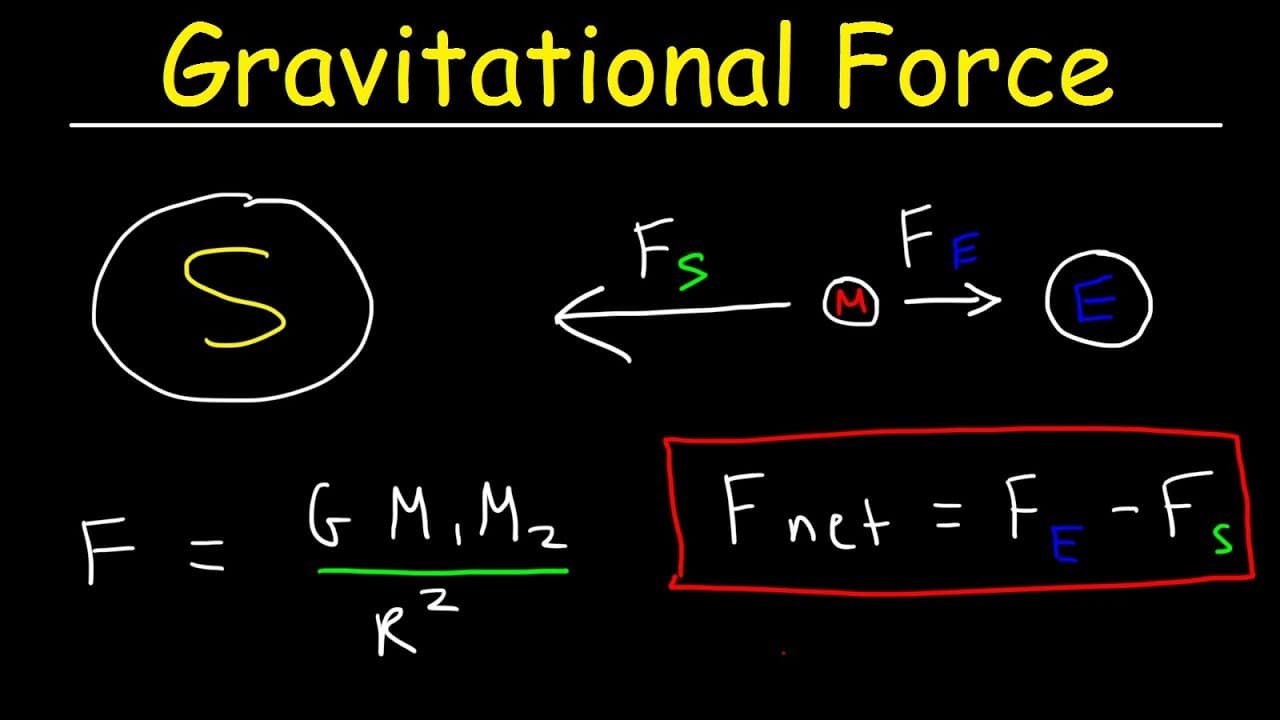
To calculate the gravitational force between two objects, use the formula F = (G * m1 * m2) / r^2, where G is the universal gravitation constant. The weight of an object can also be determined by multiplying its mass by the gravitational acceleration. The net force on an object subjected to multiple gravitational influences can be calculated using the difference or the Pythagorean theorem, depending on their arrangement.
Transcript
let's work on some problems calculate the force of gravity that exists between a 60 kilogram person and an 80 kilogram person who are 50 centimeters apart from each other so let's draw a picture so let's say that this is the 60 kilogram person and here is the 80 kilogram person how can we calculate the gravitational force between the two now gravit... Read More
Key Insights
- ❓ Gravity is a force of attraction that brings objects together.
- 🇬🇫 The force of gravity between two objects can be calculated using the equation F = (G * m1 * m2) / r^2.
- 💆 The weight of an object can be calculated by multiplying its mass by the gravitational acceleration.
- ❎ The force of gravity between two objects is directly proportional to their masses and inversely proportional to the square of the distance between their centers.
- 🧑🏭 The net force acting on an object is the difference between the gravitational forces exerted by different objects on it.
- 🗯️ The Pythagorean theorem can be used to calculate the net force when gravitational forces are at right angles to each other.
Install to Summarize YouTube Videos and Get Transcripts
Explore YouTube Video Summarizer or Get YouTube Transcript Extractor
Questions & Answers
Q: How do you calculate the force of gravity between two objects?
To calculate the force of gravity between two objects, use the equation F = (G * m1 * m2) / r^2, where G is the universal gravitation constant, m1 and m2 are the masses of the two objects, and r is the distance between their centers.
Q: Can you explain the calculation for the force of gravity on a block resting on the Earth?
The force of gravity on a block resting on the Earth can be calculated using the equation F = (G * m1 * m2) / r^2, or simply by multiplying the mass of the block by the gravitational acceleration of the Earth.
Q: How do you calculate the force of gravity exerted on the Earth by the Sun?
To calculate the force of gravity exerted on the Earth by the Sun, use the equation F = (G * m1 * m2) / r^2, where m1 is the mass of the Earth, m2 is the mass of the Sun, and r is the distance between their centers.
Q: How can you determine the distance between two planets based on the given gravitational force?
The distance between two planets can be determined using the formula r = √((G * m1 * m2) / F), where r is the distance, m1 and m2 are the masses of the planets, F is the given gravitational force, and G is the universal gravitation constant.
Summary & Key Takeaways
-
Calculate the force of gravity between two individuals (60kg and 80kg) who are 50 centimeters apart using the equation F = (G * m1 * m2) / r^2.
-
Calculate the force of gravity on a 25kg block resting on the Earth using the equation F = (G * m1 * m2) / r^2, or simply using the weight formula (Weight = mass * gravitational acceleration).
-
Calculate the force of gravity exerted on the Earth by the Sun using the equation F = (G * m1 * m2) / r^2.
-
Determine the distance between two planets (Planet X and Planet Y) based on the given gravitational force using the equation r = √((G * m1 * m2) / F).
-
Find the net force exerted on the Moon when it is between the Earth and the Sun by calculating the difference between the gravitational forces exerted by them using the equation F_net = F_Earth - F_Sun.
-
Calculate the net force exerted on the Moon by the Earth and the Sun when the gravitational forces are at right angles to each other using the Pythagorean theorem (F_net = √(F_Earth^2 + F_Sun^2)).
Read in Other Languages (beta)
Share This Summary 📚
Summarize YouTube Videos and Get Video Transcripts with 1-Click
Try YouTube Summary with ChatGPT & Claude or YouTube Transcript Generator
Explore More Summaries from The Organic Chemistry Tutor 📚


Summarize YouTube Videos and Get Video Transcripts with 1-Click
Try YouTube Summary with ChatGPT & Claude or YouTube Transcript Generator