What Is the Trappist-1 System and Its Potential for Life?
TL;DR
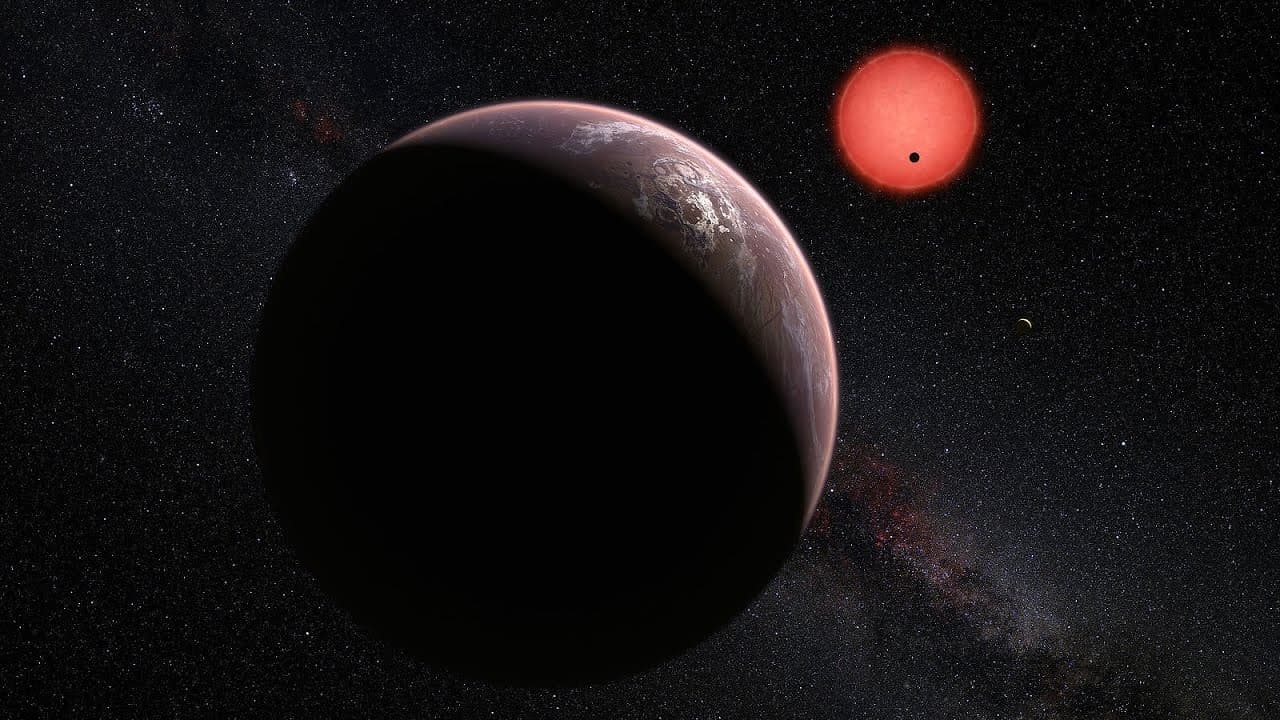
The Trappist-1 system contains seven Earth-sized planets, with Trappist-1e being the most promising candidate for supporting liquid water and potential life. Unlike earlier beliefs that Earth-like planets are common, new insights suggest that Earth is unique due to specific conditions allowing for complex life. Models indicate that life could exist in diverse environments, not just those with obvious liquid water.
Transcript
This is an update in my continuing coverage of the Trappist -1 system, a fascinating solar system that could host up to 7 roughly earth-sized planets where the conditions could be right for liquid water, and thus hold the potential for life. See my other videos on this channel for more back story. When I was a kid sitting in grade school science cl... Read More
Key Insights
- 🌍 Exoplanets have been confirmed and over 3000 have been discovered, indicating that Earth-like worlds may be common in the universe.
- 🧑🏭 Contrary to previous beliefs, Earth is a rare planet, with specific factors contributing to its ability to support complex life.
- 👻 The Trappist - 1 system offers the potential for liquid water and could host Earth-like planets, although it is uncertain how widespread these conditions may be.
- 🪐 Climate modeling is crucial for predicting potentially habitable planets and comparing them to data collected in the future.
- 💦 Trappist - 1e is the most promising candidate for liquid water among the three potential planets in the system.
- 🪐 Tidally locked planets, like Trappist - 1e, would have distinct climate patterns, with only a portion of the planet suitable for liquid water.
- 🌍 Earth-like worlds can exist in various conditions, including those with subsurface liquid water.
Install to Summarize YouTube Videos and Get Transcripts
Explore YouTube Video Summarizer or Get YouTube Transcript Extractor
Questions & Answers
Q: How many exoplanets have been discovered outside our solar system?
Since 1992, over 3000 exoplanets have been discovered, indicating that planets outside our solar system are quite common.
Q: What factors make Earth a suitable planet for complex life?
Factors like atmospheric composition, orbital stability, the presence of a moon, and the stability of the sun all contribute to Earth's ability to support complex life forms.
Q: Which planet in the Trappist - 1 system has the best chance of supporting liquid water?
According to a climate model by Eric Wolf, Trappist - 1e is the most likely planet to have liquid water among the three most promising candidates.
Q: Are the planets in the Trappist - 1 system likely to be similar to Earth?
Due to their proximity to their star, the planets in the Trappist - 1 system are probably tidally locked. This means that only a portion of the planets may have conditions suitable for liquid water, making them different from Earth.
Summary & Key Takeaways
-
In the 1980s, it was believed that exoplanets existed, and Earth-like worlds could be abundant in the universe.
-
However, new understanding shows that Earth is a unique and rare planet, with specific factors allowing for the evolution of complex life.
-
Trappist - 1, a star system with seven potentially Earth-sized planets, offers the possibility of liquid water, and therefore, the potential for life.
Read in Other Languages (beta)
Share This Summary 📚
Summarize YouTube Videos and Get Video Transcripts with 1-Click
Try YouTube Summary with ChatGPT & Claude or YouTube Transcript Generator
Explore More Summaries from John Michael Godier 📚


Summarize YouTube Videos and Get Video Transcripts with 1-Click
Try YouTube Summary with ChatGPT & Claude or YouTube Transcript Generator