Q&A 158: Does a Titan Sample Return Mission Make Sense? And More...
TL;DR
Fraser answers questions about space exploration, including topics like gravitational wave detection, planetary protection, sample return missions, time dilation, and moon base experiments.
Transcript
hey everyone welcome to the question show your questions my answers as always wherever you are across my channel if a question pops into your brain just write it down i will gather them up and i will answer them here i we do the show every monday at 5 p.m pacific time so if you want to join live you can but put down your questions anywhere across m... Read More
Key Insights
- 😒 Gravitational wave observatories use redshift to calculate the distance of collisions and events.
- ⌛ Planetary protection measures have improved over time, and recent missions prioritize sterilization to prevent contamination.
- 😘 Launching a vehicle from Titan is feasible due to its lower gravity and the availability of local resources for fuel.
- ⌛ Time dilation occurs near massive objects, impacting the passage of time relative to observers elsewhere.
- 😚 Ideas for using robotic vehicles to retrieve lost items from outside the International Space Station have been suggested but are not currently implemented.
- 🤖 The future potential of self-replicating robots and the impact of advanced launch capabilities on spacecraft development.
- 😚 If a significant celestial object were to approach our solar system, it may go undetected until it is closer as our observing capabilities have limits.
- 😀 Different theories surrounding the Fermi paradox include the possibility of humanity being alone in the universe, facing a Great Filter, or being observed by advanced civilizations in a "galactic zoo."
- 😎 Even in the distant future when the universe has cooled and all matter has decayed, time will continue to exist.
Install to Summarize YouTube Videos and Get Transcripts
Explore YouTube Video Summarizer or Get YouTube Transcript Extractor
Questions & Answers
Q: How do gravitational wave observatories like LIGO determine the distance of collisions?
Gravitational wave observatories use redshift to calculate the distance. The frequency of the detected waves allows scientists to determine the redshift and thereby the distance from Earth.
Q: Have all the satellite rovers sent to Mars been sterilized?
Older missions to Mars did not prioritize planetary protection measures, but recent spacecraft have implemented sterilization protocols to prevent contamination of potentially habitable regions.
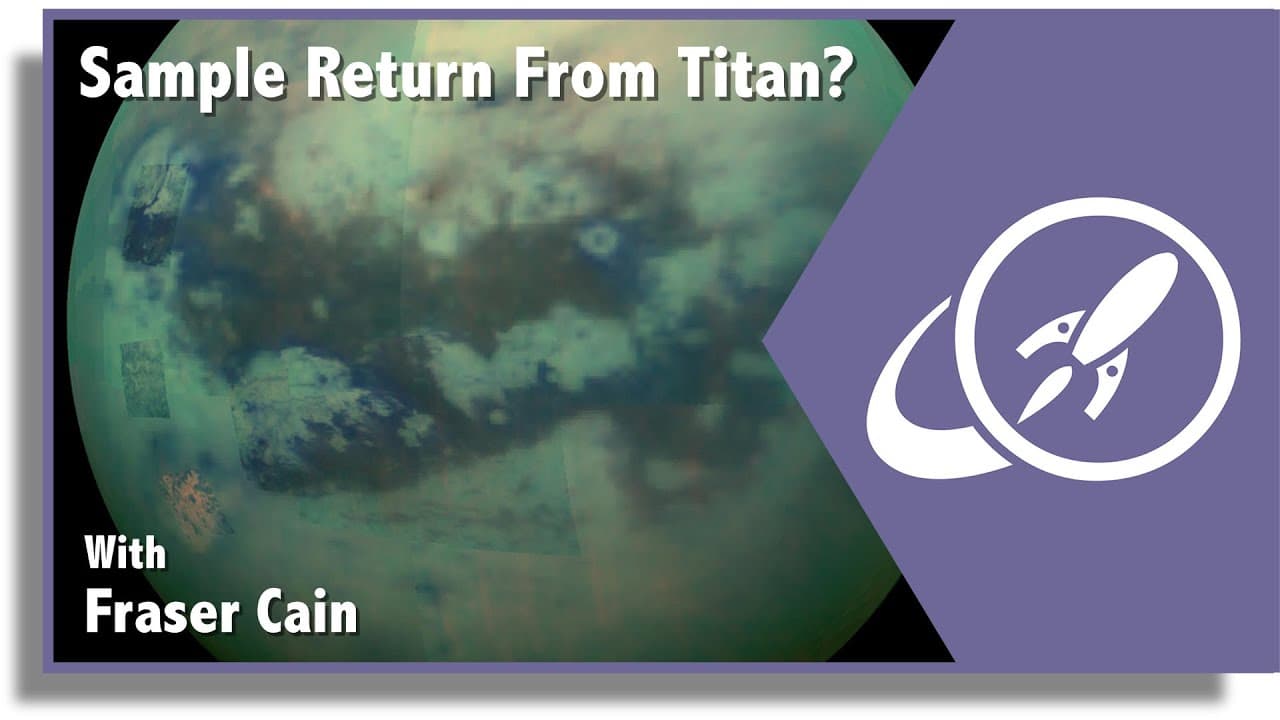
Q: Is it possible to build a launch vehicle on Titan due to its dense atmosphere and methane concentration?
Yes, it is possible to build a launch vehicle on Titan. Its lower gravity and thick but not unmanageable atmosphere make a launch feasible, and local resources like water ice and methane can be used as fuel components.
Q: How does time pass in an area without gravity?
Time is relative and influenced by gravity. In areas without gravity, time would still exist but would be experienced differently compared to observers in different gravitational fields.
Q: Could a robotic vehicle be used to retrieve lost items from outside the International Space Station?
While no such proposal exists currently, there have been previous experiments with flying robots within the space station. An external spacecraft with propellant or tethered options may be explored in the future.
Summary & Key Takeaways
-
Fraser answers questions about how gravitational wave observatories like LIGO determine the distance of collisions by measuring the redshift of the detected waves.
-
He explains that older spacecraft sent to Mars were not adequately sterilized, but recent missions have implemented stringent planetary protection measures.
-
Fraser discusses the possibility of launching a spacecraft from Titan's surface, taking advantage of its methane-rich atmosphere and lower gravity.
-
The concept of time and its relationship to gravity is explored, with Fraser explaining how time dilation occurs near massive objects.
-
The potential of using an external robotic vehicle to retrieve lost items from outside the International Space Station is discussed.
Read in Other Languages (beta)
Share This Summary 📚
Summarize YouTube Videos and Get Video Transcripts with 1-Click
Try YouTube Summary with ChatGPT & Claude or YouTube Transcript Generator
Explore More Summaries from Fraser Cain 📚
Summarize YouTube Videos and Get Video Transcripts with 1-Click
Try YouTube Summary with ChatGPT & Claude or YouTube Transcript Generator