How Do We Know Black Holes Are Real?
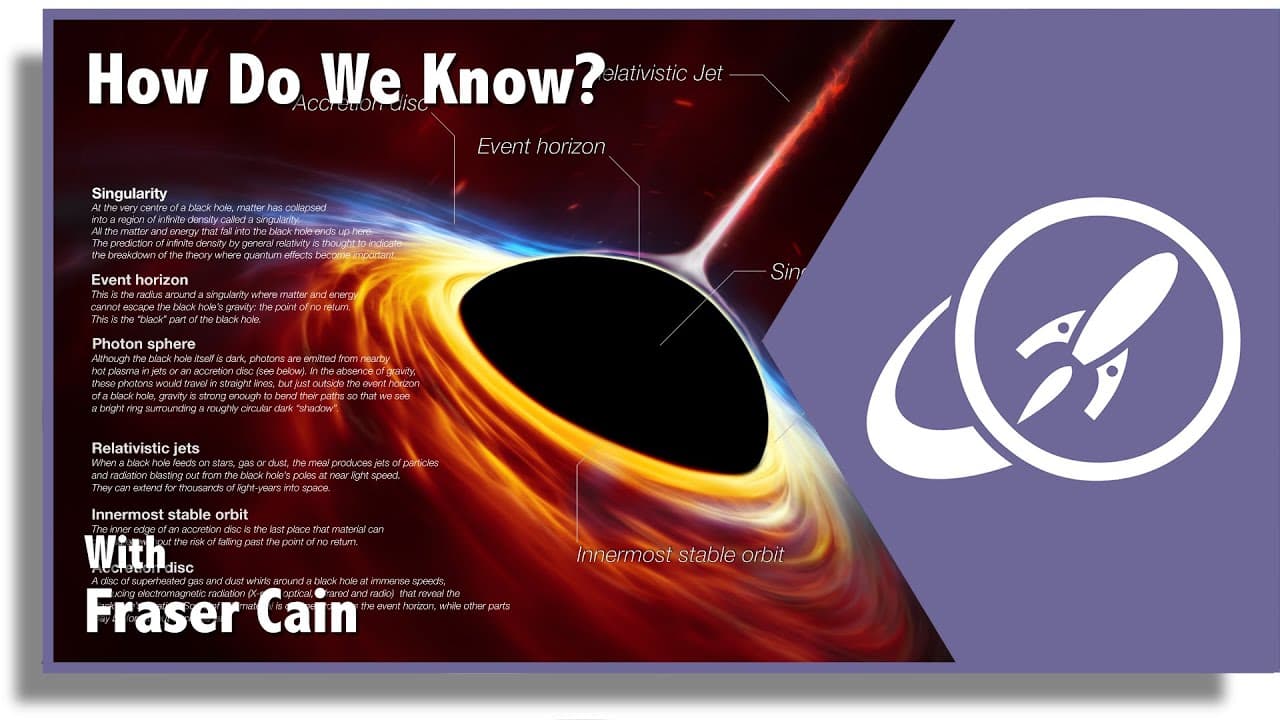
TL;DR
Black holes are confirmed through multiple lines of evidence, including X-ray binaries that reveal dense objects, observations of stars orbiting the Milky Way's center, gravitational wave detections from merging black holes, and the first image captured by the Event Horizon Telescope. These observations align perfectly with predictions made by general relativity, establishing black holes as a fundamental aspect of our universe.
Transcript
I'd say half of the astronomy related videos on YouTube are about black holes people are clearly fascinated by black holes but every time we talk about them there's a sort of group of people who say yeah I don't think they're real well they're real they're fascinating and today I've brought on a special guest who will help me explain to you all of ... Read More
Key Insights
- 📤 X-ray binaries, where objects emit intense x-rays, indicate the presence of black holes.
- ✴️ Stars orbiting the center of the Milky Way reveal the existence of a massive invisible object, likely a black hole.
- 🖤 Gravitational wave detections, predicted by Einstein's theories, confirm the existence of merging black holes.
- 🖤 The first image of a black hole, captured by the Event Horizon Telescope, provides visual evidence.
Install to Summarize YouTube Videos and Get Transcripts
Explore YouTube Video Summarizer or Get YouTube Transcript Extractor
Questions & Answers
Q: What is a black hole?
A black hole is a region in space-time with extreme gravitational pull, where nothing, not even light, can escape its event horizon.
Q: How were black holes first discovered?
Black holes were first discovered through the observation of x-ray binaries, where the emission of copious amounts of x-rays indicated the presence of extremely dense objects.
Q: How do astronomers study black holes if they cannot directly observe them?
Astronomers study black holes by observing their effects on their surroundings, such as the motion of stars orbiting them or the gravitational waves emitted during black hole mergers.
Q: What evidence supports the existence of supermassive black holes?
Observations of stars orbiting the black hole at the center of the Milky Way and the detection of quasars, incredibly bright objects powered by supermassive black holes, provide evidence for their existence.
Summary & Key Takeaways
-
Black holes are not holes per se but rather regions of space-time with immense gravitational pull and absence of light.
-
X-ray binaries, where a star is orbited by an object emitting x-rays, provided the first evidence for the existence of black holes.
-
Observations of stars orbiting the black hole at the center of the Milky Way, gravitational wave detections, and the first image of a black hole further support their reality.
Read in Other Languages (beta)
Share This Summary 📚
Summarize YouTube Videos and Get Video Transcripts with 1-Click
Try YouTube Summary with ChatGPT & Claude or YouTube Transcript Generator
Explore More Summaries from Fraser Cain 📚




Summarize YouTube Videos and Get Video Transcripts with 1-Click
Try YouTube Summary with ChatGPT & Claude or YouTube Transcript Generator