Open Space 96: The End of the International Space Station? And More...
TL;DR
A live Q&A session discussing space and astronomy, upcoming interviews and projects, and the recent power outage.
Transcript
hey everyone assuming this works uh welcome to open space for monday uh november 23rd 2020. uh once again this is my live qa where you can ask me any questions you want about space or astronomy or anything although i don't have answers for anything else um but yeah so go ahead post a comment in the in the in the youtube chat and i will uh get going... Read More
Key Insights
- 🥺 Power outages can lead to a realization of heavy dependence on the internet and technology.
- 😎 The sun's increasing temperature will make Earth uninhabitable in around 500 million to a billion years.
- 🫥 The Great Conjunction in December will allow Saturn and Jupiter to be visible in a single telescope eyepiece for the first time in 800 years.
- 🥹 Nuclear power holds potential for space propulsion and energy generation, but there are challenges and risks involved.
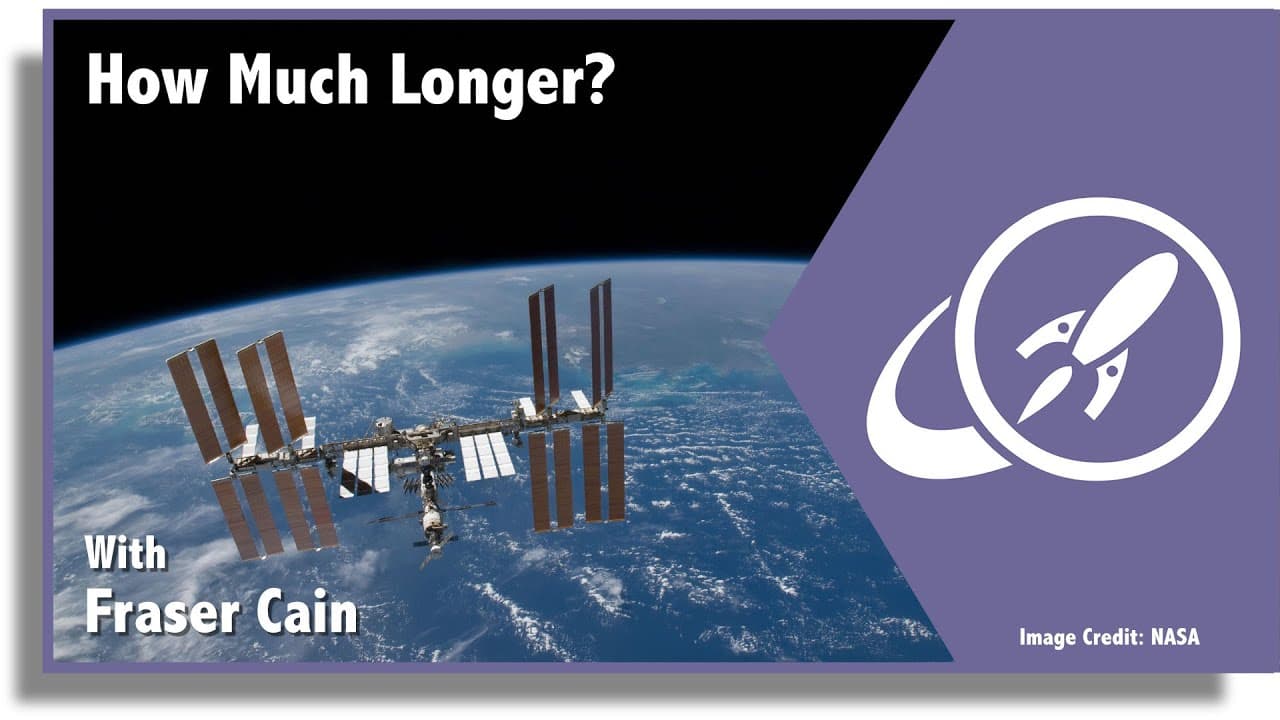
- 🧑🏭 The future of the International Space Station is uncertain, with factors such as funding and international partnerships influencing its trajectory.
- 🇮🇨 Construction of the 30-meter telescope in Mauna Kea, Hawaii is unlikely due to protests, with the Canary Islands as a possible alternative site.
- 👾 International cooperation between space agencies can foster scientific progress and peace.
- 💆 The quantity of mass-energy in the no longer observable universe is uncertain due to incomplete understanding of the universe's size.
Install to Summarize YouTube Videos and Get Transcripts
Explore YouTube Video Summarizer or Get YouTube Transcript Extractor
Questions & Answers
Q: How much longer will Earth be habitable?
Earth will be habitable for the next 500 million to a billion years, until the sun's increasing temperature causes all the water on Earth to evaporate and the surface becomes completely dry.
Q: How long has it been since an all-planet conjunction?
An all-planet conjunction where Saturn and Jupiter are visible in a single telescope eyepiece is happening in December, the first time in approximately 800 years.
Q: Is nuclear power a good option in space?
Nuclear power can be used for propulsion as well as generating electricity for space missions. While there are risks and challenges involved, there are ongoing projects, including NASA's Kilopower, exploring the use of nuclear power in space.
Q: Will the total eclipse on December 14th be streamed?
The availability of a live stream for the total eclipse on December 14th is uncertain, but efforts will be made to provide a special star party livestream for the event.
Q: What is the future of the International Space Station?
The future of the International Space Station is uncertain. There are considerations to maintain or replace it, but factors like funding, international partnerships, and the development of the Lunar Gateway may influence its future.
Q: Can the Arecibo telescope be replaced?
The Arecibo telescope has been decommissioned due to significant structural damage. While there are no current plans to replace it, other observatories around the world continue to contribute to scientific research.
Q: Should the 30-meter telescope be built at its planned location?
Due to protests and controversies, it is unlikely that the 30-meter telescope will be built in Mauna Kea, Hawaii. The alternative site in the Canary Islands is being considered as a viable location.
Q: Will greater cooperation between various space agencies be possible despite political boundaries?
International cooperation has been essential in space exploration, and efforts like the Artemis Accords aim to define rules for collaboration. While political boundaries may pose challenges, continued cooperation is beneficial for scientific progress and peace.
Q: How well is the quantity of mass-energy in the no longer observable universe known?
The size and mass-energy of the entire universe beyond the observable universe are unknown. We can only observe a fraction of the universe, making up about 5% of cosmic mass-energy.
Q: Is there any value in placing a telescope on Mars?
The benefits of placing a telescope on Mars are limited compared to having telescopes in near-Earth space or on the far side of the Moon. Building a telescope on Mars carries significant logistical and cost challenges that do not outweigh the advantages of Earth or Moon-based telescopes.
Summary & Key Takeaways
-
Last week's episode with Chris Carr was canceled due to a power outage.
-
A future interview with an astrobiologist is scheduled.
-
Exciting updates on Universe Today, Astronomy Cast, and Weekly Space Hangout.
-
Questions answered about Earth's habitability, the Great Conjunction, nuclear power in space, and more.
Read in Other Languages (beta)
Share This Summary 📚
Summarize YouTube Videos and Get Video Transcripts with 1-Click
Try YouTube Summary with ChatGPT & Claude or YouTube Transcript Generator
Explore More Summaries from Fraser Cain 📚
Summarize YouTube Videos and Get Video Transcripts with 1-Click
Try YouTube Summary with ChatGPT & Claude or YouTube Transcript Generator