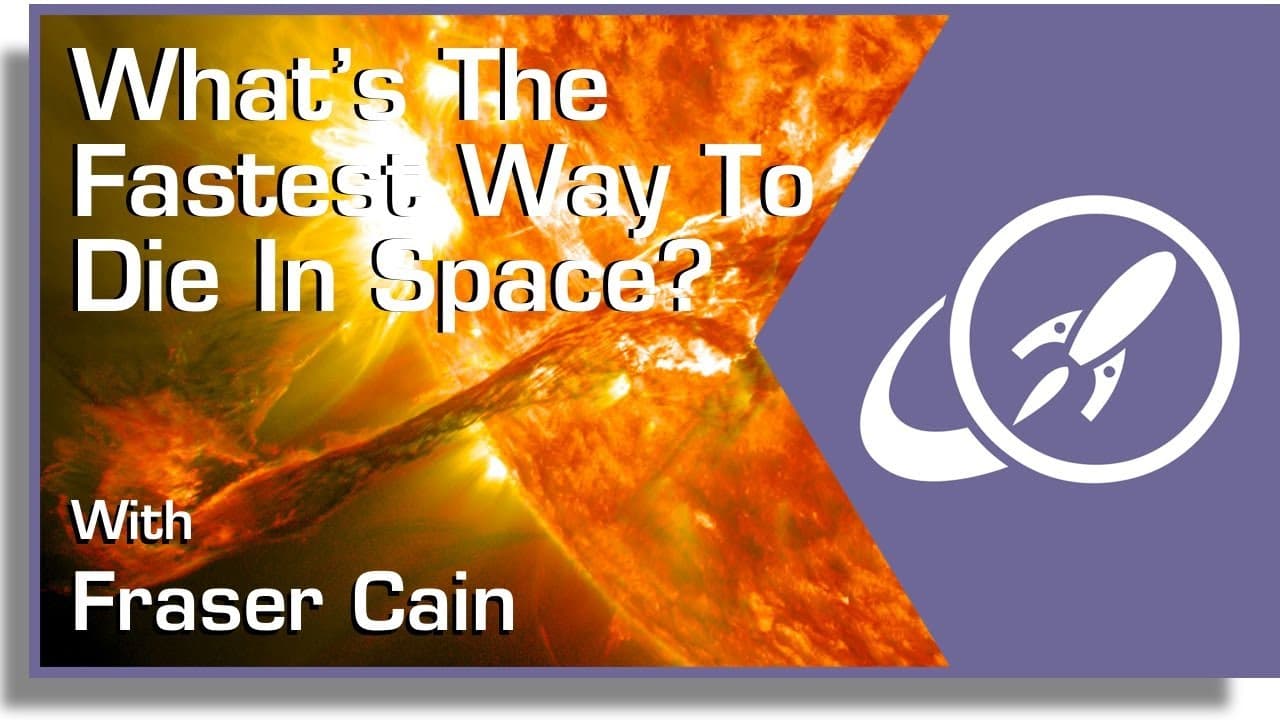
What's The Fastest Way To Die In Space? Space Has So Many Ways to Kill You
TL;DR
Space presents various risks to human life, including asphyxiation, radiation exposure, fire hazards, lack of essential resources, and potential impacts with debris.
Transcript
Just in case you were planning to jump out into the vacuum of space without a spacesuit, I urge you to reconsider. There's nothing but painful suffocation and death. Do not do it. You probably wouldn't be here if you weren't wondering, just how lethal is space? What are all the ways space is trying to kill you? Space has a swiss army knife of metho... Read More
Key Insights
- 👾 Humans cannot survive in the vacuum of space without a spacesuit, as asphyxiation would occur almost instantaneously.
- 👾 Radiation exposure is a constant threat in space, with solar storms posing immediate risks of acute radiation poisoning.
- 😋 Survival in space requires managing fire hazards, ensuring a stable supply of essential resources like water and food, and combating mold growth.
- 👾 Traveling in space presents long-term challenges, including the effects of microgravity on the human body.
- 🚄 Impact with debris is a significant risk, as even small particles traveling at high speeds can cause catastrophic damage to spacecraft.
Install to Summarize YouTube Videos and Get Transcripts
Explore YouTube Video Summarizer or Get YouTube Transcript Extractor
Questions & Answers
Q: How quickly would a person die in space without a spacesuit?
Without a protective suit, a person would quickly asphyxiate in the vacuum of space, as human blood only contains about 15 seconds of usable oxygen. Death would occur within a few minutes.
Q: What are the risks of radiation exposure in space?
Once outside the Earth's magnetic field, spacecraft are exposed to high levels of radiation constantly streaming through space. Solar storms can deliver lethal doses of radiation within hours, causing acute radiation poisoning.
Q: What are some of the immediate hazards faced in space?
Immediate hazards in space include fire, failure of oxygen systems, access to clean water and food, and even mold growth in the damp environment of a spaceship.
Q: What are the long-term effects of being in space?
Prolonged exposure to microgravity can cause significant health issues, such as bone and muscle loss. The long-term effects of microgravity on the human body are not fully understood.
Summary & Key Takeaways
-
Without a spacesuit, asphyxiation would be almost instantaneous in the vacuum of space, as human blood contains only about 15 seconds of usable oxygen.
-
Exposure to radiation is a significant risk as spacecraft venture beyond the Earth's magnetic field, with solar storms potentially delivering lethal doses in just a few hours.
-
Other risks in space include fire, lack of access to clean water and food, mold growth, and long-term effects of microgravity on the human body.
-
The fastest way space can kill is through impacts with debris, as even small particles can travel at high speeds and cause catastrophic damage.
Read in Other Languages (beta)
Share This Summary 📚
Summarize YouTube Videos and Get Video Transcripts with 1-Click
Try YouTube Summary with ChatGPT & Claude or YouTube Transcript Generator
Explore More Summaries from Fraser Cain 📚



Summarize YouTube Videos and Get Video Transcripts with 1-Click
Try YouTube Summary with ChatGPT & Claude or YouTube Transcript Generator