What Is MSG and Is It Safe to Eat?
TL;DR
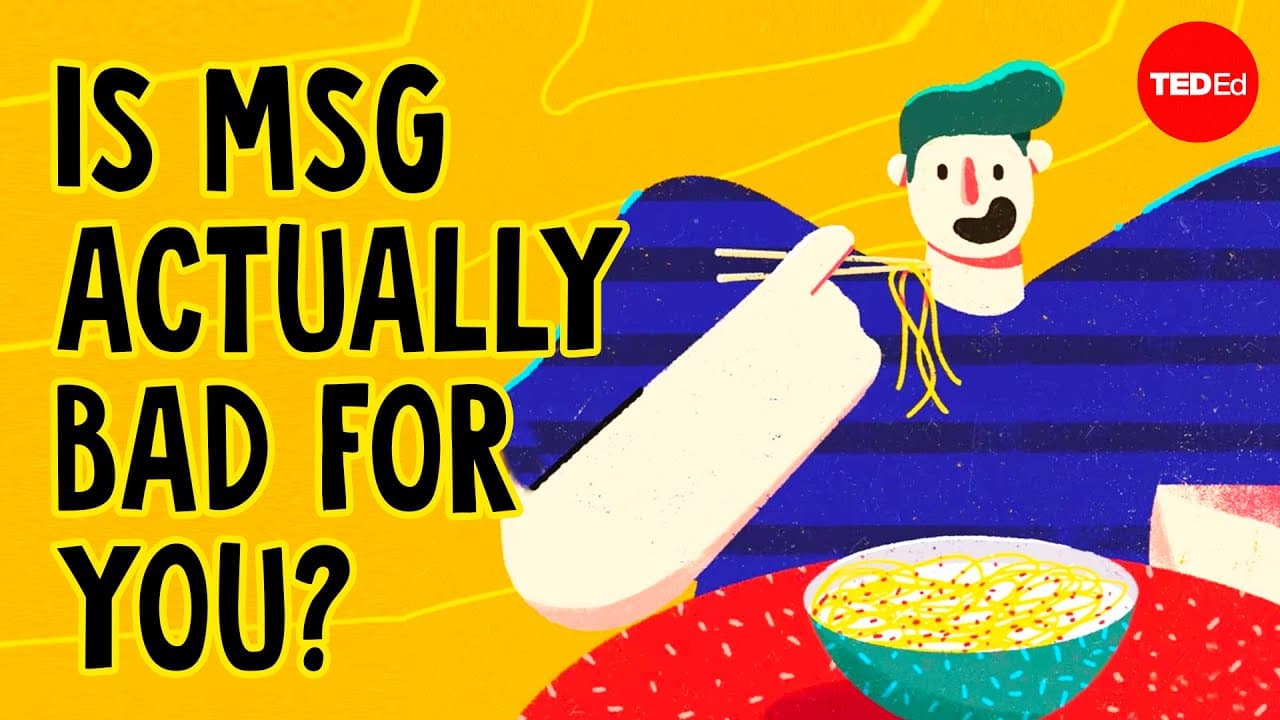
MSG, a seasoning made from sodium and glutamate, is generally safe for consumption and may even offer health benefits. Misconceptions about MSG stemmed from biased media portrayals linking it to 'Chinese Restaurant Syndrome.' Current research supports its role in enhancing flavor without major health risks for most people.
Transcript
In 1968, Dr. Robert Ho Man Kwok felt ill after dinner at a Chinese restaurant. He wrote a letter detailing his symptoms to a prestigious medical journal, pondering whether his illness had resulted from eating monosodium glutamate— also known as MSG. Kwok’s connection between his headache and this common seasoning in American Chinese cuisine was j... Read More
Key Insights
- 🖐️ MSG is a mixture of sodium and glutamate, a common amino acid that plays a crucial role in digestion, muscle function, and the immune system.
- 😒 The invention of MSG by a Japanese chemist in 1908 revolutionized the use of umami flavor in cooking and led to its widespread popularity.
- 😅 The fear and controversy surrounding MSG, labeled as "Chinese Restaurant Syndrome," stemmed from biases against Asian eating customs and sensationalist journalism.
- 🥺 Recent research suggests that MSG is safe for most people and may even have health benefits, although excessive consumption may lead to certain symptoms.
- 😋 Glutamate, the main component of MSG, is naturally present in various foods like mushrooms, cheese, tomatoes, and broth.
- 🥺 Sensationalist headlines and biased reporting led to misconceptions about the health impacts of MSG, with studies later finding the reported issues unrelated to MSG consumption.
- 🫵 Researchers now view MSG without discriminatory bias and recognize its role in metabolism.
Install to Summarize YouTube Videos and Get Transcripts
Explore YouTube Video Summarizer or Get YouTube Transcript Extractor
Questions & Answers
Q: What is MSG made of and what role does it play in our body?
MSG is a combination of sodium and glutamate, an essential amino acid. Glutamate plays a vital role in digestion, muscle function, and the immune system. While our body produces enough glutamate for these processes, it is also present in our diet in foods like mushrooms, cheese, tomatoes, and broth.
Q: How was MSG invented and why did it become so popular?
MSG was invented by a Japanese chemist, Dr. Ikeda Kikunae, who isolated high quantities of glutamate from a bowl of noodle broth and combined it with another flavor enhancer, sodium, to create a seasoning that enhanced the umami taste of any dish. It quickly gained popularity in Asia and eventually became widely used in commercial food production worldwide.
Q: Why was there so much controversy and fear surrounding MSG?
The controversy and fear surrounding MSG stemmed from biases against Asian eating customs and sensationalist journalism. The term "Chinese Restaurant Syndrome" created prejudices and led to headlines suggesting that MSG could cause brain damage and other health issues, even though the studies were inconclusive or based on internal glutamate imbalances unrelated to MSG consumption.
Q: What does recent research say about the safety of MSG?
Recent research suggests that MSG is safe for consumption, and it may even have health benefits. Glutamate plays a vital role in metabolism, and some researchers believe that MSG is a healthier alternative to added fat and sodium. However, excessive consumption of MSG may lead to headaches, chest pains, or heart palpitations in some individuals.
Summary & Key Takeaways
-
MSG is a mixture of sodium and glutamate, a common amino acid found in various proteins, and plays a crucial role in digestion, muscle function, and the immune system.
-
Originally invented in 1908 by a Japanese chemist, MSG became a kitchen staple in Asia by the 1930s and was widely used in commercial food production worldwide by the mid-20th century.
-
The stigma and fear surrounding MSG, labeled as "Chinese Restaurant Syndrome," fueled biased journalism and sensationalist headlines, leading to misconceptions about its health impacts.
Read in Other Languages (beta)
Share This Summary 📚
Summarize YouTube Videos and Get Video Transcripts with 1-Click
Try YouTube Summary with ChatGPT & Claude or YouTube Transcript Generator
Explore More Summaries from TED-Ed 📚



Summarize YouTube Videos and Get Video Transcripts with 1-Click
Try YouTube Summary with ChatGPT & Claude or YouTube Transcript Generator