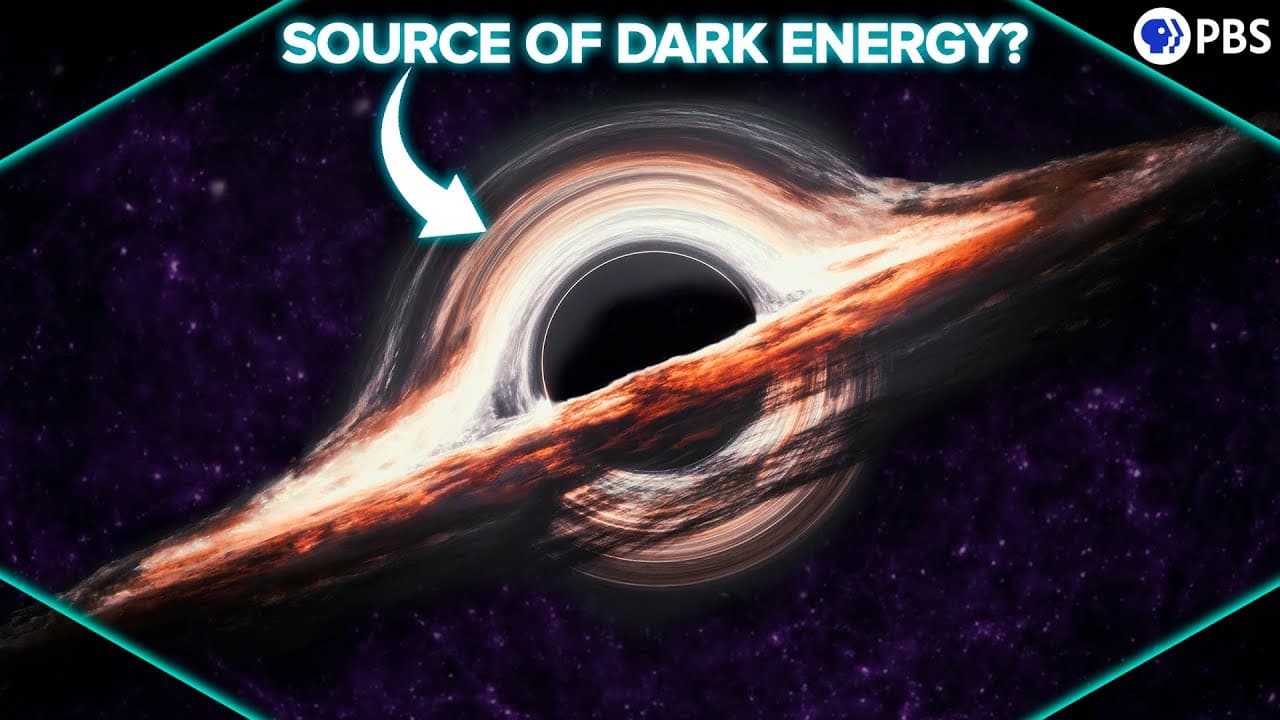
What If Black Holes ARE Dark Energy?
TL;DR
Exploring if black holes could be the source of dark energy.
Transcript
People love to imagine that the things they don’t understand. are somehow connected to each other. For example, quantum mechanics and consciousness, or aliens and pyramids, or black holes and dark matter, or dark matter and dark energy, dark energy and black holes. Usually there’s no real relationship whatsoever, but this last pair—black holes a... Read More
Key Insights
- Recent theories suggest black holes might be made of dark energy, potentially influencing the universe's expansion.
- The idea originates from Erast Gliner's 1966 paper, proposing that black hole interiors could be energetic vacuums.
- Cosmological coupling suggests that as the universe expands, black holes gain mass, contributing to cosmic acceleration.
- The theory challenges general relativity, suggesting black holes are connected to the universe on a cosmic scale.
- Supermassive black holes (SMBHs) appear to have grown more than expected, possibly due to cosmological coupling.
- The theory posits that black holes could account for the universe's dark energy, making up 70% of its energy.
- Critics argue the theory lacks direct evidence and relies on speculative assumptions about black hole behavior.
- Despite skepticism, exploring such theories is crucial for potential breakthroughs in understanding cosmic phenomena.
Install to Summarize YouTube Videos and Get Transcripts
Explore YouTube Video Summarizer or Get YouTube Transcript Extractor
Questions & Answers
Q: What is the new hypothesis about black holes and dark energy?
The new hypothesis suggests that black holes might be composed of dark energy, and as the universe expands, these black holes gain mass, potentially contributing to the accelerating expansion of the universe. This idea challenges traditional views of general relativity and proposes a connection between black holes and the universe on a cosmic scale.
Q: How does the concept of cosmological coupling relate to black holes?
Cosmological coupling suggests that as the universe expands, black holes gain mass in proportion to the increasing volume of the universe. This implies that black holes could be connected to the universe on a cosmic scale, influencing their growth and potentially contributing to the accelerating expansion of the universe.
Q: What is the historical basis for the idea that black holes might be dark energy?
The idea traces back to Erast Gliner's 1966 paper, which proposed that black hole interiors might be energetic vacuums. This concept laid the groundwork for the theory that black holes could be composed of dark energy, influencing the universe's expansion and potentially accounting for the mysterious force driving cosmic acceleration.
Q: What evidence supports the theory that black holes are dark energy?
The theory suggests that supermassive black holes have grown more than expected, possibly due to cosmological coupling. However, direct evidence is lacking, and the idea relies on speculative assumptions about black hole behavior. Critics argue that the theory challenges established physics principles and requires further investigation.
Q: What are the criticisms of the theory connecting black holes to dark energy?
Critics argue that the theory lacks direct evidence and relies on speculative assumptions about black hole behavior. It challenges established principles of general relativity, suggesting a cosmic connection between black holes and the universe. The theory's speculative nature and lack of supporting research from other experts raise skepticism about its validity.
Q: How might this theory impact our understanding of the universe?
If validated, the theory could revolutionize our understanding of the universe by explaining the mysterious force driving its accelerating expansion. It could provide insights into the nature of dark energy and challenge traditional views of black holes and general relativity. However, its speculative nature means it requires further exploration and validation by the scientific community.
Q: What role does Erast Gliner's work play in this theory?
Erast Gliner's 1966 paper proposed that black hole interiors might be energetic vacuums, laying the groundwork for the theory that black holes could be composed of dark energy. His work introduced the concept of cosmological coupling, suggesting a connection between black holes and the universe on a cosmic scale, influencing their growth and the universe's expansion.
Q: Why is exploring speculative theories like this important?
Exploring speculative theories is crucial for advancing our understanding of the universe and potentially leading to groundbreaking discoveries. While such theories may challenge established principles and lack direct evidence, they encourage scientific inquiry and innovation, pushing the boundaries of what we know and opening new avenues for exploration.
Summary & Key Takeaways
-
Recent hypotheses propose that black holes may be composed of dark energy, influencing the universe's expansion. The concept stems from the idea of cosmological coupling, where black holes gain mass as the universe expands. This could explain the accelerating expansion of the universe, challenging traditional views of general relativity.
-
The theory traces back to Erast Gliner's 1966 paper, suggesting that black hole interiors might be energetic vacuums. This idea has evolved into the notion that black holes are connected to the universe on a cosmic scale, affecting their growth and potentially accounting for dark energy.
-
While the theory is speculative and lacks direct evidence, it offers a new perspective on the relationship between black holes and dark energy. Critics argue it challenges established physics principles, but exploring such ideas is essential for advancing our understanding of the universe.
Read in Other Languages (beta)
Share This Summary 📚
Summarize YouTube Videos and Get Video Transcripts with 1-Click
Try YouTube Summary with ChatGPT & Claude or YouTube Transcript Generator
Explore More Summaries from PBS Space Time 📚
Summarize YouTube Videos and Get Video Transcripts with 1-Click
Try YouTube Summary with ChatGPT & Claude or YouTube Transcript Generator