What Are the 6 Essential Lessons Every Photographer Should Learn?
TL;DR
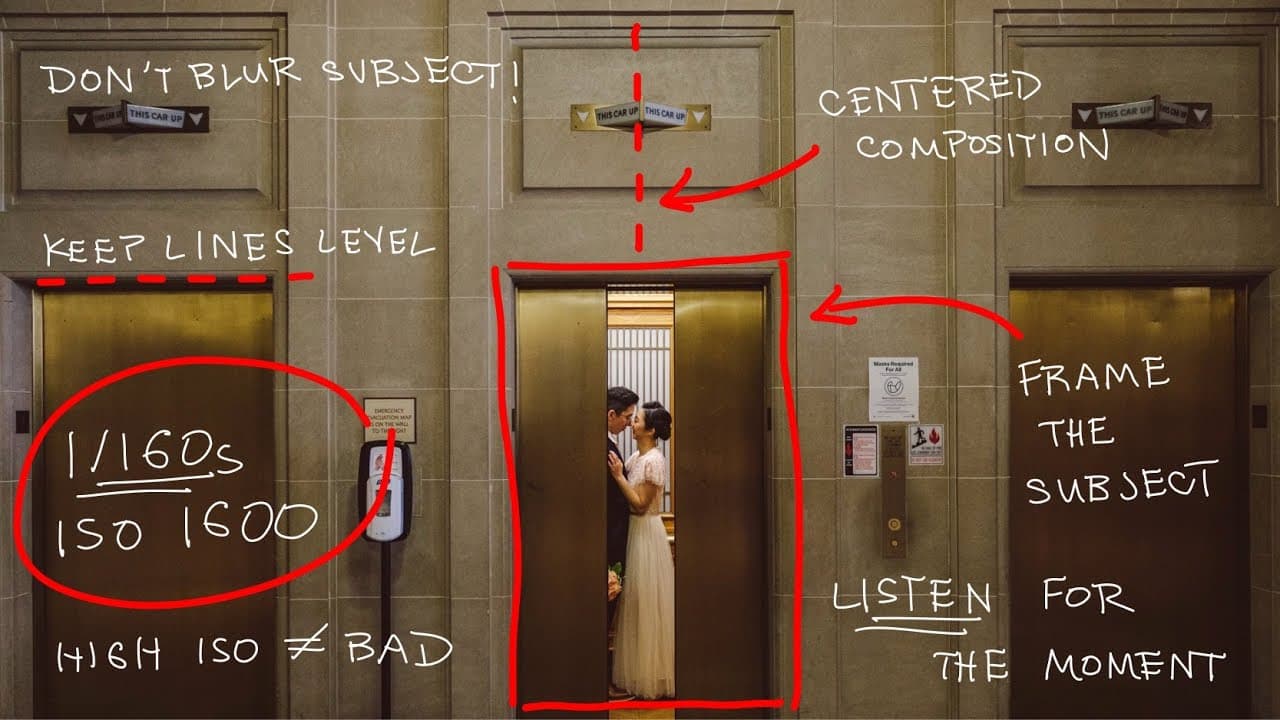
Every photographer should master six essential lessons: use a shutter speed of 1/160s for sharp images of people, manage light quality over quantity, capture comprehensive coverage with diverse angles, listen for candid moments, pre-visualize scenes before shooting, and focus on curation rather than just editing. These skills enhance both artistry and storytelling in photography.
Transcript
(camera shutters) (tranquil music) - And I need, ah face toward this way. (tranquil music) So this first lesson is going to be about the optimal shutter speed that everyone should know about. And that is that the 1/160s of the shutter speed is usually ideal for capturing sharp images with any type of human subject in them. So if it's a candid photo... Read More
Key Insights
- 🐎 A shutter speed of 1/160s is the sweet spot for sharp images of human subjects, crucial for both spontaneity and formal portraits.
- 🙂 The concept of low light shouldn't deter photographers; managing light quality and direction can lead to stunning results in challenging conditions.
- 🔺 Comprehensive coverage enhances storytelling in photography, ensuring diverse representations of subjects through varied angles and focal lengths.
- 👂 Listening and observing emotional dynamics within a scene are essential skills for capturing authentic candid moments.
- 📷 Pre-visualization of a scene, without the camera, greatly influences the quality of photos by allowing photographers to plan effective compositions.
- 🤕 In the age of social media, the skill of curation outweighs mere editing, focusing on selecting impactful images that tell a story.
- 💦 Implementing experience-planned, diverse shots can elevate the perceived value of a photographer's work, especially in events like weddings.
Install to Summarize YouTube Videos and Get Transcripts
Explore YouTube Video Summarizer or Get YouTube Transcript Extractor
Questions & Answers
Q: Why is 1/160th of a second the recommended shutter speed?
A shutter speed of 1/160th of a second is optimal for capturing sharp images of human subjects, as it sufficiently freezes motion without introducing blur. This speed is especially crucial in candid photography, where quick movements are common. While factors like lens focal length often dictate the shutter speed, this specific setting assures high clarity even in dynamic environments.
Q: How can photographers manage low light situations effectively?
Photographers need to distinguish between low light and bad light by examining light direction and quality. Utilizing tools like flash can enhance the lighting condition while balancing the ambient light. They must be adept at positioning subjects to take advantage of whatever natural light is present and minimizing reliance on higher ISO settings, which may result in grainy images.
Q: What does "comprehensive coverage" mean in photography?
Comprehensive coverage refers to capturing a subject from various angles, distances, and compositions to present a well-rounded visual narrative. This includes taking tight close-ups, wider shots for context, and exploring different focal lengths to convey depth and emotion. It enhances the storytelling aspect of photography, ensuring a rich selection of images for presentation.
Q: Why is listening important for capturing candid moments?
Listening is vital in photography as it allows photographers to anticipate moments by recognizing emotional peaks within a scene. By tuning in to the dynamics of a social environment—such as laughter or conversation—photographers can prepare to capture impactful moments that unfold naturally, leading to more genuine and emotive imagery.
Q: How does observing a scene contribute to better photography?
Observing a scene before photographing allows a photographer to identify key elements like light sources, lines, and potential compositions. This pre-capture reflection is crucial as it enables the photographer to strategize the best approach to the subject matter, ensuring that the eventual shots are both aesthetically pleasing and contextually relevant.
Q: What is the value of curation in photography?
Curation is the process of selecting and sequencing the best images from a larger collection. This skill is essential for photographers to emphasize the most impactful moments and create a cohesive narrative. It transforms a vast array of photos into a compelling story that highlights the best of an event or shoot, thus significantly impacting client satisfaction and portfolio strength.
Summary & Key Takeaways
-
The ideal shutter speed for sharp human subjects is 1/160th of a second, regardless of lens used. This ensures clarity in various situations, even low-light environments.
-
Low light does not equate to bad light; photographers must manage light direction and quality to capture the best images, utilizing equipment like flash when necessary.
-
Comprehensive coverage involves capturing multiple angles and compositions to provide a rich selection of images, enhancing the photographer's value and ensuring diversity in the final presentation.
Read in Other Languages (beta)
Share This Summary 📚
Summarize YouTube Videos and Get Video Transcripts with 1-Click
Try YouTube Summary with ChatGPT & Claude or YouTube Transcript Generator
Explore More Summaries from Reggie Ballesteros 📚


Summarize YouTube Videos and Get Video Transcripts with 1-Click
Try YouTube Summary with ChatGPT & Claude or YouTube Transcript Generator