Want To Explore Mars? Send Humans To The Moons Of Mars First: Phobos And Deimos
TL;DR
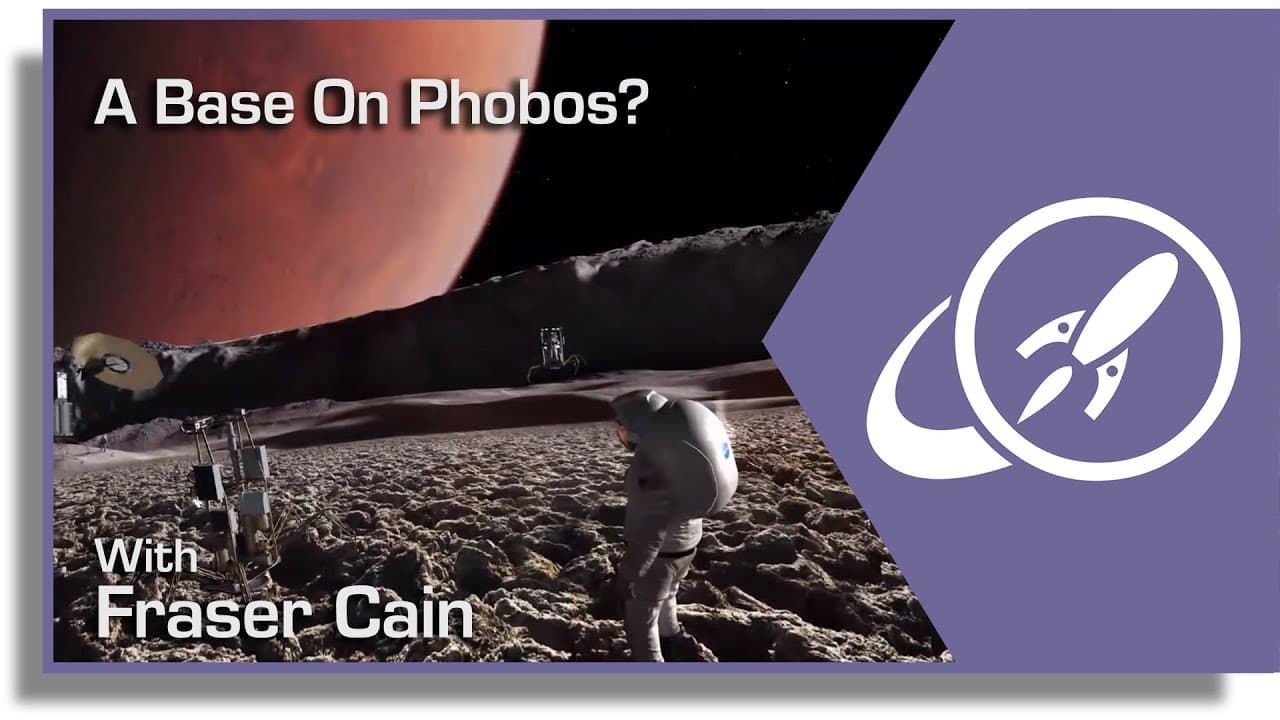
Sending humans directly to the surface of Mars is risky, but establishing a base on Phobos or Deimos could serve as a safer stepping-stone.
Transcript
humans to Mars that's the plan right the problem is that sending humans down to the surface of Mars is one of the most complicated and ambitious goals that we can attempt it's a huge step to go from low-earth orbit then lunar landings then all the way to Mars a journey of hundreds of millions of kilometers in two years at the least but there are tw... Read More
Key Insights
- 🎟️ Mars poses risks and challenges for human missions, making it necessary to explore safer alternatives like Phobos and Deimos.
- 👻 Establishing a base on Phobos or Deimos allows for resource gathering, research, and preparation before attempting a landing on Mars.
- 👾 The moons provide advantages such as better communication, constant sunlight, and potential for partial space elevators.
- 🥺 Digging tunnels inside Deimos could lead to a permanent habitat large enough for rotating habitats and the extraction of valuable resources.
Install to Summarize YouTube Videos and Get Transcripts
Explore YouTube Video Summarizer or Get YouTube Transcript Extractor
Questions & Answers
Q: Why is sending humans to Mars considered a complicated and ambitious goal?
Sending humans to Mars involves a journey of hundreds of millions of kilometers in two years, and Mars has proven to be challenging for spacecraft with a success rate of only 50%.
Q: What are the advantages of establishing a base on Phobos or Deimos before landing on Mars?
Setting up a base on these moons allows humans to gather resources and conduct research in a relatively safe environment, providing a stepping-stone between Earth and Mars.
Q: How would a mission to Phobos be carried out?
A proposal suggests launching supplies, a Phobos habitat, and a return vehicle for astronauts. Astronauts would spend about 500 days on Phobos, performing scientific research, before returning to Earth.
Q: How does Deimos offer advantages over Phobos for establishing a base?
Deimos, being at a higher altitude, provides constant communication with the surface for almost 60 hours continuously. It also sees more of the surface of Mars and is easier to reach, requiring less velocity change.
Summary & Key Takeaways
-
Sending humans to Mars is complex and poses risks, as only 50% of spacecraft landing attempts have been successful.
-
Phobos and Deimos, the moons of Mars, could serve as base camps for humans to gather resources and conduct research before landing on Mars.
-
Phobos is larger and closer to Mars, while Deimos offers better communication and constant sunlight. Both moons provide a safer alternative to directly landing on Mars.
Read in Other Languages (beta)
Share This Summary 📚
Summarize YouTube Videos and Get Video Transcripts with 1-Click
Try YouTube Summary with ChatGPT & Claude or YouTube Transcript Generator
Explore More Summaries from Fraser Cain 📚





Summarize YouTube Videos and Get Video Transcripts with 1-Click
Try YouTube Summary with ChatGPT & Claude or YouTube Transcript Generator