Microscopy: Adjusting the Eyepiece and Camera (Nico Stuurman)
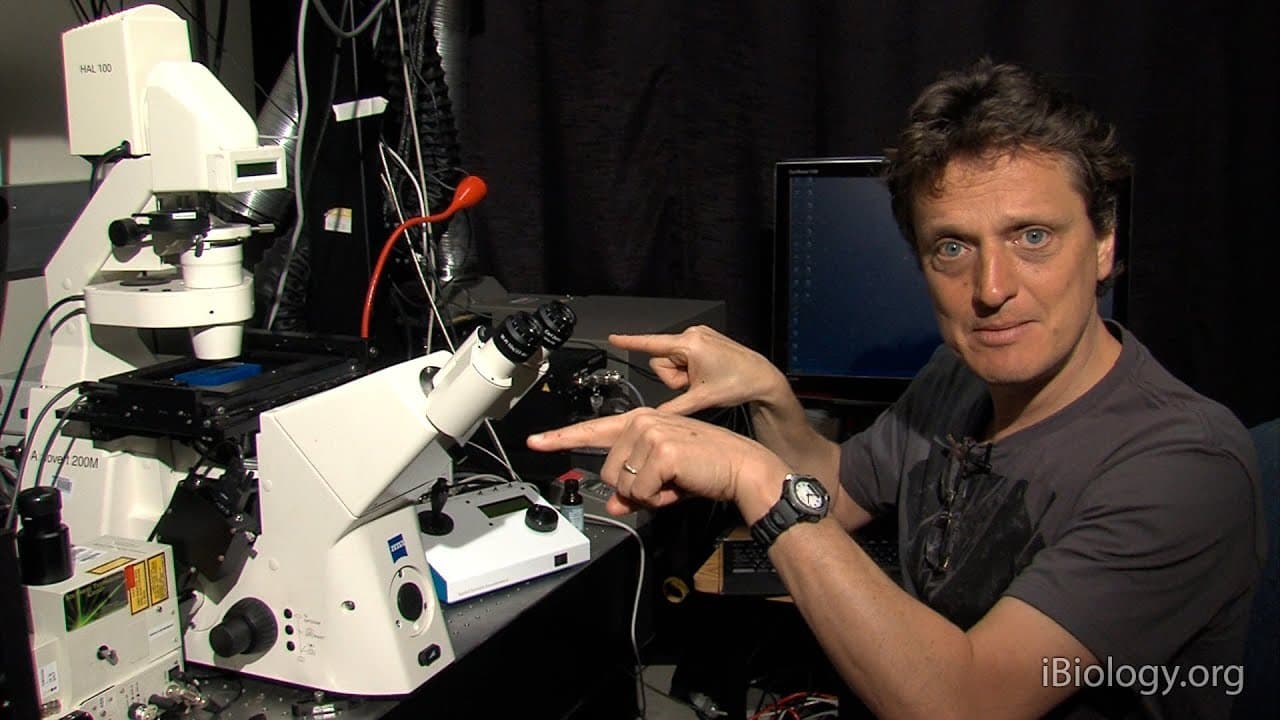
TL;DR
Align eyepiece and camera focus for optimal microscopy.
Transcript
Okay, we're going to talk about eyepieces. So, this is often a neglected part of the microscope. First of all, what often happens is that dirt accumulates on the eyepiece. These are pretty clean in this case, but dirt will definitely make it harder to see things. And so what you want to do is to clean them using an optical tissue, and you don't hav... Read More
Key Insights
- Eyepieces are often neglected in microscopy but are crucial for clear observation. Regular cleaning with optical tissue is recommended to avoid dirt accumulation, which can impair visibility.
- Each eyepiece has a wide focus range. If eyepieces are misaligned, it can cause discomfort and nausea due to differing focus for each eye.
- Aligning the focus of the eyepiece and camera is essential for seamless switching between them. This ensures that the image remains in focus across both viewing methods.
- In an ideal setup, a focusing c-mount would be available to adjust the camera's focus independently. However, in practice, this is rarely the case.
- The process involves first focusing the image on the camera using software, then adjusting each eyepiece individually to match the camera's focal plane.
- Achieving parfocality, where both eyepiece and camera are in focus simultaneously, enhances efficiency and accuracy in microscopy work.
- Switching between eyepiece and camera without losing focus saves time and reduces the need for constant readjustments during microscopy sessions.
- Proper setup of eyepieces and camera can significantly improve the user's experience, reducing eye strain and improving observation quality.
Install to Summarize YouTube Videos and Get Transcripts
Explore YouTube Video Summarizer or Get YouTube Transcript Extractor
Questions & Answers
Q: Why is it important to clean microscope eyepieces?
Cleaning microscope eyepieces is important because dirt and debris can accumulate on them, which can obstruct the view and impair the clarity of the observed image. Regular cleaning with optical tissue ensures that the eyepieces remain clear, providing a better and more accurate observation experience.
Q: What is the common issue with eyepiece focus in microscopes?
A common issue with eyepiece focus is misalignment, where each eyepiece is focused differently. This can lead to discomfort and nausea as the user tries to compensate for the differing focus with each eye. Ensuring that both eyepieces are aligned and focused correctly is essential for comfortable and accurate microscopy.
Q: How can you achieve alignment between the eyepiece and camera focus?
To achieve alignment between the eyepiece and camera focus, first focus the image on the camera using its software. Then, adjust each eyepiece individually to match the camera's focal plane. This process, known as achieving parfocality, allows for seamless switching between the eyepiece and camera without losing focus.
Q: What is parfocality, and why is it important in microscopy?
Parfocality refers to the condition where both the microscope eyepieces and camera are in focus simultaneously. It is important because it allows users to switch between viewing methods without needing to readjust the focus each time, saving time and reducing the potential for errors during microscopy work.
Q: What role does a focusing c-mount play in microscopy?
A focusing c-mount allows for the independent adjustment of the camera's focus, separate from the eyepieces. In an ideal setup, this would enable precise control over the camera's focal plane. However, such mounts are rarely available, making it necessary to adjust the eyepieces to achieve alignment with the camera.
Q: Why is it beneficial to have the camera immediately in focus when switching from the eyepiece?
Having the camera immediately in focus when switching from the eyepiece is beneficial because it reduces the need for constant adjustments, saving time and effort. This setup enhances workflow efficiency and ensures that the observed image remains clear and accurate across both viewing methods.
Q: How does proper eyepiece and camera setup improve the user's experience?
Proper eyepiece and camera setup improves the user's experience by reducing eye strain and discomfort, ensuring that images remain in focus when switching between viewing methods. This alignment allows for more efficient and accurate microscopy work, enhancing both the quality of observations and the user's comfort.
Q: What is the first step in aligning the eyepiece and camera focus?
The first step in aligning the eyepiece and camera focus is to focus the image on the camera using its software. This establishes a baseline focal plane for the camera, which the eyepieces can then be adjusted to match, ensuring that both viewing methods are in sync and providing a clear image.
Summary & Key Takeaways
-
This video provides guidance on aligning the focus of microscope eyepieces and the camera. Proper alignment is crucial for ensuring that images remain in focus when switching between the two viewing methods, enhancing efficiency and reducing eye strain.
-
The presenter emphasizes the importance of maintaining clean eyepieces and adjusting their focus to match the camera's focal plane. This setup ensures that users can seamlessly switch between observing through the eyepieces and viewing images on the camera.
-
Achieving parfocality, where both the eyepieces and camera are in focus, is highlighted as a key goal. This alignment reduces the need for constant adjustments, making microscopy work more efficient and comfortable for the user.
Read in Other Languages (beta)
Share This Summary 📚
Summarize YouTube Videos and Get Video Transcripts with 1-Click
Try YouTube Summary with ChatGPT & Claude or YouTube Transcript Generator
Explore More Summaries from iBiology Techniques 📚



Summarize YouTube Videos and Get Video Transcripts with 1-Click
Try YouTube Summary with ChatGPT & Claude or YouTube Transcript Generator