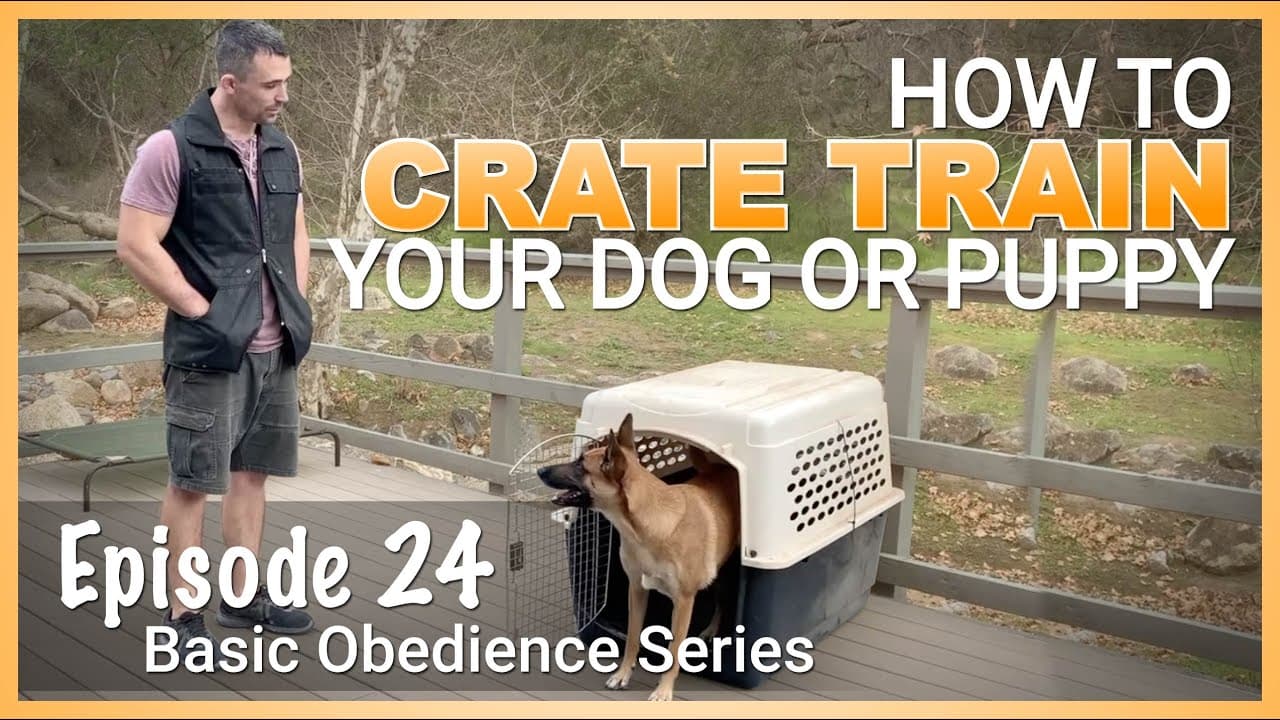
How to EASILY Crate Train your Dog or Puppy! Episode 24
TL;DR
Learn simple techniques for effective dog crate training.
Transcript
season the great command if you've already watched the introduction to the house who saw stood a little bit in that video but I want to go a little bit more into detail on it we're gonna use the reward base and then we're also gonna do the pressure based so again first thing we want to do take the food throat into the creek here's it he goes inside... Read More
Key Insights
- Crate training involves using both reward-based and pressure-based techniques to encourage dogs to enter and stay in the crate.
- Food rewards are used to motivate dogs to enter the crate willingly, making it a fun and positive experience.
- Leash pressure can be applied to guide dogs into the crate, with pressure released once the dog complies, reinforcing the desired behavior.
- Consistency is key; dogs learn that resisting entry into the crate does not yield rewards, reducing resistance over time.
- Crate training should include teaching dogs to stay in the crate, gradually increasing the duration and distance from the crate.
- Randomly placing dogs in the crate throughout the day helps prevent anxiety associated with being crated only during long absences.
- Crate training can be phased out once the dog reliably behaves well in the house, but crates can remain as a comforting den space.
- Understanding markers and leash pressure is essential before starting crate training to ensure effective communication with the dog.
Install to Summarize YouTube Videos and Get Transcripts
Explore YouTube Video Summarizer or Get YouTube Transcript Extractor
Questions & Answers
Q: How do you use food rewards in crate training?
Food rewards are used to encourage dogs to enter the crate willingly. By tossing food into the crate and praising the dog when it enters, the dog learns to associate the crate with positive experiences. This method makes crate training a fun and engaging game for the dog.
Q: What is the role of leash pressure in crate training?
Leash pressure is used to guide the dog into the crate. By applying gentle pressure on the leash and releasing it once the dog enters the crate, the dog learns that compliance results in the removal of pressure. This technique reinforces the desired behavior of entering the crate.
Q: How can crate training prevent anxiety in dogs?
Crate training can prevent anxiety by randomly placing dogs in the crate throughout the day, rather than only when leaving for extended periods. This helps the dog associate the crate with normal daily activities and reduces the likelihood of anxiety when crated during absences.
Q: When can crate training be phased out?
Crate training can be phased out when the dog consistently behaves well in the house without engaging in undesirable behaviors. If the dog can be left alone without supervision and does not cause any damage or have accidents, it may no longer need to be crated.
Q: Why might you keep a crate even after training?
A crate can be kept as a den space for the dog, offering a place of comfort and security. Many dogs enjoy having a space they can retreat to, even if they no longer need to be crated for training purposes. Removing the door can provide easy access for the dog.
Q: What are the prerequisites for starting crate training?
Before starting crate training, it's important that the dog understands markers and leash pressure. These foundational skills are crucial for effective communication during training, ensuring the dog comprehends what is being asked and can respond appropriately.
Q: How does consistency impact crate training?
Consistency in crate training helps the dog understand what is expected and reduces resistance over time. By consistently applying the same techniques and rewarding desired behaviors, the dog learns that entering and staying in the crate leads to positive outcomes.
Q: What should you do if a dog resists entering the crate?
If a dog resists entering the crate, maintain the pressure and wait patiently. Do not reward the dog while it is resisting. Once the dog enters the crate, release the pressure and reward it. This teaches the dog that resistance does not work and compliance is rewarded.
Summary & Key Takeaways
-
This video demonstrates effective techniques for crate training dogs using a combination of reward and pressure-based methods. It emphasizes the importance of consistency and patience in teaching dogs to enter and stay in the crate willingly.
-
The trainer highlights the use of food rewards and leash pressure to guide dogs into the crate, gradually reducing resistance and building positive associations with the crate. Random crate sessions help prevent anxiety.
-
Crate training can be phased out as dogs learn to behave appropriately in the house. However, crates can remain as a den space for dogs. Understanding markers and leash pressure is crucial for successful training.
Read in Other Languages (beta)
Share This Summary 📚
Summarize YouTube Videos and Get Video Transcripts with 1-Click
Try YouTube Summary with ChatGPT & Claude or YouTube Transcript Generator
Explore More Summaries from Nate Schoemer 📚



Summarize YouTube Videos and Get Video Transcripts with 1-Click
Try YouTube Summary with ChatGPT & Claude or YouTube Transcript Generator