After Roe v. Wade, What Next?
TL;DR
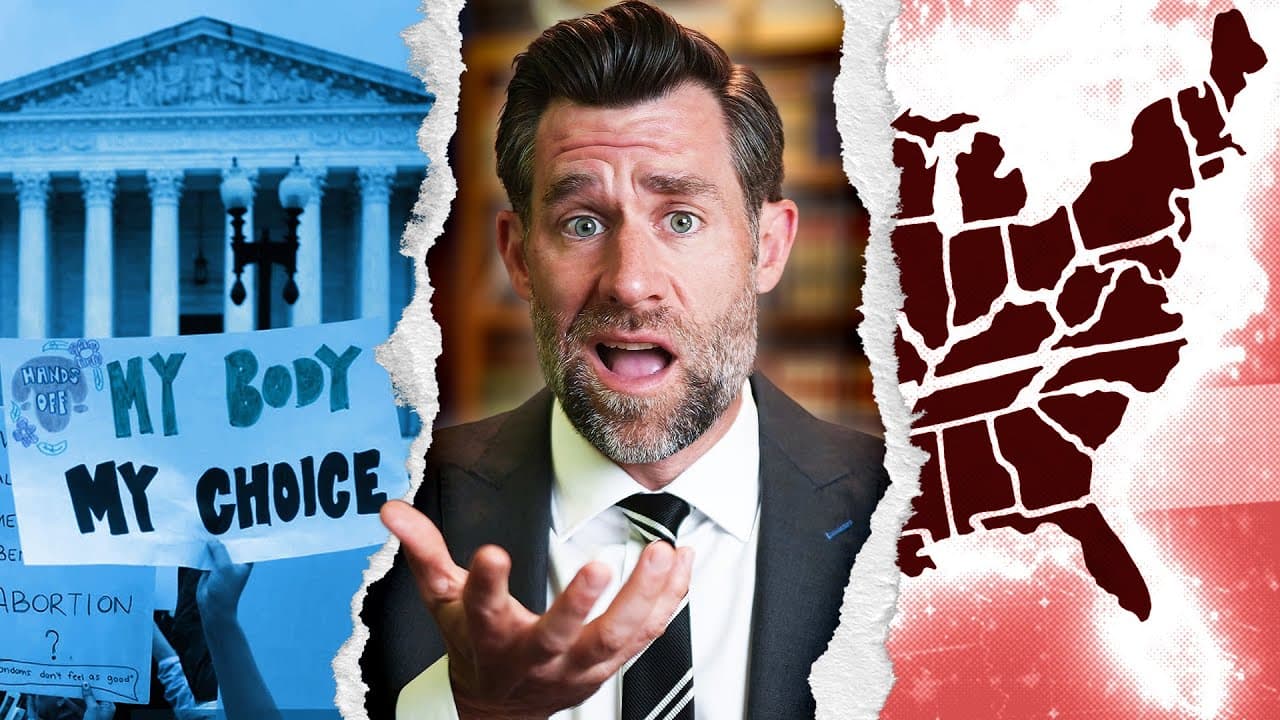
After Roe v. Wade, states can regulate and criminalize abortion under rational basis review, creating a patchwork of protections, bans, and unresolved interstate conflicts. Thirteen states had trigger laws, but only five included exceptions for rape or incest, while Connecticut created protections for people involved in abortions performed there. Read on for answers about six-week bans, abortion pills, religious claims, fetal personhood, and interstate travel.
Transcript
- That Roe is dead opens more questions than it answers. What happens next after the Dobb's decision? Well, today we're going to look at some of the most pressing issues from trigger laws to abortion pills, to federal codification of Roe. And we start with the idea of whether states can criminalize abortion. The answer here is obviously yes they ca... Read More
Key Insights
- 🥺 The Supreme Court's ruling has allowed states to regulate and criminalize abortion, leading to a complex patchwork of laws across the country.
- 👮 Trigger laws and limited exceptions for rape or incest highlight the varied approaches and restrictions on abortion access in different states.
- 💌 The potential recognition of fetal personhood and restrictions on abortion pills through mail order may further limit reproductive rights.
- 👮 Interstate travel for abortion, the future of abortion laws in Washington D.C., congressional actions, and the First Amendment's implications pose additional challenges and uncertainties.
- 🤨 The Supreme Court's narrowing view of substantive due process raises concerns about the potential rollback of other constitutional rights.
- 😀 Reproductive health charities are likely to face increased challenges and may require support.
Install to Summarize YouTube Videos and Get Transcripts
Explore YouTube Video Summarizer or Get YouTube Transcript Extractor
Questions & Answers
Q: Can states criminalize abortion after the Dobbs decision?
Yes. The Supreme Court ruled that abortion laws are subject to rational basis review, so states may regulate or criminalize abortion when they have a rational reason for the law. Dobbs did not take an official position on whether states should prosecute patients, abortion providers, or people who help someone obtain an abortion, leaving those decisions to each state.
Q: What are abortion trigger laws, and how many states had them?
Trigger laws were designed to ban abortion once Roe and Casey were overturned. Thirteen states had such laws on the books, with five states already banning abortion and eight states expected to do so soon.
Q: Do state trigger laws include exceptions for rape or incest?
Only five of the 13 states with trigger laws had exceptions for rape or incest. All 13 included exceptions intended to save the life of the pregnant woman.
Q: What happened to six-week abortion bans after Roe was overturned?
Before Dobbs, federal courts had unanimously struck down so-called fetal-heartbeat laws that prohibited abortion after detecting a fetal heartbeat. Ohio, Georgia, South Carolina, and Iowa had passed trigger laws imposing six-week bans, although Georgia's law was enjoined by a court at the time discussed.
Q: How are abortion-protective states responding to abortion bans elsewhere?
The transcript identifies 27 states where abortion was protected and likely to remain so. Connecticut enacted a law preventing its agencies from participating in investigations, lawsuits, or prosecutions involving abortions performed there, and it allowed residents to countersue if sued for helping out-of-state abortion patients.
Q: Can states stop someone from traveling elsewhere for an abortion?
The Dobbs case did not directly resolve interstate travel for abortion. Justice Kavanaugh expressed the view that states cannot prohibit women from traveling to another state for an abortion, but conflicts between state protections and restrictions remained unsettled.
Q: Could religious-liberty claims affect abortion care or medication?
Many states allow pharmacists to refuse prescriptions based on moral or religious objections. The transcript says pharmacists and medical providers might claim a right to withhold abortion medication or decline services such as surgery for an ectopic pregnancy, while the treatment of those claims remained unclear.
Q: Could fetal personhood lead to broader abortion restrictions?
Anti-abortion activists argue that embryos and fetuses should receive individual rights, sometimes beginning at conception. The transcript says unborn lives had not historically been treated as persons for constitutional rights or counted in the U.S. Census, but Justice Alito left the door open to fetal personhood in the Dobbs opinion.
Summary & Key Takeaways
-
The Supreme Court's ruling allows states to regulate and criminalize abortion, giving rise to a patchwork of laws across the country.
-
Trigger laws in 13 states ban abortion after the overturning of Roe v. Wade, with limited exceptions for saving the life of the pregnant woman but no exceptions for rape or incest.
-
Fetal personhood and potential limitations on abortion pills through mail order may redefine the scope of reproductive rights.
-
Interstate travel for abortion, the future of abortion laws in Washington D.C., potential congressional actions, and the First Amendment implications add further complexity and uncertainty.
Read in Other Languages (beta)
Share This Summary 📚
Summarize YouTube Videos and Get Video Transcripts with 1-Click
Try YouTube Summary with ChatGPT & Claude or YouTube Transcript Generator
Explore More Summaries from LegalEagle 📚






Summarize YouTube Videos and Get Video Transcripts with 1-Click
Try YouTube Summary with ChatGPT & Claude or YouTube Transcript Generator