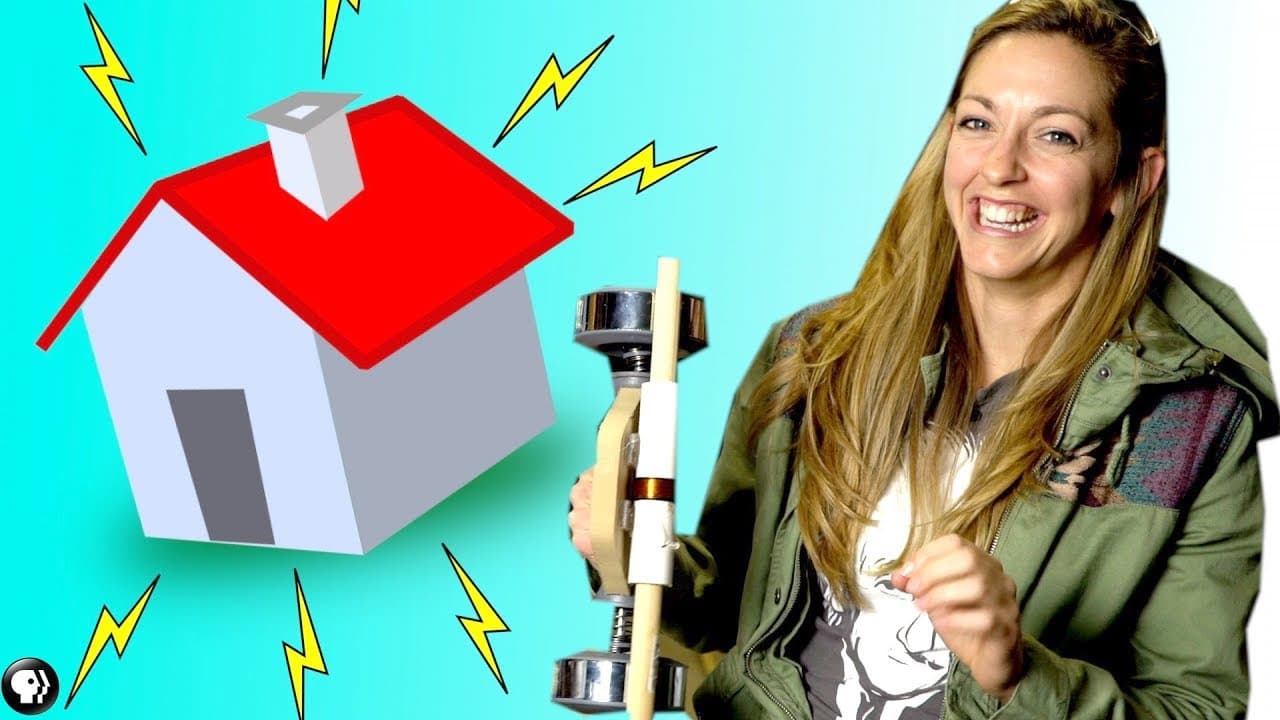
Can you power a house with a ShakeWeight?
TL;DR
Physics enthusiast Dianna Cowern modifies a ShakeWeight to generate electricity and explores the progress and challenges of clean energy.
Transcript
[MUSIC PLAYING] DIANNA COWERN: Thanks to Bill and Melinda Gates for supporting PBS Digital Studios. Robert, are you ready? So this is Robert. He's my roommate. Hi. He also happens to be a physicist. So Robert, this is my device, co-designed and made by Kyle. Have you heard of a ShakeWeight? I have not heard of the-- what? You shake it like this... Read More
Key Insights
- ℹ️ Dianna showcases the potential of electromagnetic induction as a source of clean energy.
- 🛩️ Clean energy accounts for a smaller percentage of overall energy consumption compared to electricity production.
- 🪡 The transportation sector poses challenges for clean energy adoption due to the need for energy storage and limited infrastructure.
- 🛀 Despite the limited success of the ShakeWeight experiment, progress in clean energy technology shows promise for the future.
- 🪡 The magnitude of energy consumption and the challenges of clean energy highlight the need for continued innovation and progress.
- 💌 Bill and Melinda Gates' annual letter emphasizes the importance of optimism in addressing global challenges.
Install to Summarize YouTube Videos and Get Transcripts
Explore YouTube Video Summarizer or Get YouTube Transcript Extractor
Questions & Answers
Q: How does Dianna modify the ShakeWeight to generate electricity?
Dianna adds a magnet connected to a rod, which moves back and forth through a coil of wire, utilizing electromagnetic induction to produce an electromotive force that powers an LED.
Q: What is the percentage of energy in the US that comes from clean energy?
Clean energy accounts for approximately 10% of total US energy and 15% of US electricity, as not all energy is used for electricity production.
Q: Which sectors consume the most energy in the US?
In the US, transportation consumes the most energy at 29%, followed by industrial (22%), residential (6%), and commercial (4%) sectors.
Q: How efficient is the ShakeWeight in generating electricity?
The average power produced by the ShakeWeight experiment is 0.004 watts, indicating its inefficiency in powering a house. It would take 7,500,000 hours of shaking the ShakeWeight to produce enough energy for a day.
Summary & Key Takeaways
-
Dianna modifies a ShakeWeight by adding a magnet and coil of wire to generate electricity through electromagnetic induction.
-
She aims to determine how long it would take for such a device to produce enough energy to power a house for a day.
-
Dianna quizzes herself on the current state and progress of clean energy, exploring the percentage of energy in the US that comes from renewables and the overall energy consumption.
Read in Other Languages (beta)
Share This Summary 📚
Summarize YouTube Videos and Get Video Transcripts with 1-Click
Try YouTube Summary with ChatGPT & Claude or YouTube Transcript Generator
Explore More Summaries from Physics Girl 📚





Summarize YouTube Videos and Get Video Transcripts with 1-Click
Try YouTube Summary with ChatGPT & Claude or YouTube Transcript Generator