Q&A 63: Why Can't We Find Planet 9? And More...
TL;DR
Astronomers discuss the potential existence of Planet Nine, the practicality of using parachutes to recover boosters, how the Moon is illuminated, the escape velocity of the Moon, how the Hubble Space Telescope takes in-depth photos, the Great Attractor, calculating orbits around celestial bodies, the concept of Dyson Spheres, and the reflectors on the Moon.
Transcript
question show time your questions my answers as always wherever you are anywhere on my channel question popped in your brain write it down in the comments I will gather a bunch of them up and I will answer them here and did you know that I do another separate question show just for the people who subscribe to the newsletter it's a secret it's only ... Read More
Key Insights
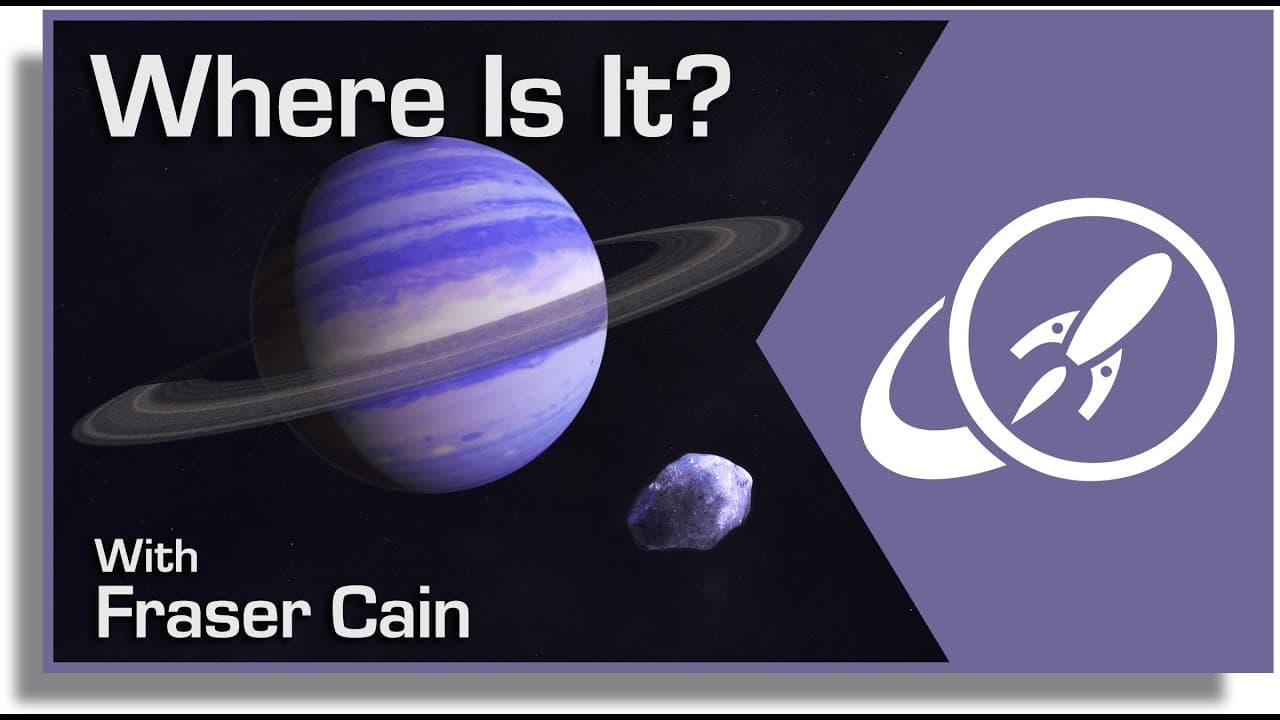
- 🦾 Determining the exact location of Planet Nine is difficult due to the turbulence of orbital mechanics and the limitations of calculations.
- ⬛ Parachutes are not practical for recovering boosters as they are too large, lack control, and may be damaged upon landing in water.
- 🧘 The Moon is illuminated by reflected sunlight, and its phases indicate the Sun's position from the Earth.
- ✋ The escape velocity of the Moon is too high for humans to jump off it, but smaller objects can be escaped from.
- 😥 The Hubble Space Telescope captures detailed photos by pointing at specific targets for extended periods of time.
- 🌌 The Great Attractor is a dense supercluster of galaxies beyond the Milky Way, and its full observation will become possible as the Milky Way rotates.
- 👮 Calculating orbits around celestial bodies involves using Newton's law of universal gravitation.
- 🤩 Dyson Spheres are impractical, but Dyson swarms are a more feasible approach for capturing a star's energy.
Install to Summarize YouTube Videos and Get Transcripts
Explore YouTube Video Summarizer or Get YouTube Transcript Extractor
Questions & Answers
Q: Can we calculate when objects in the Kuiper belt shifted to their current orbits to infer the existence of Planet Nine?
While it is theoretically possible to trace back orbits, the chaotic nature of orbital mechanics and the limitations of predicting future positions make it impossible to determine the exact location of Planet Nine with current knowledge.
Q: Why haven't parachutes been used to recover boosters like the Apollo capsules?
Parachutes are impractical due to the large size and lack of control over landing locations. Boosters are now recovered using powered descent and landing, which is more efficient and allows for multiple launches.
Q: How is the Moon illuminated during the full moon phase?
The Moon is illuminated by the Sun, and the light reflected from its surface is what makes it appear bright during the full moon phase.
Q: What is the escape velocity of the Moon, and can humans jump off it?
The escape velocity of the Moon is too high for humans to jump off it. It requires an initial velocity of 2.38 km/s, which is faster than a bullet.
Q: How does the Hubble Space Telescope capture in-depth photos while in low-earth orbit?
The Hubble Space Telescope can observe different targets by pointing itself in various directions. Extended observations of specific targets allow for detailed photos, as seen in the famous image of thousands of galaxies.
Q: What is the Great Attractor, and can we eventually observe it clearly?
The Great Attractor is a supercluster of galaxies located on the other side of the Milky Way. As the Milky Way rotates, we will gradually have a clearer view of the Great Attractor until it is no longer obscured by the core of our galaxy.
Q: How do astronomers calculate the necessary power and speed to keep objects in stable orbit around celestial bodies?
Calculating stable orbits involves using Newton's law of universal gravitation, which requires knowing the mass of the celestial body. Astronomers can determine the orbital velocities and distances to calculate mass.
Q: Are Dyson Spheres practical, and what impact would their construction have on the equilibrium of star systems?
Dyson Spheres are not practical due to the enormous amount of material required. However, building Dyson swarms, where solar collecting satellites orbit the star, is a more feasible approach. The dismantling of planets in a star system would not impact the equilibrium, and in some cases, could even stabilize the system.
Q: How did the Earth survive a collision with another planet in the past to form the Moon?
The collision between a planet the size of Mars and the Earth caused the Earth to turn molten. The debris from this collision eventually coalesced to form the Moon. Over time, the Earth cooled and solidified, allowing for the development of water and the planet we see today.
Summary & Key Takeaways
-
Astronomers cannot accurately determine the past or future orbits of objects in the Kuiper belt or the exact location of Planet Nine due to the chaotic nature of orbital mechanics.
-
Parachutes are not practical for recovering boosters as they are too large, lack control over the landing location, and the seawater would damage them upon landing in water.
-
The Moon is illuminated by reflected sunlight and its phases indicate the location of the Sun in relation to the Moon.
-
The escape velocity of the Moon is too high for humans to jump off it, but smaller objects like comets and asteroids have lower escape velocities.
-
The Hubble Space Telescope can take detailed photos by pointing itself in different directions and observing specific targets for extended periods of time.
-
The Great Attractor is a supercluster of galaxies located on the other side of the Milky Way and can be observed using different wavelengths.
-
Calculating orbits around celestial bodies involves using Newton's law of universal gravitation to determine their masses and distance.
-
Dyson Spheres are more likely to be Dyson swarms, where multiple solar collecting satellites or stations orbit a star to capture its energy.
-
Reflectors left on the Moon by Apollo astronauts are used to study the precise distance to the Moon and can detect weathering from micrometeorites.
Read in Other Languages (beta)
Share This Summary 📚
Summarize YouTube Videos and Get Video Transcripts with 1-Click
Try YouTube Summary with ChatGPT & Claude or YouTube Transcript Generator
Explore More Summaries from Fraser Cain 📚

Summarize YouTube Videos and Get Video Transcripts with 1-Click
Try YouTube Summary with ChatGPT & Claude or YouTube Transcript Generator