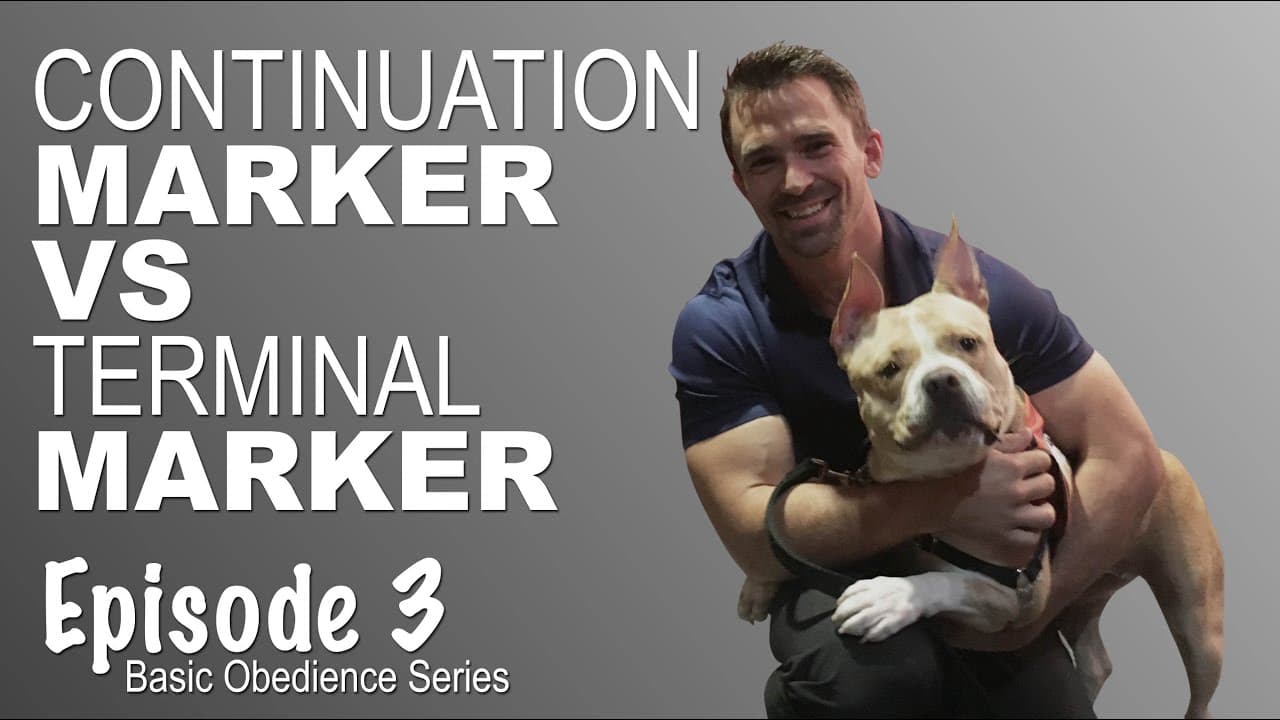
Dog Training | Continuation Marker vs The Terminal Marker - Episode 3
TL;DR
Continuation and terminal markers enhance training by clarifying commands.
Transcript
what is the difference between a continuation marker and a terminal marker well both of them are pinpointing a moment in time when your dog is correct so your dog does a sit you have the continuation marker or your dog does a sit and you use the terminal marker well the continuation marker is letting our dog know you're correct but I'm gonna bring ... Read More
Key Insights
- Continuation markers are used to tell the dog they are correct and to remain in their current position, as the reward will be brought to them.
- Terminal markers indicate to the dog that they have completed the exercise correctly and can come to receive their reward.
- Using both markers effectively can speed up training and improve communication between the trainer and the dog.
- The choice between continuation and terminal markers depends on the dog's temperament and the desired training outcome.
- Terminal markers are often used in the beginning stages to make training more engaging and fun for the dog.
- The speed of a dog's response is influenced by their motivation, which can be increased through positive reinforcement.
- Using terminal markers can prevent reinforcing a stay prematurely when the focus is on teaching specific behaviors.
- Verbal commands are crucial for determining when a dog is in a 'stay' position and when markers should be applied.
Install to Summarize YouTube Videos and Get Transcripts
Explore YouTube Video Summarizer or Get YouTube Transcript Extractor
Questions & Answers
Q: What is the purpose of a continuation marker in dog training?
A continuation marker is used to inform a dog that they have performed the desired behavior correctly and should maintain their position, as the trainer will bring the reward to them. It is particularly useful for training stability and duration in a specific position, such as a sit or stay.
Q: How does a terminal marker differ from a continuation marker?
A terminal marker signals to the dog that they have completed the exercise correctly and are free to move from their position to receive their reward. This marker is often used to create excitement and motivation, encouraging the dog to perform the behavior quickly and enthusiastically.
Q: Why might a trainer use a terminal marker more frequently at the start of training?
A trainer might use a terminal marker more frequently at the start of training to make the sessions more engaging and fun for the dog. The terminal marker encourages a quick response by allowing the dog to anticipate a reward immediately after completing the behavior, enhancing motivation and enthusiasm.
Q: How does motivation affect a dog's response speed in training?
Motivation significantly affects a dog's response speed. A highly motivated dog will perform behaviors more quickly due to the anticipation of a reward. Positive reinforcement, such as using terminal markers, can boost motivation by associating quick, enthusiastic responses with immediate rewards, thereby improving training efficiency.
Q: When should a trainer avoid reinforcing a stay with a terminal marker?
A trainer should avoid reinforcing a stay with a terminal marker when the focus is on teaching specific behaviors rather than maintaining position. If the trainer is not ready to reinforce the stay, using a terminal marker helps prevent premature reinforcement, allowing the trainer to focus on behavior accuracy first.
Q: What role do verbal commands play in using markers effectively?
Verbal commands are crucial in using markers effectively, as they define when a dog is in a 'stay' position. Only when a verbal command is given does the dog understand they are in a stay, guiding the appropriate use of continuation or terminal markers based on the training context.
Q: How can continuation markers help with a hyperactive dog during training?
Continuation markers can help manage a hyperactive dog by encouraging them to maintain a position and calm down. By informing the dog that they are correct and a reward is coming, the continuation marker can reduce excitement levels, promoting stability and duration in their behavior.
Q: What is the benefit of using both continuation and terminal markers in training?
Using both continuation and terminal markers in training provides clarity and enhances communication with the dog. It allows the trainer to reinforce behaviors accurately, manage the dog's excitement and motivation levels, and create a structured training environment that encourages quick and correct responses.
Summary & Key Takeaways
-
The video explains the difference between continuation and terminal markers in dog training, emphasizing how each marker serves to communicate specific instructions to the dog. Continuation markers reinforce a behavior by bringing the reward to the dog, while terminal markers release the dog to receive their reward.
-
The choice of marker depends on the training goals and the dog's behavior. Terminal markers are typically used early in training to create excitement and engagement, while continuation markers help in maintaining stability and duration in a position.
-
Proper use of markers enhances the clarity of communication in training, with verbal commands indicating when a dog is in a 'stay' position. Motivation plays a key role in the speed and enthusiasm of a dog's response, influenced by the type of marker used.
Read in Other Languages (beta)
Share This Summary 📚
Summarize YouTube Videos and Get Video Transcripts with 1-Click
Try YouTube Summary with ChatGPT & Claude or YouTube Transcript Generator
Explore More Summaries from Nate Schoemer 📚






Summarize YouTube Videos and Get Video Transcripts with 1-Click
Try YouTube Summary with ChatGPT & Claude or YouTube Transcript Generator