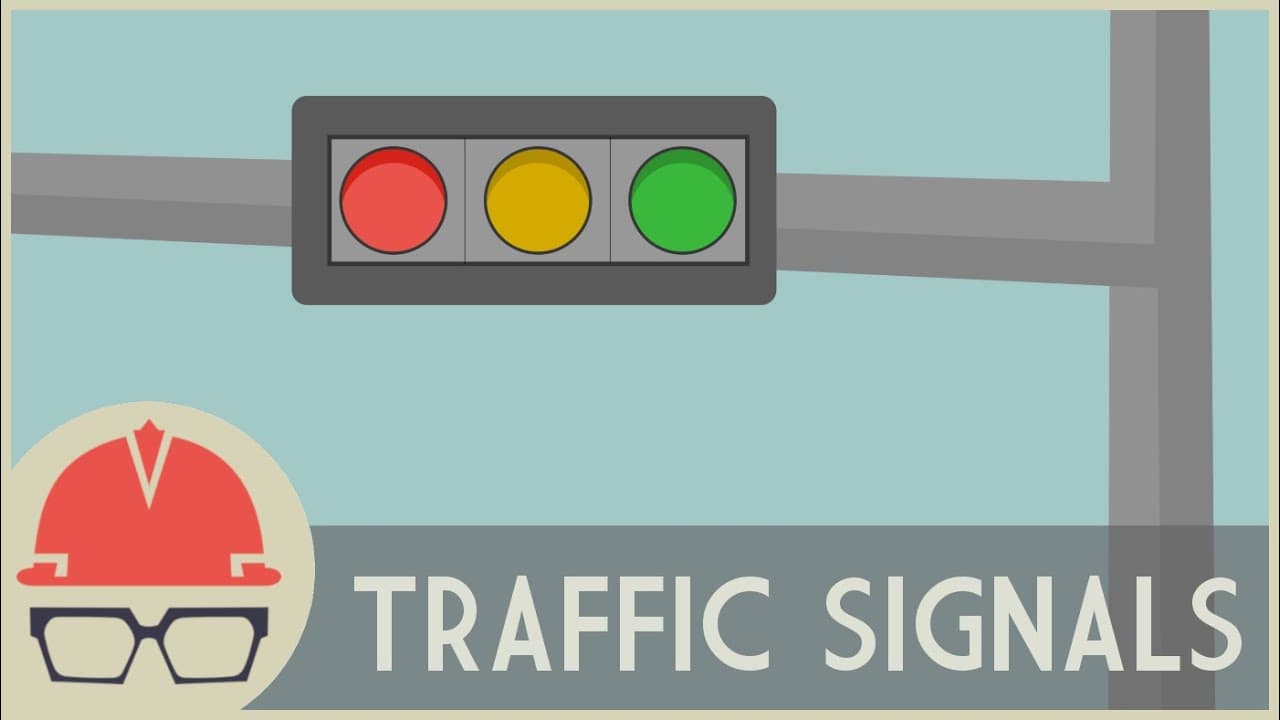
How Do Traffic Signals Work?
TL;DR
Traffic signals are crucial for managing urban traffic efficiently.
Transcript
If you live in a major city, I can take a pretty good guess at one of your most common frustrations: traffic. In city driving, the journey is rarely better than the destination. In most cases, we just want to get where we’re going. Traffic is not just frustrating, but it has consequences to the environment as well. All those idling vehicles have an... Read More
Key Insights
- Traffic signals are vital for managing the flow of vehicles, pedestrians, and bikes at intersections, balancing safety and efficiency.
- Intersections are the main limiters of roadway capacity, requiring careful design to maximize traffic throughput and minimize accidents.
- Traffic signals offer a cost-effective and space-efficient solution for handling large volumes of traffic with minimal interruptions.
- Actuated signal control allows traffic signals to adapt to real-time traffic conditions using data from sensors like inductive loops.
- Signal coordination can improve traffic flow on major roads by timing lights to allow vehicle platoons to pass through without stopping.
- Adaptive signal control technologies use centralized systems and algorithms to optimize traffic flow across entire networks.
- Self-driving cars could revolutionize traffic management, potentially eliminating the need for traffic signals through vehicle communication.
- Traffic congestion is self-limiting, as increased road capacity often leads to more traffic, maintaining congestion levels.
Install to Summarize YouTube Videos and Get Transcripts
Explore YouTube Video Summarizer or Get YouTube Transcript Extractor
Questions & Answers
Q: What is the primary function of traffic signals?
Traffic signals primarily manage the flow of vehicles, pedestrians, and bikes at intersections. They assign the right-of-way, helping to balance safety and efficiency by controlling when different streams of traffic can proceed. This is crucial in urban areas where multiple traffic streams intersect, making it essential to manage these interactions effectively.
Q: How do actuated signal controls work?
Actuated signal controls use data from traffic detection systems, such as inductive loop sensors, to adjust light timing and sequence in real-time. These systems allow signals to adapt to varying traffic conditions, improving efficiency by reducing wait times and accommodating unexpected traffic changes, such as road closures or special events.
Q: What are the benefits of signal coordination?
Signal coordination aligns the timing of traffic lights along major roadways, allowing vehicle platoons to pass through multiple intersections without stopping. This increases the volume of traffic that can move through a corridor, reducing congestion and improving travel times. It is particularly effective on roads with frequent but minor cross streets.
Q: What is adaptive signal control technology?
Adaptive signal control technology (ASCT) uses a centralized system to optimize traffic flow across an entire network. It collects data from detectors at intersections and employs algorithms to adjust signal timing, reducing congestion and enhancing efficiency. ASCT represents a significant advancement in traffic management, leveraging modern computing and data analysis.
Q: How might self-driving cars impact traffic management?
Self-driving cars could revolutionize traffic management by enabling vehicle-to-vehicle communication, potentially eliminating the need for traditional traffic signals. This could allow for uninterrupted traffic flow, as vehicles coordinate their movements in real-time. However, the full integration of self-driving technology into urban traffic systems remains a future goal.
Q: What challenges do traffic signals face in urban areas?
Traffic signals in urban areas face challenges such as balancing multiple traffic streams, ensuring safety, and minimizing congestion. Intersections are major bottlenecks, requiring careful design and signal timing to maximize efficiency. Additionally, urban congestion is self-limiting, as increased capacity often leads to more traffic, maintaining congestion levels.
Q: Why is traffic congestion considered self-limiting?
Traffic congestion is considered self-limiting because any increase in road capacity tends to attract more vehicles, quickly filling the available space and restoring congestion to previous levels. This latent demand means that even with improvements, congestion persists as additional capacity encourages more people to drive during peak times.
Q: What role do sensors play in modern traffic signals?
Sensors, such as inductive loop detectors, video cameras, and radars, play a crucial role in modern traffic signals by providing real-time data on traffic conditions. This information allows actuated and adaptive signal control systems to adjust light timing and sequence dynamically, improving traffic flow and reducing delays at intersections.
Summary & Key Takeaways
-
Traffic signals play a crucial role in managing urban traffic by efficiently controlling the flow of vehicles, pedestrians, and bikes at intersections. They balance safety and efficiency, offering a cost-effective solution for handling large volumes of traffic with minimal interruptions.
-
Intersections are the primary bottlenecks in roadway capacity, requiring careful design to maximize throughput and minimize accidents. Traffic signals provide a flexible solution, adapting to real-time conditions through actuated control and improving flow with signal coordination.
-
Advanced technologies like adaptive signal control and the future potential of self-driving cars promise to further enhance traffic management. However, urban congestion remains a significant challenge due to self-limiting factors and latent demand.
Read in Other Languages (beta)
Share This Summary 📚
Summarize YouTube Videos and Get Video Transcripts with 1-Click
Try YouTube Summary with ChatGPT & Claude or YouTube Transcript Generator
Explore More Summaries from Practical Engineering 📚





Summarize YouTube Videos and Get Video Transcripts with 1-Click
Try YouTube Summary with ChatGPT & Claude or YouTube Transcript Generator