Rings Around Stars, Laser Space Propulsion, Life on Cold Moons | Q&A 206
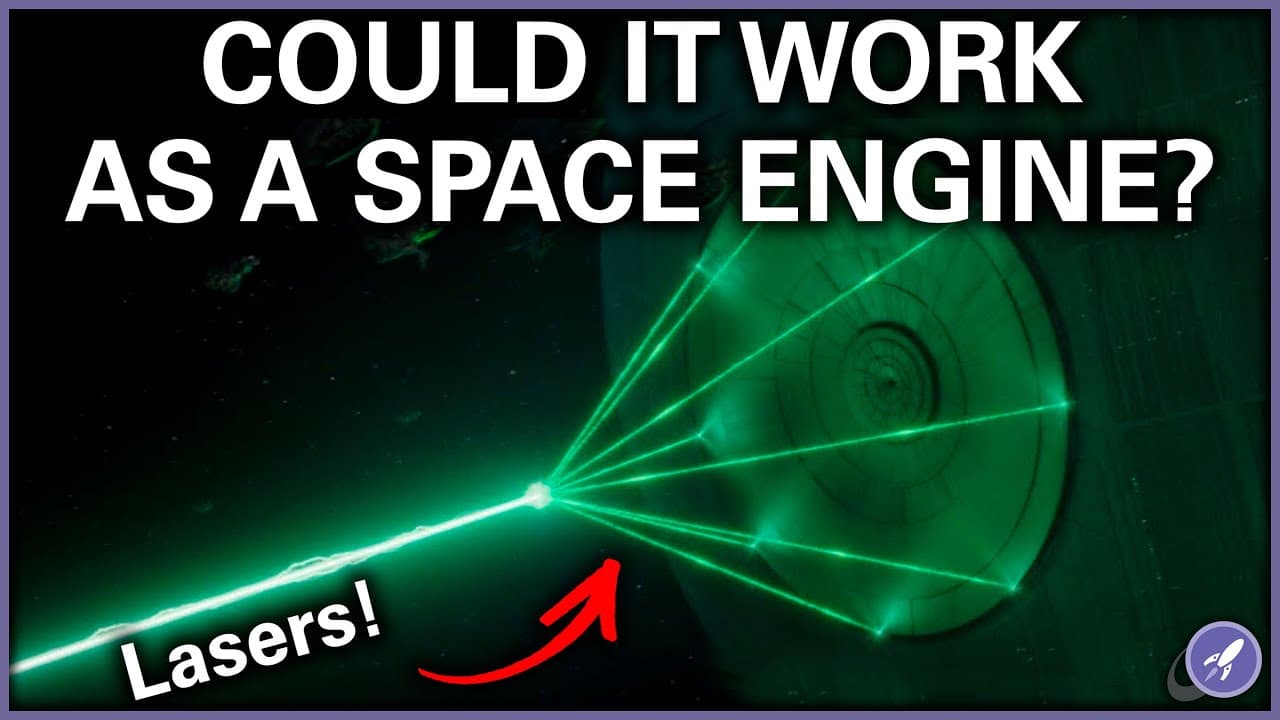
TL;DR
In this week's question show, Fraser answers various inquiries, including the possibility of stars having rings, observing the same star at different times, using balloons to launch rockets, and more.
Transcript
can stars have rings could we see the same star at different times and can balloons launch rockets all this and more in this week's question show welcome to New Year and another question show your questions my answers now wherever you are across my channel if a question Pops in your brain just write it down I'll gather them up and I will answer the... Read More
Key Insights
- 👨🎤 Stars can have rings made of dust or rock, while icy rings would melt closer to a star.
- 🙂 Gravitational lensing allows the observation of multiple images of the same object, revealing insights into the light's journey.
- 🚀 Launching rockets from balloons faces challenges in achieving the necessary velocity for orbit.
Install to Summarize YouTube Videos and Get Transcripts
Explore YouTube Video Summarizer or Get YouTube Transcript Extractor
Questions & Answers
Q: Can stars have rings?
Yes, stars can have rings. While Saturn's rings are made of icy material that would melt closer to a star, rings made of dust or rock can exist. There are also protoplanetary disks observed around newly forming stars.
Q: Could we see the same star at different times?
Gravitational lensing can produce multiple images of the same object, resulting in the ability to see the same star at different times. The light's journey around a massive foreground object can create different paths, providing insights into the gravitational lens properties.
Q: Can balloons launch rockets?
While the idea of launching rockets from balloons has been explored, it is not a simple process. Achieving the required sideways velocity for orbit is challenging, and the logistics of launching from a balloon platform can be complex.
Q: How could life survive in frigid temperatures on outer moons?
Life can survive in frigid temperatures if there is access to liquid water. Moons like Europa and Enceladus have subsurface oceans heated by tidal interactions, creating a potential environment for life.
Summary & Key Takeaways
-
Stars can have rings, like Saturn, but closer to a star, the radiation would melt the rings. However, rings made of dust or rock can exist around stars, and astronomers have observed many examples of protoplanetary disks around newly forming stars.
-
Gravitational lensing can allow multiple images of the same object, including galaxies, to be seen at different times. These images can provide insights into the properties of gravitational lenses and the light's journey.
-
Launching rockets from an airship or balloon has been considered, but it poses challenges due to the need for high sideways velocity to enter orbit. Additionally, the complexity of launching from a balloon platform and the difference in altitude wouldn't offer significant advantages.
-
In cold temperatures, life can survive and potentially begin if there is access to liquid water. Moons like Europa and Enceladus have subsurface oceans that could support life due to tidal heating and the presence of liquid water.
Read in Other Languages (beta)
Share This Summary 📚
Summarize YouTube Videos and Get Video Transcripts with 1-Click
Try YouTube Summary with ChatGPT & Claude or YouTube Transcript Generator
Explore More Summaries from Fraser Cain / Universe Today Podcast 📚


Summarize YouTube Videos and Get Video Transcripts with 1-Click
Try YouTube Summary with ChatGPT & Claude or YouTube Transcript Generator