Jumping to Multicellular Life with Dr. William Ratcliff
TL;DR
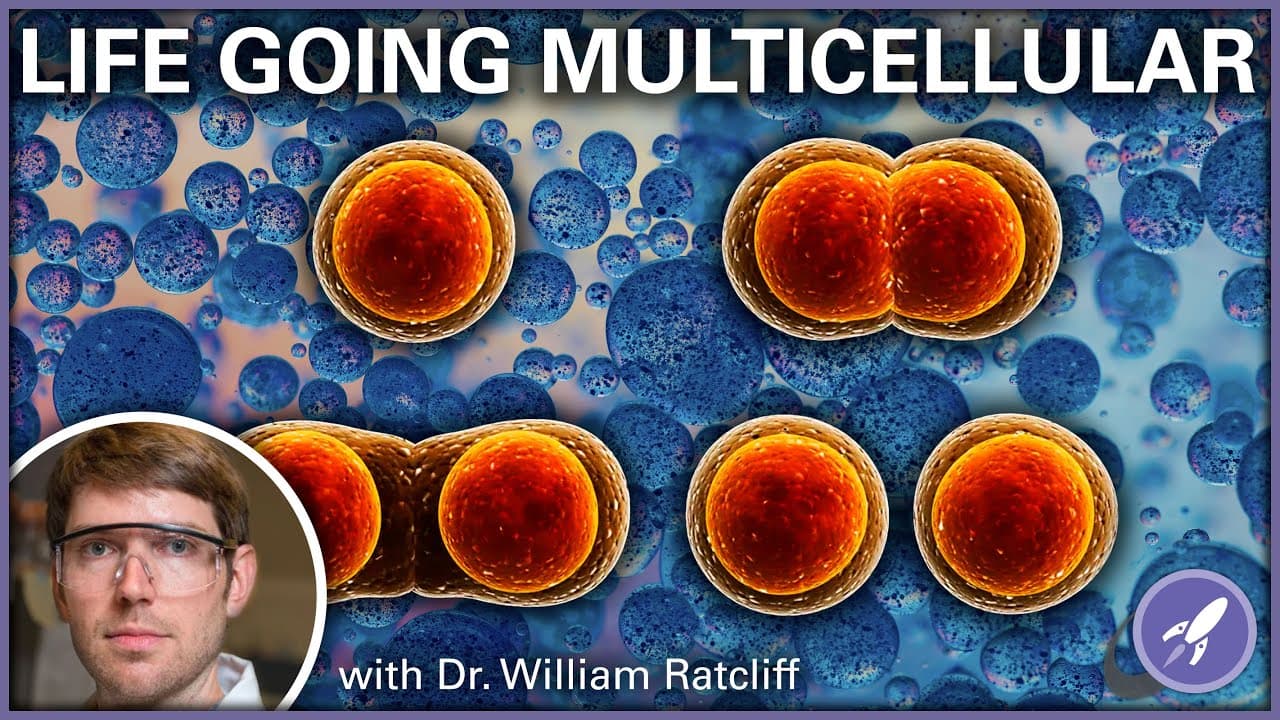
The study investigates the evolution of multicellularity using yeast as a model organism and reveals the significance of oxygen, cellular differentiation, and the emergence of complex behaviors in the transition from single-cell to multicellular life.
Transcript
Fraser Cain: Yeah, it's great. It's great. All right. People are wondering what's going on here. Hi, everyone. I'm Fraser Cain. I've been a space and astronomy journalist for over 20 years. I'm the publisher of Universe Today. And I like to bring you behind the scenes, talking to some of the people who are actually doing the science. This is going ... Read More
Key Insights
- ⌛ Multicellularity has evolved independently multiple times, with at least 50 origins identified.
- 💁 Oxygen availability influences the size and complexity of multicellular forms, with the presence of oxygen constraining growth and diffusion limitations.
- 🔬 Cellular differentiation is crucial for the division of labor and the emergence of complex behaviors in multicellular organisms.
- 💁 The evolution of multicellularity involves a gradual transition from single-celled to multicellular forms, with the integration of cells and the development of differentiated functions.
Install to Summarize YouTube Videos and Get Transcripts
Explore YouTube Video Summarizer or Get YouTube Transcript Extractor
Questions & Answers
Q: What role does oxygen play in the evolution of multicellular life?
Oxygen is essential for aerobic metabolism and provides a more efficient energy source than fermentation. It allows organisms to utilize non-fermentable carbon sources and enables the growth and development of larger, more complex multicellular forms.
Q: How does the presence or absence of oxygen affect the size and structure of multicellular organisms?
The presence of oxygen constrains the growth of multicellular organisms, as diffusion limitations impede the supply of oxygen to cells deep within the group. In its absence, multicellular yeast can grow larger, develop structural complexity, and even form entangled group structures that are resistant to fracture.
Q: What role does cellular differentiation play in the evolution of multicellularity?
Cellular differentiation is a fundamental aspect of multicellular life that allows for the division of labor and the emergence of complex behaviors. In yeast studies, the expression of specific genes involved in cell wall biogenesis contributes to the structural integrity and toughness of multicellular groups.
Q: Are the findings of this study applicable to the evolution of multicellularity in other organisms?
While the study specifically focuses on yeast, the findings provide insights into the general principles and constraints of multicellular evolution. The role of oxygen, cellular differentiation, and structural complexity are likely to be relevant in the evolution of multicellularity in other organisms as well.
Summary & Key Takeaways
-
Multicellularity has evolved independently multiple times in the history of life, with at least 50 origins identified.
-
Oxygen plays a crucial role in the evolution of multicellularity, as it enables aerobic metabolism, which is more efficient than fermentation.
-
The transition from single-celled to multicellular organisms is a complex and gradual process that involves the integration of cells and the development of differentiated functions.
-
The study focuses on yeast and demonstrates how oxygen availability influences the size and structural complexity of multicellular forms.
Read in Other Languages (beta)
Share This Summary 📚
Summarize YouTube Videos and Get Video Transcripts with 1-Click
Try YouTube Summary with ChatGPT & Claude or YouTube Transcript Generator
Explore More Summaries from Fraser Cain 📚





Summarize YouTube Videos and Get Video Transcripts with 1-Click
Try YouTube Summary with ChatGPT & Claude or YouTube Transcript Generator