How Can AI Enhance Our Memory and Work Lives?
TL;DR
AI has the potential to significantly enhance human memory and productivity by augmenting our capabilities through collaboration. Examples include tools like Siri that improve social interactions for individuals with disabilities, AI classifiers that achieve nearly perfect accuracy in cancer diagnosis, and design software that empowers engineers with thousands of options. This partnership between humans and AI can transform both personal and professional experiences.
Transcript
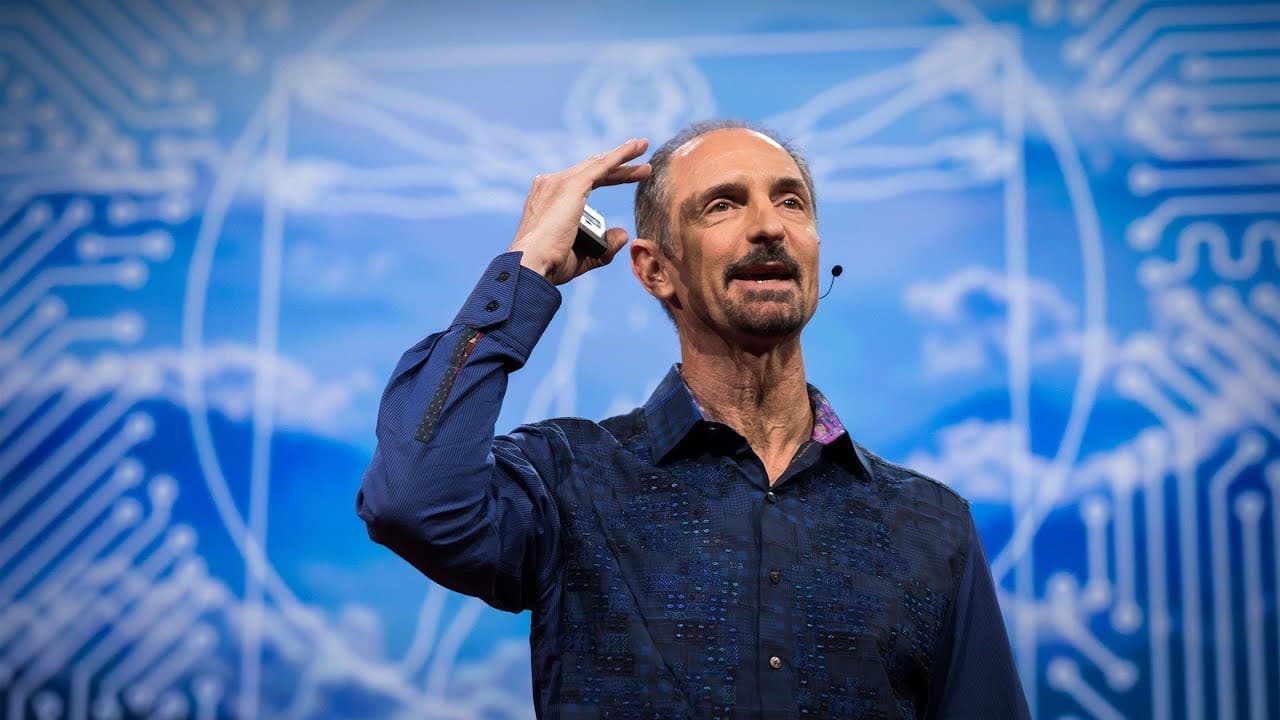
I'm here to offer you a new way to think about my field, artificial intelligence. I think the purpose of AI is to empower humans with machine intelligence. And as machines get smarter, we get smarter. I call this "humanistic AI" -- artificial intelligence designed to meet human needs by collaborating and augmenting people. Now, today I'm happy to s... Read More
Key Insights
- 🤖 Humanistic AI can empower humans by collaborating and augmenting people, making technology more accessible for all, regardless of abilities.
- 🔬 By combining the abilities of humans and machines in tasks like diagnosing cancer, accuracy can reach 99.5%, eliminating 85% of errors that humans alone would make.
- 🖥️ AI can revolutionize design processes by generating thousands of designs for engineers to choose from, enhancing human judgment and expertise.
- 🧠 Cognitive enhancement through AI could improve memory, allowing individuals to remember every person they've met, every interaction, and make new connections and ideas.
- 💻 Personal memory enhancement is inevitable and could change the way we manage allergies, chronic diseases, and improve the lives of Alzheimer's and dementia patients.
- 🌏 AI is currently experiencing a renaissance, solving complex problems in speech, text, and image understanding.
- ⚙️ We have a choice in how we use AI: to automate and compete with us or to augment and collaborate, overcoming cognitive limitations and helping us do better.
- 💡 As machines get smarter, humans get smarter, and by distributing intelligence to AI assistants, we can provide access to AI for everyone, regardless of circumstance.
Install to Summarize YouTube Videos and Get Transcripts
Explore YouTube Video Summarizer or Get YouTube Transcript Extractor
Questions & Answers
Q: What is humanistic AI?
Humanistic AI is a concept where artificial intelligence is designed to meet human needs by collaborating and augmenting people. It aims to empower humans with machine intelligence, making machines smarter and consequently making humans smarter as well.
Q: How has Siri been designed as humanistic AI?
Siri, the intelligent assistant, was designed as humanistic AI to augment people by providing a conversational interface that made it possible for them to use mobile computing, regardless of their abilities. It helps users manage their social life, email, text, and phone without depending on others, as demonstrated by Daniel, who is blind and quadriplegic.
Q: Can AI assist in diagnosing cancer?
Yes, AI can assist in diagnosing cancer. Researchers developed an AI classifier that could determine whether a sample contained cancer or not by looking at microscopic images. While the classifier was not as accurate as human pathologists individually, when combined with human expertise, the accuracy increased to 99.5%, reducing errors and allowing more effective treatment for patients.
Q: How can AI enhance the field of design?
AI can enhance design by generating thousands of design possibilities that meet the goals set by human engineers. With AI tools, engineers can input the desired form and materials for a design, and the machine can generate multiple options. The engineer's role is then to select the design that best meets the objectives, using their human judgment and expertise, resulting in innovative and efficient designs.
Summary & Key Takeaways
-
AI can empower humans by collaborating and augmenting their abilities, leading to humanistic AI.
-
Examples of humanistic AI include Siri, which enhances the social life of a blind and quadriplegic person, and AI classifiers that improve cancer diagnosis when combined with human expertise.
-
AI can also enhance design processes, offering engineers thousands of design possibilities and enabling them to make better decisions based on their human judgement and expertise.
Read in Other Languages (beta)
Share This Summary 📚
Summarize YouTube Videos and Get Video Transcripts with 1-Click
Try YouTube Summary with ChatGPT & Claude or YouTube Transcript Generator
Explore More Summaries from TED 📚




Summarize YouTube Videos and Get Video Transcripts with 1-Click
Try YouTube Summary with ChatGPT & Claude or YouTube Transcript Generator