Q&A 135: Where Will We Find Life First? In the Solar System or Another Star?
TL;DR
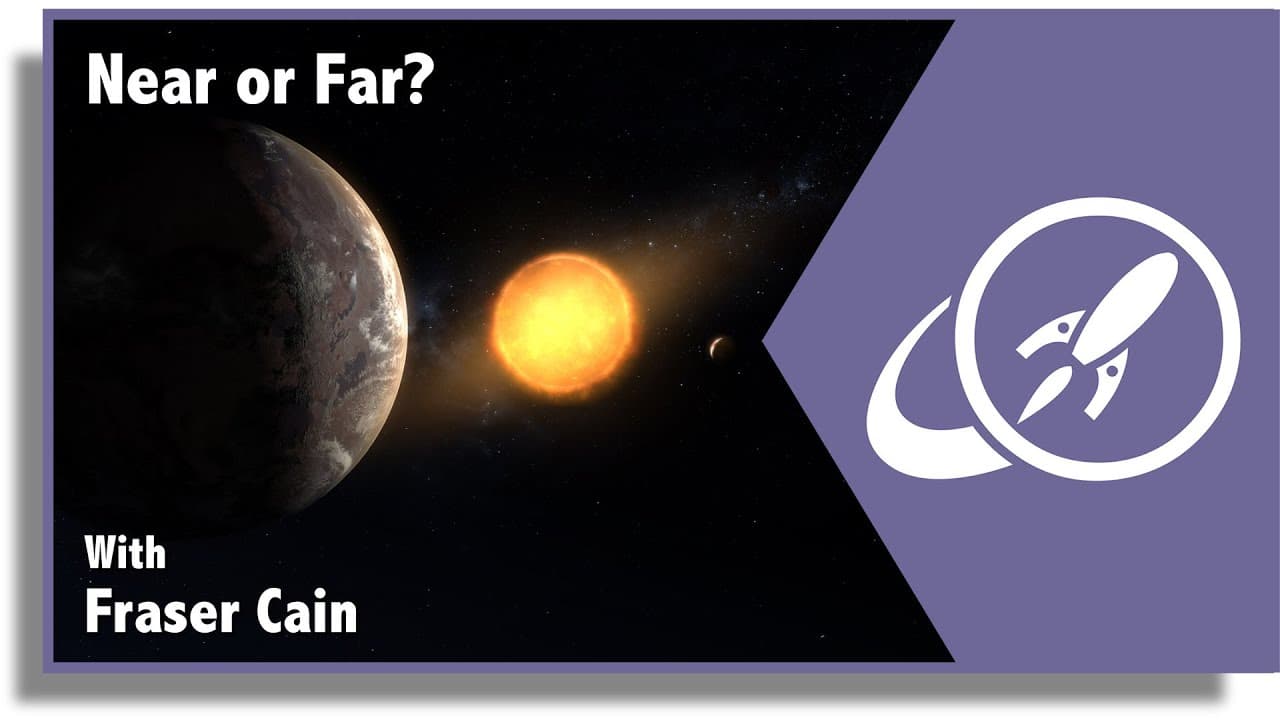
The likelihood of finding life in our solar system and within 100 light years of Earth is uncertain, with ongoing missions searching for signs of life. Finding conclusive evidence of life within our solar system would be a major breakthrough, while detecting life beyond our solar system would pose challenges and may remain inconclusive for a long time.
Transcript
hello everyone and welcome to the question show your questions my answers wherever you are across my channel just go ahead type it in i'll gather them up and i'll answer them here i record this show every monday at 5 p.m pacific so come join me live on my youtube channel and if you're watching this afterwards i recorded this episode on monday febru... Read More
Key Insights
- 👨🔬 The search for life within our solar system focuses on Mars and moons like Enceladus and Europa, but no definitive evidence has been found yet.
- 🤘 Detecting signs of life beyond our solar system requires advanced techniques like SETI and analyzing exoplanet atmospheres for biosignatures.
- 👨🔬 The advantage of studying our solar system is the potential for certainty, while the search for life beyond our solar system remains inconclusive.
- 👾 Blue Origin, the space company founded by Jeff Bezos, has the potential to become a serious contender in the space industry, especially with its rocket engine technology.
- 👾 The success of SpaceX and the imminent launch of the James Webb Space Telescope indicate exciting advancements in space exploration.
- 🔭 Building a telescope on the Moon is a compelling idea, with suggestions for a radio telescope to observe distant areas of the universe.
Install to Summarize YouTube Videos and Get Transcripts
Explore YouTube Video Summarizer or Get YouTube Transcript Extractor
Questions & Answers
Q: What are the current efforts in searching for life within our solar system?
Current missions involve studying Mars, analyzing its atmosphere for methane, searching for ancient fossils, and exploring moons like Enceladus and Europa for potential signs of alien bacteria.
Q: Is finding life within our solar system more likely than finding life beyond 100 light years from Earth?
It is uncertain which is more likely, as both searches pose unique challenges. Finding conclusive evidence of life within our solar system would be a major breakthrough, while detecting life beyond 100 light years would require more advanced techniques and may remain inconclusive for a long time.
Q: What are biosignatures and how do astronomers search for them in exoplanet atmospheres?
Biosignatures are specific chemicals in an exoplanet's atmosphere that could indicate the presence of life. Astronomers analyze the light passing through the exoplanet's atmosphere to look for the presence of these chemicals. However, confirming their presence and interpreting the data correctly is challenging.
Q: How can artificial gravity be created in space to counteract the effects of microgravity on the human body?
While wearing a suit that mimics gravity can be helpful for certain activities, it cannot fully counteract the negative effects of microgravity on the human body. To address these issues, generating artificial gravity through rotating spacecraft or using centrifugal force is a more effective solution, but further research and testing are needed.
Summary & Key Takeaways
-
The search for life within our solar system involves missions to Mars, studying the atmosphere, ancient fossils, and potential alien bacteria on moons like Enceladus and Europa. So far, no definitive evidence of life has been found.
-
Searching for life beyond our solar system relies on techniques like SETI and analyzing exoplanet atmospheres for biosignatures. However, detecting and confirming signs of life in distant exoplanets is challenging and may not provide conclusive evidence for decades or even centuries.
-
The advantage of studying our solar system is that we can achieve certainty, while exploring the rest of the universe requires different approaches and may result in inconclusive findings.
Read in Other Languages (beta)
Share This Summary 📚
Summarize YouTube Videos and Get Video Transcripts with 1-Click
Try YouTube Summary with ChatGPT & Claude or YouTube Transcript Generator
Explore More Summaries from Fraser Cain 📚

Summarize YouTube Videos and Get Video Transcripts with 1-Click
Try YouTube Summary with ChatGPT & Claude or YouTube Transcript Generator