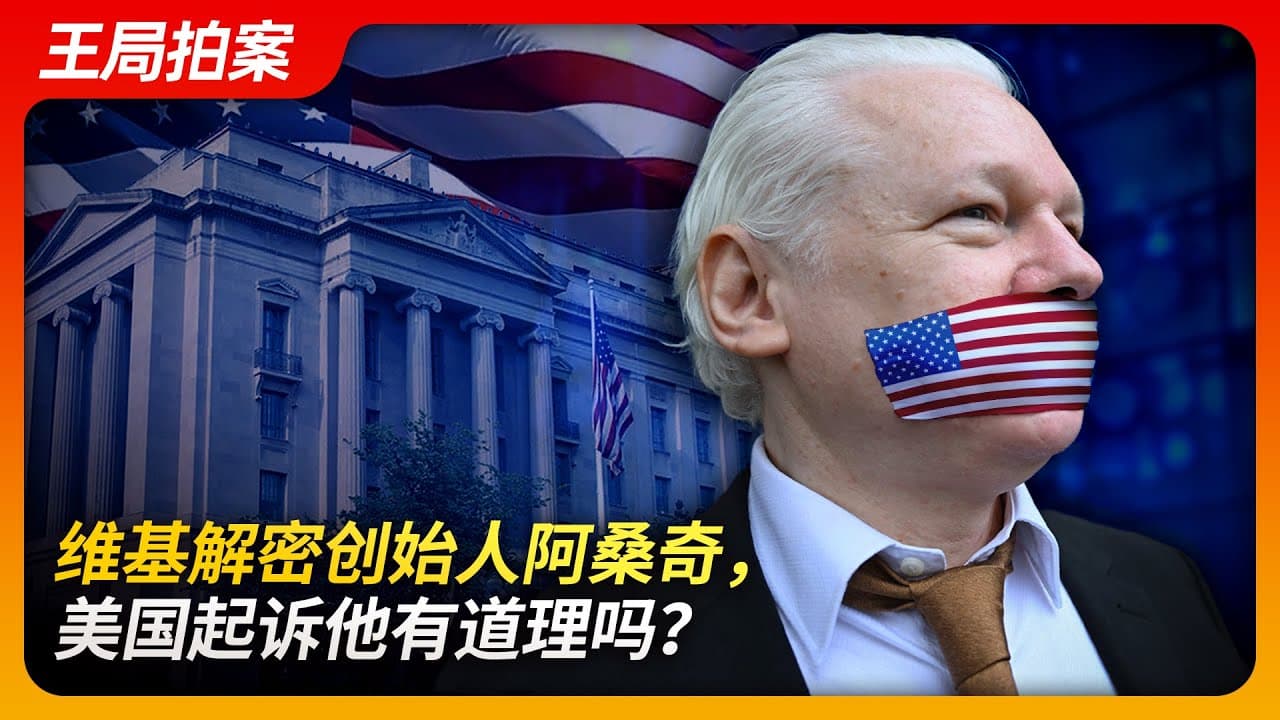
维基解密创始人阿桑奇,美国起诉他有道理吗?|wikileaks|希拉里|黑客|间谍|伊拉克|特朗普|通俄门|五角大楼|王局拍案20240703
TL;DR
Julian Assange pleads guilty to charges, ending a lengthy legal struggle.
Transcript
The person you are seeing now is named Julian Assange, very famous The founder of WikiLeaks and also a fugitive wanted by the U.S. government At this moment, Julian Assange is taking a private jet from London, the capital of the UK, to Thailand After transferring in Thailand, he will fly to the U.S. territory of Saipan to reach a plea agreement wit... Read More
Key Insights
- 😄 Assange’s plea agreement marked the end of a 14-year legal turmoil between him and the U.S. government, underlining the complexities involved in national security and journalism.
- ❓ WikiLeaks' documentation of government misconduct exerted pressure on the U.S. administration to reconsider its approaches to transparency and accountability.
- 😯 The case underscored the delicate balance between whistleblower protections and government claims of national security, provoking worldwide discussions on freedom of speech.
- 💁 Assange’s journey from hacker to journalist highlights how personal history can shape an individual's trajectory in the realm of data and information dissemination.
- 🤨 The prosecution of Assange raised alarms among journalists regarding potential repercussions for investigative reporting and the potential chilling effect on press freedom.
- 🤳 Assange's unique background and his self-taught technological prowess contributed to the innovative approach WikiLeaks took in publishing sensitive material.
- 😀 Chelsea Manning's actions illuminated the moral dilemmas faced by individuals privy to classified information, drawing attention to the role of whistleblowers in democratic societies.
Install to Summarize YouTube Videos and Get Transcripts
Explore YouTube Video Summarizer or Get YouTube Transcript Extractor
Questions & Answers
Q: What led to Julian Assange's initial legal troubles?
Julian Assange's legal troubles began with allegations of sexual assault in Sweden, which were tied to his post-WikiLeaks activities. He contended that these allegations were a pretext for the U.S. to extradite him for publishing sensitive documents. This marked the start of a lengthy and complex legal battle spanning over a decade.
Q: What was the impact of WikiLeaks on U.S. military and diplomatic operations?
WikiLeaks' release of military and diplomatic documents significantly damaged the U.S. government’s image, revealing war crimes and other misconduct. The 2010 publication of a video showing the killing of Reuters journalists caused widespread outrage and raised questions about military ethics and accountability, impacting public perception and political discourse.
Q: How did Assange's background influence his actions with WikiLeaks?
Assange faced a turbulent childhood, filled with instability and emotional challenges, which shaped his worldview and career. His self-taught skills in hacking and programming fueled his desire to expose government secrets and advocate for transparency. This background provided a unique perspective on the necessity of revealing injustices.
Q: What role did Chelsea Manning play in the WikiLeaks case?
Chelsea Manning was a U.S. Army intelligence analyst who leaked top-secret documents to Assange. Her motivations stemmed from a strong belief in exposing wrongdoings, particularly in warfare. The release of the classified information she provided led to significant legal repercussions for both Manning and Assange, underscoring the risks associated with whistleblowing.
Q: What were the implications of Assange’s plea agreement with the U.S. government?
Assange's plea agreement concluded his protracted legal issues, allowing him to return to Australia. However, the agreement came with stipulations, including the deletion of any unpublished documents, demonstrating ongoing tensions between national security and press freedom, and highlighting the complex dynamic between whistleblowers and government authorities.
Q: How did the media respond to the WikiLeaks revelations?
The media response to WikiLeaks was varied; while some hailed it as a triumph for journalistic integrity and transparency, others criticized it for potentially endangering lives and national security. The unprecedented nature of the leaks sparked debates over the ethical obligations of journalism and the intersection of privacy, security, and freedom of expression.
Q: Why is Assange's case considered a landmark event in journalism?
Assange's case is viewed as a landmark in journalism as it tests the boundaries of the First Amendment and press freedoms. Being the first journalist prosecuted under the Espionage Act, it raises important questions about governmental authority, accountability, and the legal protections available to journalists in pursuit of uncovering the truth.
Summary & Key Takeaways
-
Julian Assange, the founder of WikiLeaks, reached a plea agreement with the U.S. government after a lengthy legal battle of 14 years. He was sentenced to five years in prison but was released due to time served in the UK.
-
WikiLeaks became globally significant after Assange published sensitive U.S. military and diplomatic documents, leading to controversy over journalism, freedom of speech, and government transparency.
-
The legal saga surrounding Assange included charges under the U.S. Espionage Act, debates over freedom of the press, and accusations of a conspiracy to extradite him based on earlier sexual assault allegations.
Read in Other Languages (beta)
Share This Summary 📚
Summarize YouTube Videos and Get Video Transcripts with 1-Click
Try YouTube Summary with ChatGPT & Claude or YouTube Transcript Generator
Explore More Summaries from 王局拍案 📚





Summarize YouTube Videos and Get Video Transcripts with 1-Click
Try YouTube Summary with ChatGPT & Claude or YouTube Transcript Generator