Q&A 76: Can You Come To A Dead Stop In Space? And More... Featuring Launch Pad Astronomy
TL;DR
Fraser answers various questions related to space, including topics like spacecraft movement, telescope limitations, habitability of other planets, challenges of interstellar travel, and potential colonization of Mars.
Transcript
question show time your questions my answers wherever you are anywhere on my channel if a question pops into your brain just write it down I'll gather them up and I will answer them here now we've got another guest answerer this week so make sure you stick around right to the very end all right let's get into it billy-boy ik hey Fraser is it possib... Read More
Key Insights
- 💀 Spacecraft or objects cannot come to a dead stop in space due to the concept of relativity.
- 🔭 Physical limitations restrict the size of telescopes on Earth, but space or the Moon offers possibilities for larger telescopes.
- 🖤 Mars may become more habitable in the future due to changes in the Sun, but it currently lacks essential elements for sustaining life.
- 🗺️ Interstellar travel within a human lifetime is currently beyond our technological capabilities.
- 😘 There is no evidence of a stellar-mass black hole near the solar system, and the likelihood of its existence is low.
- 💥 Life on Earth and Mars may be connected through asteroid collisions that transfer rocks and potentially living organisms.
- 🤑 Mars colonization is not limited to the rich but for individuals willing to embrace challenges.
Install to Summarize YouTube Videos and Get Transcripts
Explore YouTube Video Summarizer or Get YouTube Transcript Extractor
Questions & Answers
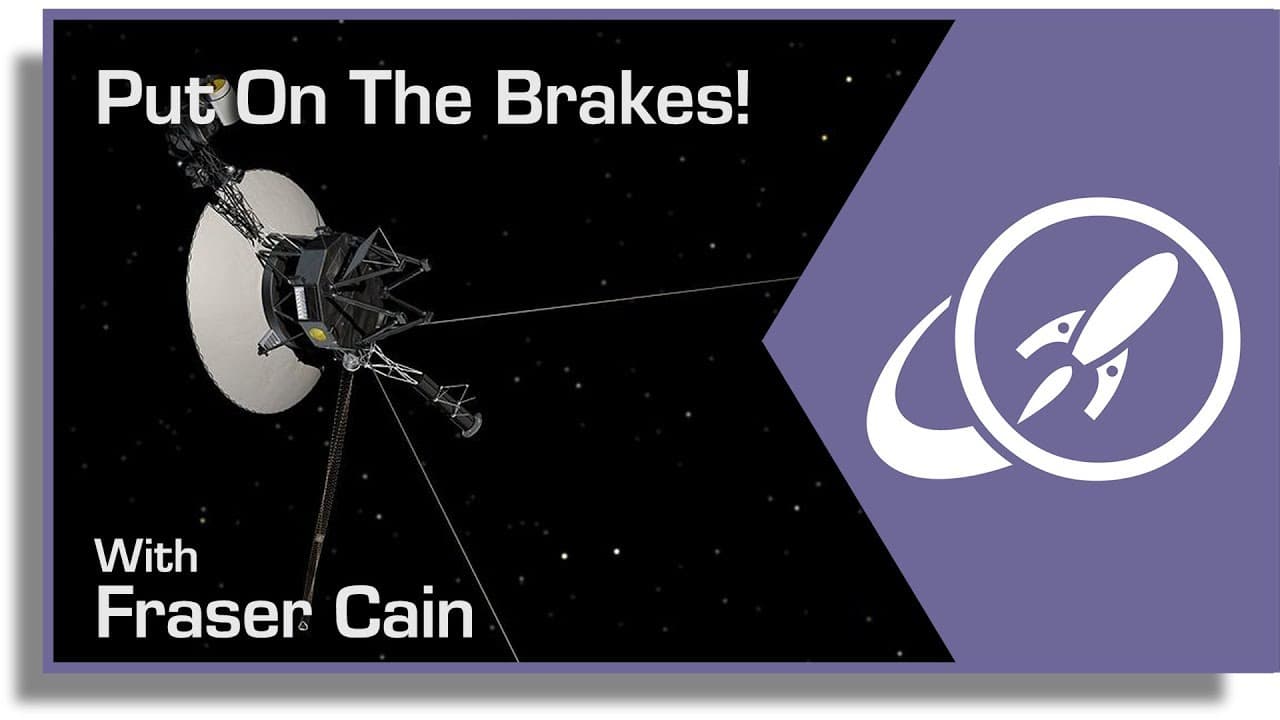
Q: Is it possible for a spacecraft or any object to come to a dead stop in space?
No, there is no such thing as stopping in space as everything is relative and constantly in motion.
Q: What are the physical limits of optical telescopes?
The physical limit for telescopes on Earth is around 100 meters due to the force of gravity, but larger telescopes can be built in space or on the Moon.
Q: Will Mars be habitable in the future?
As the Sun expands, Mars may become more habitable, but it lacks key elements like a thick atmosphere and sufficient water at present.
Q: Is interstellar travel within a human lifetime possible?
Currently, interstellar travel is limited by our technology and understanding of physics, making it impractical to travel to other stars within a human lifetime.
Q: Is there a stellar-mass black hole near the solar system?
The likelihood of a stellar-mass black hole near the solar system is low, as it would be the dominant gravitational object and cause Earth to orbit it.
Q: Could life on Earth and Mars be related?
Life on Earth and Mars may be related through asteroid collisions that transfer rocks and potentially living organisms between the two planets.
Q: Will colonizing Mars be exclusive to the rich?
Colonizing Mars will not be limited to the rich, but to individuals who enjoy difficult challenges and want to live in a different environment.
Q: Can artificial gravity be simulated in space?
Artificial gravity can be simulated using magnetic boots or other magnetic systems to provide a sense of gravity and improve the experience of living in space.
Summary & Key Takeaways
-
In space, there is no such thing as coming to a dead stop as everything is relative and constantly in motion.
-
Telescopes have physical limitations due to gravity, but larger telescopes can be built in space or on the Moon to gather more detailed images of objects like exoplanets.
-
Mars may become more habitable in the future due to the Sun's expansion, but it currently lacks crucial elements like a thick atmosphere and sufficient water.
-
Interstellar travel within a human lifetime is currently not feasible with our current technology and understanding of physics.
-
The possibility of a stellar-mass black hole near the solar system is unlikely as the dominant gravitational object would cause Earth to orbit it.
-
The potential for life to be transferred between Earth and Mars exists through asteroid collisions, but further investigation is needed to determine if life on both planets is related.
-
Colonizing Mars will not only be for the rich, but for individuals who enjoy difficult challenges and want to live a different lifestyle than what is available on Earth.
-
Artificial gravity and magnetic boots could potentially simulate gravity and improve the experience of living in space.
-
Earth and Moon can be considered a binary planet system when the Moon is far enough from Earth for the barycenter to be in space between them.
Read in Other Languages (beta)
Share This Summary 📚
Summarize YouTube Videos and Get Video Transcripts with 1-Click
Try YouTube Summary with ChatGPT & Claude or YouTube Transcript Generator
Explore More Summaries from Fraser Cain 📚
Summarize YouTube Videos and Get Video Transcripts with 1-Click
Try YouTube Summary with ChatGPT & Claude or YouTube Transcript Generator