10 Mysteries The James Webb Telescope Might Solve
TL;DR
The James Webb Space Telescope (JWST) will launch soon and has the potential to solve mysteries related to planet formation, the universe's material composition, quasars, galaxy evolution, exoplanets, and more.
Transcript
To coin a phrase, fusion energy forever seems right around the corner, and so does the James Webb space telescope. But after much waiting and anticipation, it seems that the wait is almost over and the telescope will launch on December 18th of this year. Fingers crossed for a successful launch, but it’s worth noting that the launch system... Read More
Key Insights
- 🫢 The JWST will provide high-resolution infrared capabilities, allowing it to observe objects obscured by gas, dust, or atmospheric interference.
- 👾 The telescope's launch system is highly reliable, increasing the chances of a successful mission once it reaches space.
- 🤩 Studying the earliest galaxies and stars can offer valuable insights into the evolution of our universe.
- 🦻 JWST's observations can aid in characterizing exoplanets and their potential habitability.
- 🕵️ The telescope may even detect technosignatures or artificial lighting on exoplanets like Proxima B.
- 💁 Asteroids and meteorites can offer clues about the early solar system, the formation of Earth, and the delivery of chemical building blocks for life.
- 🥺 Unforeseen events and transient phenomena will be observed and can lead to the solving of new mysteries.
Install to Summarize YouTube Videos and Get Transcripts
Explore YouTube Video Summarizer or Get YouTube Transcript Extractor
Questions & Answers
Q: How can the JWST contribute to the understanding of planet formation?
The JWST's infrared capabilities allow it to study the dust and gas that form protoplanetary disks, providing insights into the complex process of planet formation and potentially identifying forming planets or collisions.
Q: What mysteries can the JWST help solve regarding the universe's material composition?
By studying the interstellar medium, the JWST can reveal how heavier atoms from supernovas populate the universe. This knowledge could shed light on the origin of the materials that make up objects like Earth.
Q: How will the JWST deepen our understanding of quasars and their supermassive black holes?
The JWST will study quasars and try to match them with host galaxies, providing insights into supermassive black holes in the early universe. Discrepancies in mass predictions could challenge existing models.
Q: How can the JWST contribute to the study of exoplanet atmospheres?
The JWST will greatly expand our ability to study exoplanet atmospheres, detecting gases like water vapor, methane, oxygen, and sodium. Unusual atmospheric compositions, even those hinting at industrial activities, could be observed.
Summary & Key Takeaways
-
The JWST can study the dynamics of protoplanetary disk collapse, helping to understand planet formation and the formation of Earth-like planets.
-
By studying the interstellar medium and dust from supernovas, the JWST can probe how the universe gets its material and how heavier elements are produced.
-
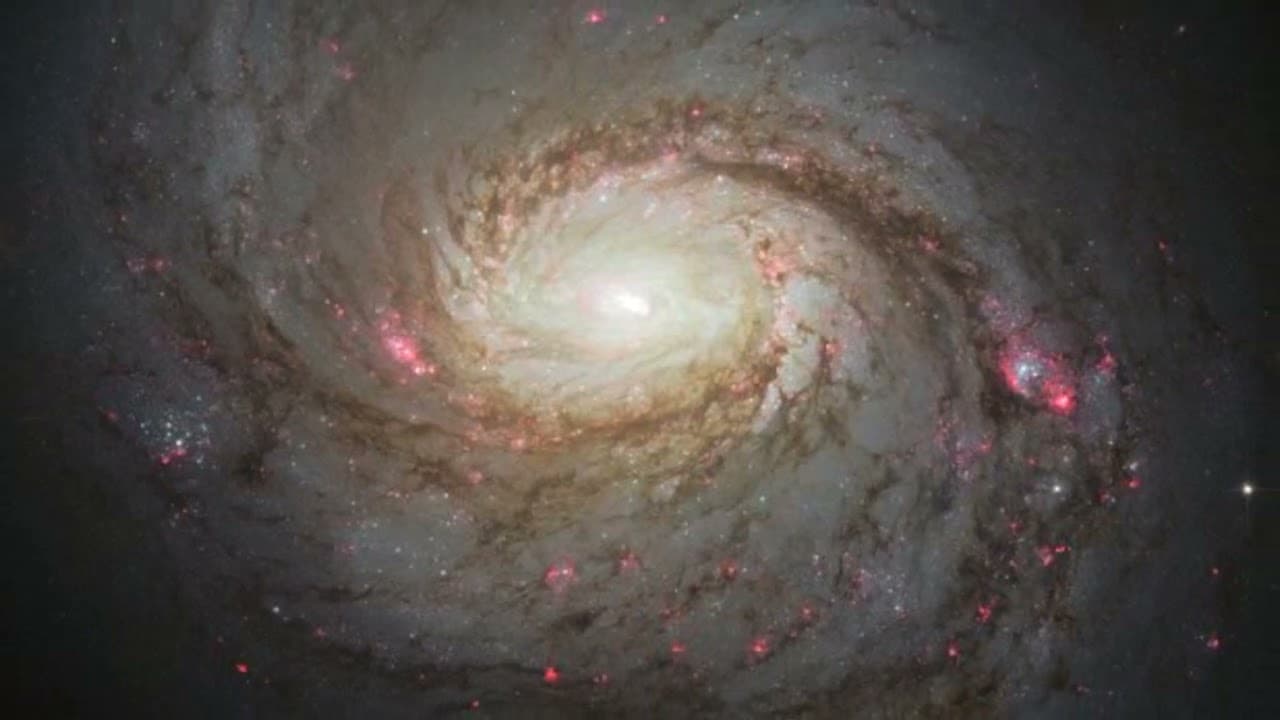
The telescope will investigate the evolution of galaxies, including the role of mergers and gravitational effects, to understand their current forms and the organization of matter.
Read in Other Languages (beta)
Share This Summary 📚
Summarize YouTube Videos and Get Video Transcripts with 1-Click
Try YouTube Summary with ChatGPT & Claude or YouTube Transcript Generator
Explore More Summaries from John Michael Godier 📚


Summarize YouTube Videos and Get Video Transcripts with 1-Click
Try YouTube Summary with ChatGPT & Claude or YouTube Transcript Generator