Mental Health Toolkit: Tools to Bolster Your Mood & Mental Health
TL;DR
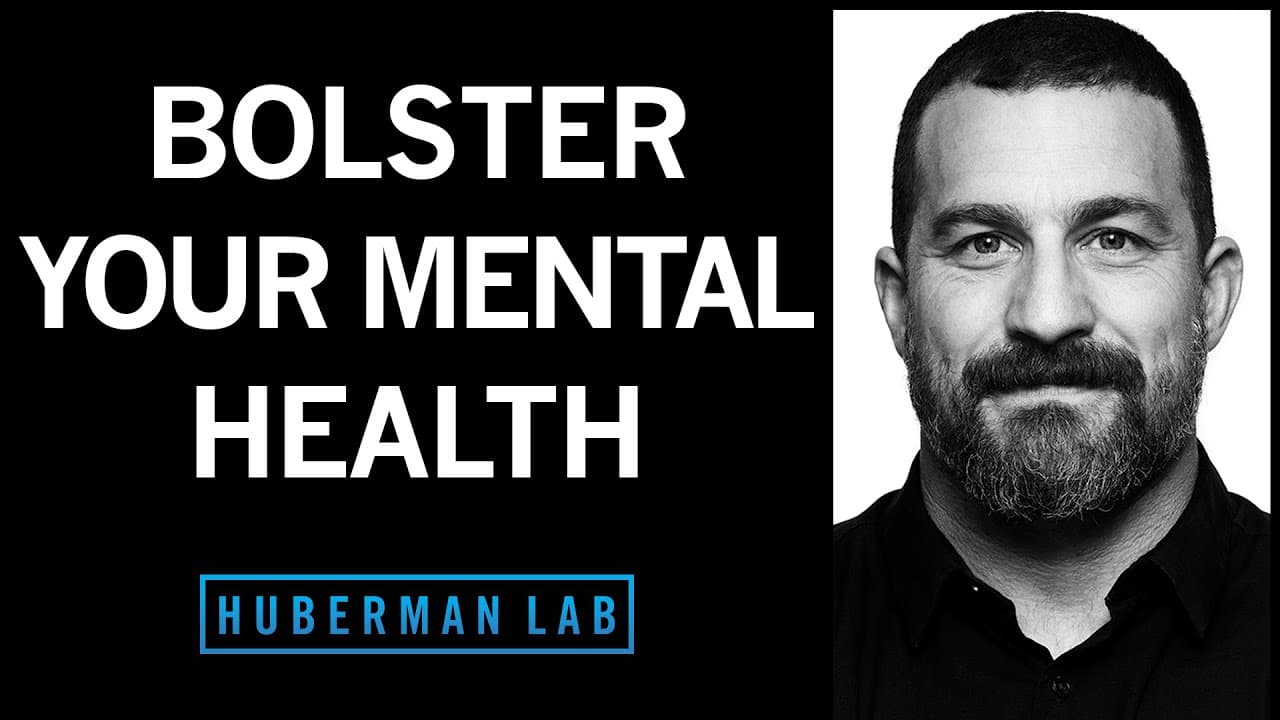
In this podcast episode, Dr. Andrew Huberman discusses various tools and resources for improving mood and mental health. These tools include focusing on sleep, light exposure, movement, nutrition, social connection, and stress control.
Transcript
welcome to the huberman Lab podcast where we discuss science and science-based tools for everyday life I'm Andrew huberman and I'm a professor of neurobiology and Opthalmology at Stanford school of medicine today we are discussing tools for mood and mental health I will include tools and resources taken from the guest episode that I did with Dr Lis... Read More
Key Insights
- 😪 Optimizing sleep, getting regular sunlight exposure, engaging in movement/exercise, maintaining a healthy diet, nurturing social connections, and practicing stress control are critical for improving mood and mental health.
- 🥶 Morning sunlight exposure and deliberate cold exposure have significant benefits for managing stress and enhancing mood.
- 🚕 Social connections should be carefully evaluated to determine which interactions provide positive energy and which are taxing.
- 😃 Predictability in brain function and neurotransmitter balance is established through the maintenance of the "big six" pillars of self-care.
Install to Summarize YouTube Videos and Get Transcripts
Explore YouTube Video Summarizer or Get YouTube Transcript Extractor
Questions & Answers
Q: What is the significance of morning sunlight exposure for mood and mental health?
Morning sunlight exposure has been proven to have positive effects on mood and mental health. The light stimulates biological processes in the brain that enhance feelings of alertness and focus. It is recommended to spend around 10 minutes in morning sunlight, or alternatively, use bright artificial light if sunlight is not available.
Q: How can deliberate cold exposure help manage stress and improve mental health?
Deliberate cold exposure, such as taking cold showers, has been shown to induce the release of adrenaline and noradrenaline. This practice helps increase stress tolerance and teaches individuals to remain calm in stressful situations. By practicing deliberate cold exposure, individuals can develop better resilience to stress and improve their overall mood and mental health.
Q: How does social connection impact mood and mental health?
Social connections play a crucial role in mood and mental health. It is important to identify individuals and groups that provide "savings" or positive interactions that contribute to overall well-being. Conversely, it is beneficial to limit interactions with people or groups that cause stress or negativity. Building positive social connections promotes feelings of happiness and improves mental health outcomes.
Q: How does stress control contribute to mood and mental health?
Effectively managing stress is key to maintaining good mood and mental health. The physiological sigh, a specific breathing pattern, can be used to reduce stress in real-time. Additionally, adopting offline stress control techniques, such as deliberate cold exposure, can improve stress tolerance and enhance one's ability to navigate challenging situations.
Summary & Key Takeaways
-
The episode explores tools and resources mentioned by guest speakers, Dr. Lisa Feldman Barrett and Dr. Paul Kti, as well as recent research publications.
-
Key tools for improving mood and mental health include optimizing sleep, getting sunlight exposure in the morning and throughout the day, engaging in regular movement, maintaining a healthy diet, nurturing social connections, and managing stress levels.
Read in Other Languages (beta)
Share This Summary 📚
Summarize YouTube Videos and Get Video Transcripts with 1-Click
Try YouTube Summary with ChatGPT & Claude or YouTube Transcript Generator
Explore More Summaries from Andrew Huberman 📚


Summarize YouTube Videos and Get Video Transcripts with 1-Click
Try YouTube Summary with ChatGPT & Claude or YouTube Transcript Generator