New bionics let us run, climb and dance | Hugh Herr | TED
TL;DR
This content explores the intersection between nature, design, and bionics, and discusses how advancements in technology can eliminate disabilities and enhance human potential.
Transcript
Looking deeply inside nature, through the magnifying glass of science, designers extract principles, processes and materials that are forming the very basis of design methodology. From synthetic constructs that resemble biological materials, to computational methods that emulate neural processes, nature is driving design. Design is also driving nat... Read More
Key Insights
- 🔬 Nature and science are driving design, with designers extracting principles, processes, and materials from nature to inform design methodology, while also creating technologies that go beyond what nature has foreseen.
- 🦾 Bionics explores the interplay between biology and design, aiming to bridge the gap between disability and ability.
- 💡 Technology can be a powerful tool for eliminating disabilities and enhancing human potential.
- 🏔 Personal experiences can inspire technological advancements, as shown in the story of a rock climber who developed specialized limbs to overcome his disability and regain his ability to climb.
- 💪 The field of bionics is expanding to not only improve mobility but also enhance athletic performance and everyday activities.
- ⚙️ Mechanical interfaces between devices and the human body are a complex and ongoing challenge in design, with the potential for advancements in materials and techniques to create more comfortable and functional attachments.
- 🔌 Bionic limbs can communicate with the nervous system through electrodes and sensors, allowing the user to control the limb and receive sensory feedback.
- 🌟 Bionics has the potential to improve the lives of people with disabilities, allowing them to regain their mobility and pursue their passions, such as dancing, and should be made accessible to those who need it.
Install to Summarize YouTube Videos and Get Transcripts
Explore YouTube Video Summarizer or Get YouTube Transcript Extractor
Questions & Answers
Q: What is the relationship between nature and design in the field of bionics?
Nature is a driving force in the design of bionics, with designers extracting principles, processes, and materials from nature to inform their designs. Conversely, design is also driving nature in the realms of genetics, regenerative medicine, and synthetic biology, where designers are creating novel technologies not anticipated by nature.
Q: How did Hugh Herr's own disability inspire his work in bionics?
Hugh Herr, a bionic limb user himself, had both of his legs amputated after a mountain climbing accident. Rather than viewing his body as broken, he saw technology as inadequate and made it his mission to advance technology to eliminate his own disability and that of others. This personal experience drove him to develop specialized limbs and later establish the Center for Extreme Bionics.
Q: How did Hugh Herr's bionic limbs enhance his ability to climb?
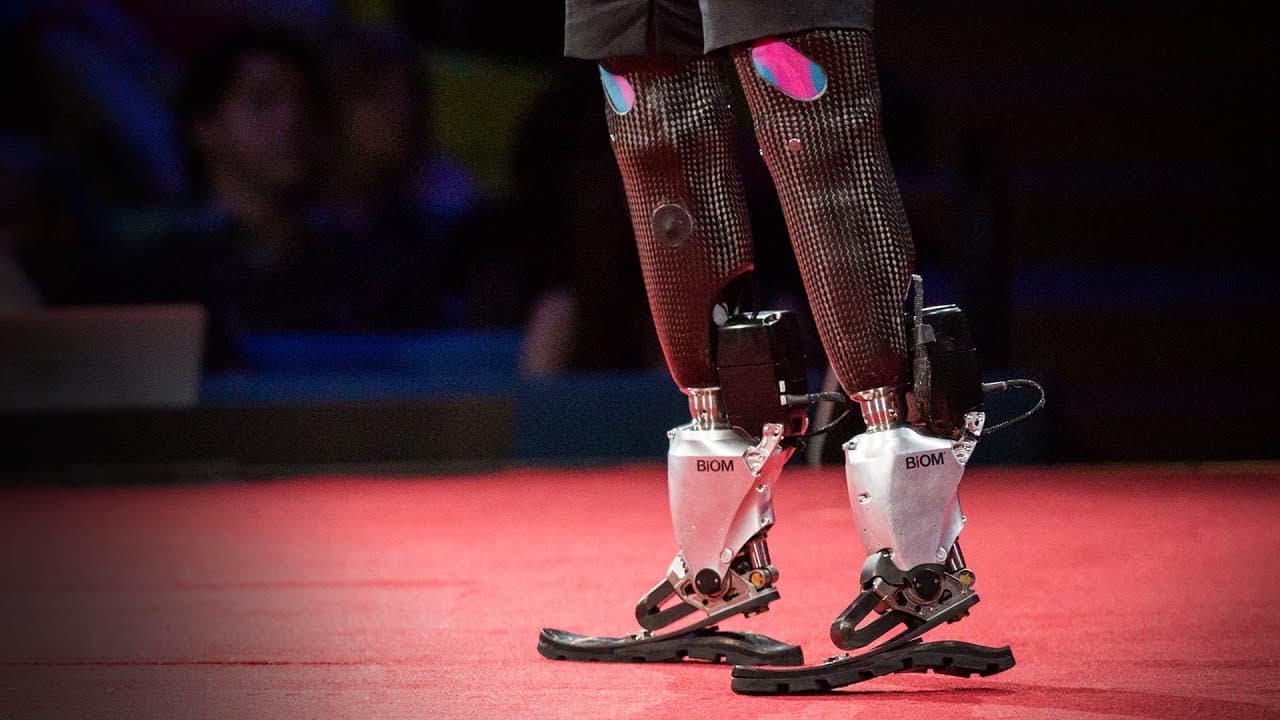
Hugh Herr's bionic limbs, called BiOMs, allowed him to return to rock and ice climbing. The artificial limbs were malleable and could take on any form or function, allowing him to adjust his height and optimize his climbing abilities. For example, narrow-edged feet enabled him to climb steep rock fissures, while spiked feet prevented muscle leg fatigue when scaling vertical ice walls.
Q: How are bionic limbs attached to the body mechanically?
In the field of design, there is still limited understanding of how to attach devices to the human body mechanically. However, researchers at the MIT Media Lab, like Professor Neri Oxman, are exploring innovative approaches. They are developing synthetic skins with stiffness variations that mirror the underlying tissue biomechanics. By creating a mathematical model of the biological limb and using imaging tools, they can optimize the attachment of bionic limbs to the body.
Q: How do bionic limbs move like flesh and bone?
At the MIT lab, researchers study how humans with normal physiologies stand, walk, and run to understand muscle function and control. This knowledge informs the design of bionic ankles, knees, and hips. The bionic limbs, such as the BiOMs, are capable of controlled movements that emulate flesh and bone in various stages of walking or running. Advanced robotics and modeling techniques allow the bionic limbs to replicate the muscle function and provide bionic propulsion.
Q: How do bionic limbs communicate with the nervous system?
Bionic limbs communicate with the nervous system through the use of electrodes placed on the residual limb, which measures the electrical pulse of the remaining muscles. This information is transmitted to the bionic limb, allowing it to track the desired movements of the individual's phantom limb. The bionic limb is controlled by modeling the missing biological limb and modulating the sensitivity of reflexes with neural signals, enabling the user to control the limb's movements with their thoughts.
Q: How can bionics enhance human experience and end disability?
By advancing bionics in this century, society can set the technological foundation for an enhanced human experience and end disability. Basic levels of physiological function should be regarded as human rights, and technological innovation can help achieve this. By transcending limitations through bionics, it becomes possible for individuals to live life without disability, such as seeing-impaired individuals having the ability to see or those with limb paralysis being able to walk or dance again.
Q: Can you provide an example of how bionics has had a profound impact on someone's life?
Adrianne Haslet-Davis, a ballroom dancer who lost her left leg in the Boston terrorist attack, was able to return to the dance floor with the help of a bionic limb. A team of MIT scientists studied dance and embedded the intelligence of fundamental principles of dance into the bionic limb. Through bionics, Adrianne regained her ability to dance, highlighting how technology can make a profound difference in someone's life and allow them to pursue their passions.
Summary & Key Takeaways
-
Designers are extracting principles, processes, and materials from nature to drive design methodology and create novel technologies in realms of genetics, regenerative medicine, and synthetic biology.
-
Bionics explores the interplay between biology and design, allowing for the development of specialized limbs and structures that can extend beyond biological capability.
-
Advances in bionics are revolutionizing the field of prosthetics and allowing individuals with disabilities to regain abilities and engage in activities like dance.
Read in Other Languages (beta)
Share This Summary 📚
Summarize YouTube Videos and Get Video Transcripts with 1-Click
Try YouTube Summary with ChatGPT & Claude or YouTube Transcript Generator
Explore More Summaries from TED 📚




Summarize YouTube Videos and Get Video Transcripts with 1-Click
Try YouTube Summary with ChatGPT & Claude or YouTube Transcript Generator