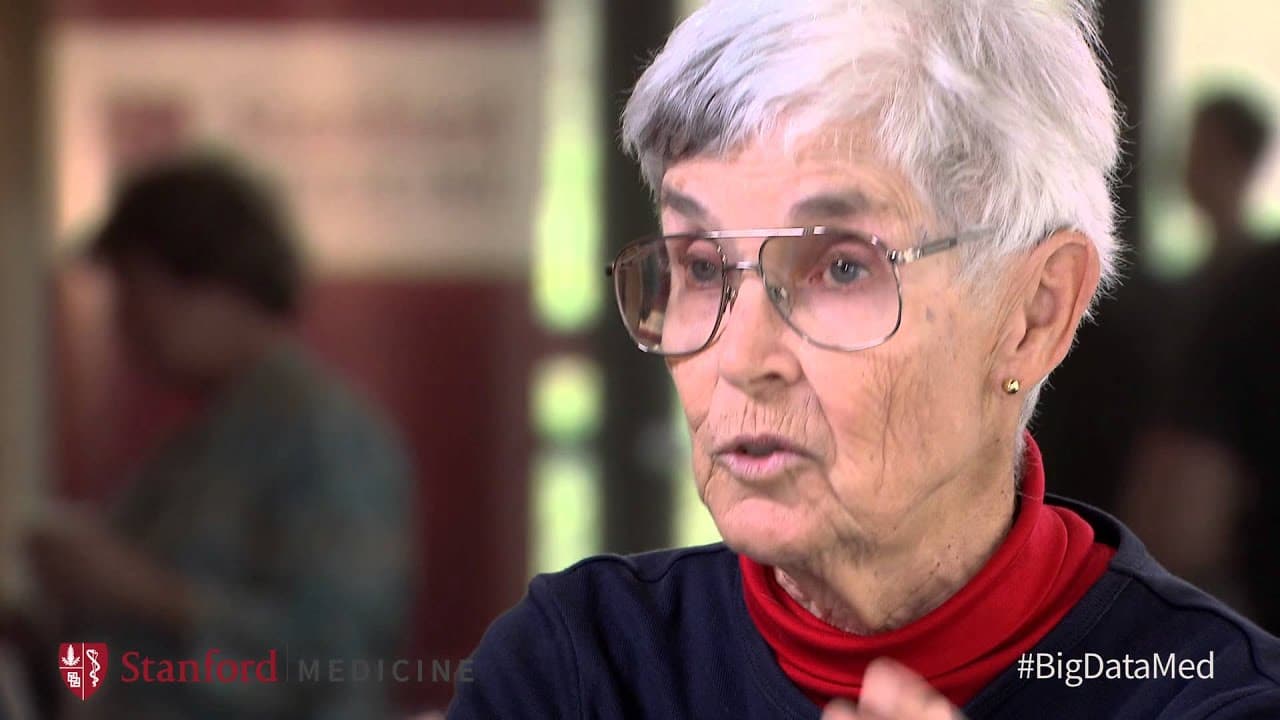
Alice Whittemore, Stanford University: Big Data in Biomedicine Conference
TL;DR
Dr. Whittemore explains how big data is used to study site-specific cancers and prioritize genetic variants for further research.
Transcript
dr. whittemore thanks so much for joining me today you're welcome I was really interested in your work with site specific cancers can you explain what that is and tell me a little bit about what projects you're tackling okay well cancer although we talked about it in the singular is really many different diseases and for example the problems that c... Read More
Key Insights
- ♋ Cancer is a complex disease with different causes and pathways specific to each type.
- 😃 Big data analysis allows researchers to compare the genomes of individuals with and without cancer, identifying potential genetic variants.
- ❓ Interpreting genetic variants is a challenge, as distinguishing between causation and correlation requires careful analysis.
- ♋ Prioritizing variants is crucial for understanding the causes of site-specific cancers.
- 🖐️ Genomic sequencing of newborns could play a significant role in personalized cancer prevention and early detection strategies.
- 🧑 Each person's risk for cancer varies based on their genetics and family history, requiring individualized screening and prevention approaches.
- ♋ Big data has revolutionized cancer research by providing vast amounts of genomic information to study and understand site-specific cancers.
Install to Summarize YouTube Videos and Get Transcripts
Explore YouTube Video Summarizer or Get YouTube Transcript Extractor
Questions & Answers
Q: What does the term "site-specific cancers" refer to?
Site-specific cancers are cancers that occur in a specific organ or tissue, such as prostate, breast, ovary, or skin.
Q: How does Dr. Whittemore use big data in his research?
Dr. Whittemore uses big data to analyze the genomes of individuals with cancer and compare them to those without cancer, identifying genetic variants that may be related to the disease.
Q: What are the challenges in interpreting the genetic variants discovered through big data analysis?
One challenge is distinguishing between variants that are potentially pathogenic (causing disease) and those that are harmless. To address this, computer programs analyze various factors, such as biophysics and evolution, to prioritize the variants.
Q: How does Dr. Whittemore differentiate between genes causing a specific cancer and genes associated with other traits?
It can be challenging to distinguish between genes associated with unrelated traits (e.g., fair skin) and genes directly causing cancer. Dr. Whittemore's research aims to tease out the specific genes responsible for cancer development.
Summary & Key Takeaways
-
Cancer is not a single disease but a collection of different diseases, each with its own characteristics and causes.
-
Dr. Whittemore focuses on researching cancers of the prostate, breast, ovary, and skin.
-
Big data is instrumental in analyzing the genomes of individuals with cancer and finding potential risk factors.
Read in Other Languages (beta)
Share This Summary 📚
Summarize YouTube Videos and Get Video Transcripts with 1-Click
Try YouTube Summary with ChatGPT & Claude or YouTube Transcript Generator
Explore More Summaries from Stanford 📚





Summarize YouTube Videos and Get Video Transcripts with 1-Click
Try YouTube Summary with ChatGPT & Claude or YouTube Transcript Generator